Going home to Australia as a traveler: what I notice now that I didn't before
 Mika Soren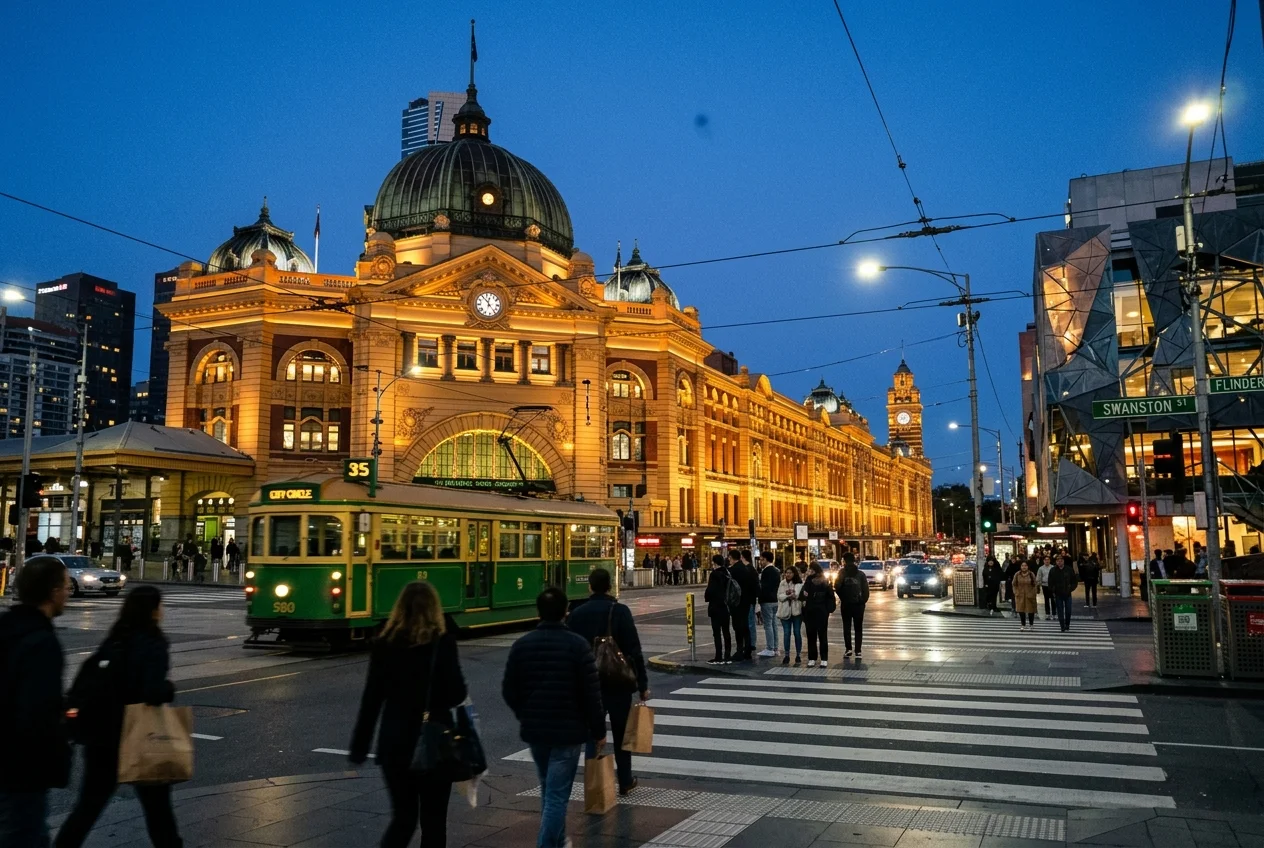
Going back to Australia is the strangest travel experience I have.
It’s the country I know better than any other. I lived in Melbourne for twenty-eight years. I know which tram to catch, which suburbs are worth visiting, what weather is coming when the sky turns that particular shade in the late afternoon. And yet every time I go back now, I see it slightly differently. Like a familiar face you’ve been away from long enough to notice things.
It’s home. It also, increasingly, feels like a place I’m visiting.
This one’s going to be different from my other country posts.
Melbourne: the city I’m always returning to
Melbourne is the most liveable city in the world by various metrics, which is a distinction the city wears with characteristic self-deprecating pride. It’s a city that deeply cares about coffee, food, sport, laneways, and arguing about which suburb is best, roughly in that order.
The laneways. This is Melbourne’s actual thing and it’s real. The CBD is threaded with narrow alleys (Degraves Street, Centre Place, Hosier Lane) that have cafés and street art and restaurants pressed in at shoulder width. Hosier Lane has been an evolving street art exhibition for decades. Centre Place has the best café density per square metre in the southern hemisphere (I’m guessing but it feels accurate).
The food. Melbourne is genuinely one of the better eating cities I’ve been in, and I’ve been in a lot of eating cities. The Vietnamese food in Richmond and Springvale. The Greek food in Oakleigh. The Japanese on Little Collins Street. The Ethiopian on Sydney Road. The coffee everywhere, done with a precision and seriousness that I will always defend.
The Melbourne laneway café culture specifically: order a flat white (Melbourne’s own invention, roughly), sit outside even when it’s slightly too cold because that’s what you do, and eavesdrop on conversations about property prices and band recommendations. This is Melbourne.
Where I eat when I’m back: My parents’ house (unavoidable, genuine, very good). Flower Drum in Chinatown (one of the best Cantonese restaurants in the country, been there since 1975, white tablecloths, order the Peking duck ahead). The noodle soup places along Victoria Street in Richmond for pho at 8am. The dumplings on Smith Street in Collingwood. The wine bar on Gertrude Street that changes name every few years but always has the right Yarra Valley wine list.
The Melbourne Cricket Ground. If there’s an AFL game on, go. I’m not specifically an AFL fan but attending a game at the MCG with 90,000 people on a Saturday afternoon is one of the better sporting experiences available. The atmosphere is genuinely extraordinary and you don’t need to understand the rules fully to enjoy it (they help, but aren’t essential).
Sydney: the one I didn’t grow up in
Sydney is the city Australians from Melbourne are supposed to have opinions about and I do, but they’re mostly positive, which apparently makes me less Melburnian.
The Harbour. The thing that Sydney has, inarguably, is one of the most beautiful natural harbour settings of any city in the world. The Opera House. The Harbour Bridge. The view from Mrs Macquaries Chair at dusk, with the whole thing laid out at once. It’s a visual spectacle in a way that Melbourne, beautiful in its own right, simply isn’t.
Bondi to Coogee coastal walk. The 6km coastal path that runs south from Bondi Beach through Tamarama, Bronte, Clovelly, to Coogee. Takes two to three hours. Ocean on one side, cliff paths, beautiful tidal pools you can swim in. Gordon’s Bay halfway along is perfect for snorkelling. One of the better urban walks I’ve done anywhere.
The beaches, properly. Bondi is famous and fine but genuinely crowded in summer. Manly (accessible by ferry from Circular Quay, which is part of the experience) is larger, slightly less packed, and the ferry ride across the harbour is excellent in its own right. Palm Beach, an hour north, is where the wealthy go and is very beautiful. Maroubra in the south for actual local beach culture without the tourist presence.
Eating in Sydney: The Fish Market at Pyrmont on a Saturday morning: enormous, chaotic, fresh seafood, eat it at the outdoor tables in the sun. The Rocks area for early morning coffee with harbour views (touristy but the coffee is real). Newtown and Surry Hills for everything else: the density of good restaurants in these suburbs is impressive.
The road trips: the part visitors underuse
Australia is a country designed for road trips and underused by visitors who fly between cities.
The Great Ocean Road (Victoria). Drive it west from Melbourne: start at Torquay, the road hits the coast at Lorne and doesn’t leave it for hours. The Twelve Apostles (limestone stacks in the ocean) are the famous part but the drive to get there is the whole thing: cliff edges, beaches you have to yourself, the rainforest section in the Otways. Two to three days done properly.
The Great Barrier Reef (Queensland). The reef is accessible from Cairns in the north or the Whitsundays in the middle. Cairns is the easier base: day trips to the outer reef, snorkelling or diving, the rainforest of the Daintree an hour north.
Do it now: the reef is bleaching.
The experience is still extraordinary. It’s also measurably less extraordinary than it was twenty years ago and the trajectory is not good.
The Red Centre. Uluru (Ayers Rock) in the Northern Territory: the most significant place in Australia that most Australians have never been. The rock at dawn and dusk turns colours you have not seen before. Climbing is now prohibited (as it should be). The walk around the base takes three hours and is the right way to experience it. The nearby Kata Tjuta (The Olgas) is often overlooked and equally extraordinary. Getting there requires flying to Alice Springs and either driving or joining a tour.
Tasmania. Fly from Melbourne or Sydney. Small, extremely beautiful, covered in wilderness, excellent food and wine scene, one of the better craft beer cultures in the country. The Freycinet Peninsula (Wineglass Bay), Cradle Mountain, the Huon Valley for whisky distilleries and apple orchards. Give it a week minimum.
The thing about going home
The practical travel information for Australia is all out there and well-documented. I want to say something slightly different.
Travelling Australia as a foreigner is unusual because most of what’s on offer is nature and space at a scale that’s genuinely hard to communicate before you’ve experienced it. The cities are sophisticated and worth time. But the reason Australia is extraordinary is the country itself.
The light. The space. The specific quality of silence in the outback that has no equivalent anywhere else I’ve been.
Go somewhere regional. Rent a car. Drive until the radio stops. That’s the experience.
On connectivity: Australia has excellent 4G coverage on the east coast and in major cities. It gets patchy in outback areas and certain regional routes. The Telstra network has the widest rural coverage. If you’re planning any significant outback travel, research your provider’s coverage map before leaving any city. I’ve written up which eSIMs work best in Australia with current pricing.
I go home once a year and each time I stay for about six weeks.
Each time I leave, I’m slightly surprised by how much I miss it. Not specifically any one thing. Just the light in the late afternoon. The way people talk. The smell of eucalyptus in the air when you’re driving somewhere regional.
You can live in forty countries. One of them is still home.
More from the region
Heading to Australia? Sort your eSIM first.
I've compared the main providers, checked the real pricing, and put together a guide on the best eSIM options for Australia.
Best eSIM for Australia →