The backpacking packing list: from someone who packed 22 kilos first time and learned the hard way
 Mika Soren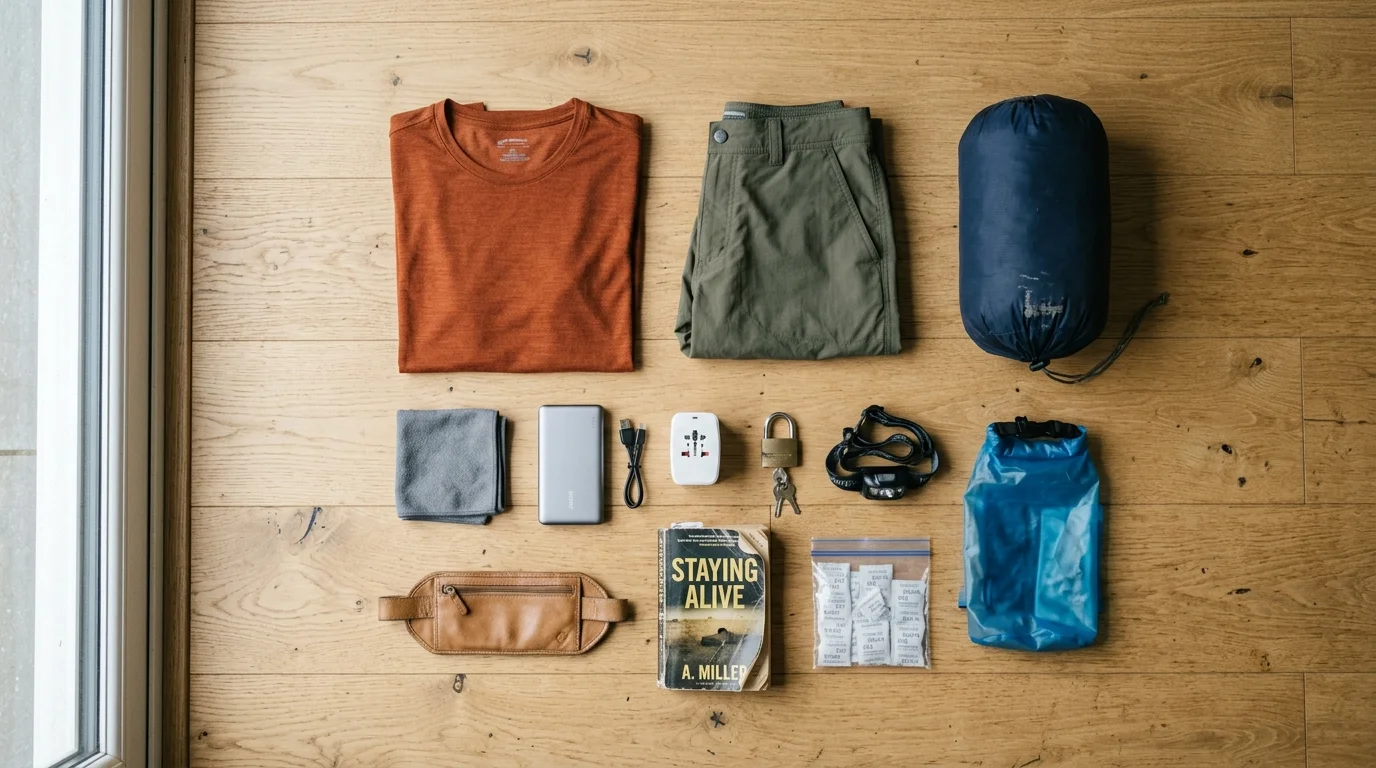
My first backpacking trip, I brought 22 kilos.
TWENTY-TWO. On my back. In Thailand. In April.
I didn’t know it was 22 kilos until the airport check-in scale at the hostel I was leaving on day three, by which point I’d already walked a 20-minute uphill stretch in 34-degree heat with all of it on my back. I used about 40% of that bag. The rest was “just in case” items that I did not, in fact, need for any case.
Here’s what I’ve worked out across years of backpacking in Southeast Asia, Central America, Eastern Europe, South Asia, and East Africa, what to bring, what to leave behind, what changes depending on where you’re going, and a few things that experienced travelers forget to mention.
The bag itself: getting this right first
Before you pack anything, the bag matters.
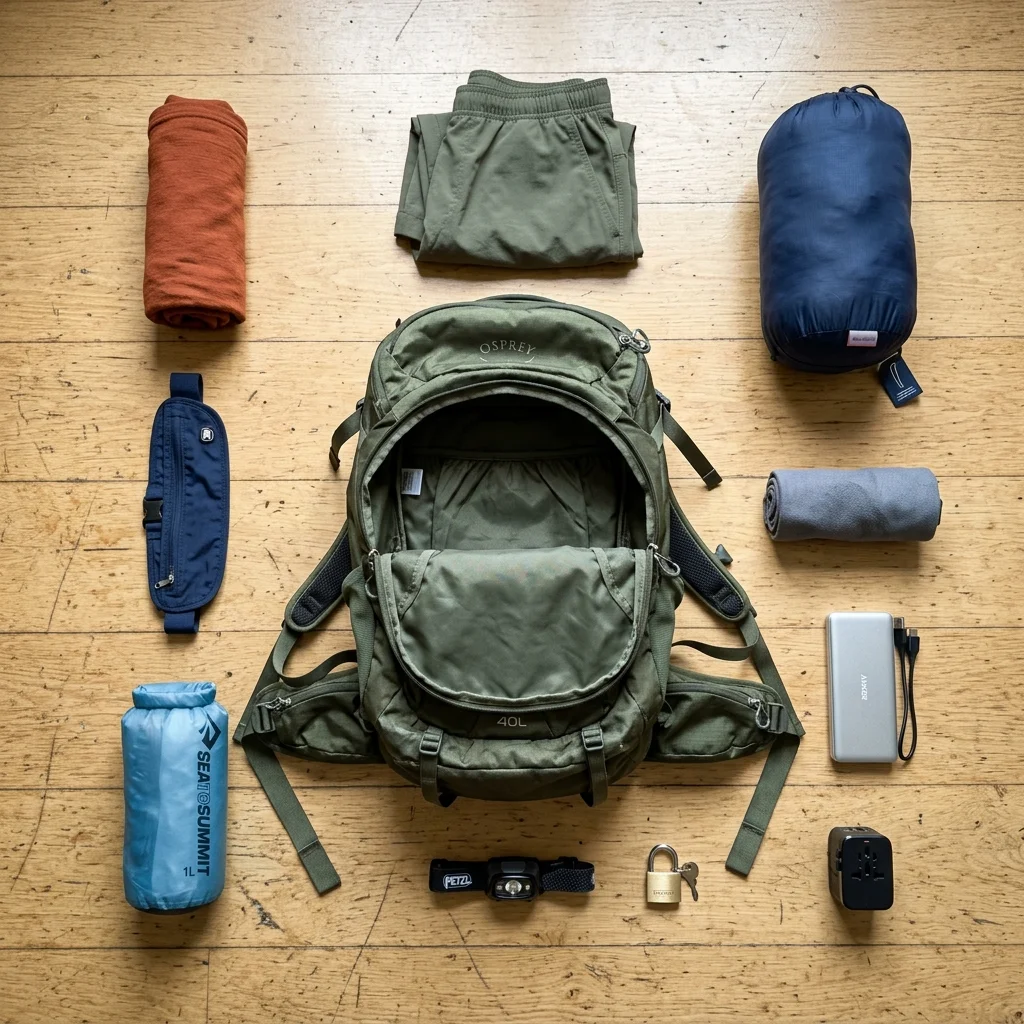
For long-term backpacking (multiple months, multiple countries), 40L maximum.
I know this sounds impossible if you haven’t done it. But the 60L bag encourages you to fill the 60L bag, and then you’re carrying 60L everywhere, and the thing about backpacking, as opposed to resort holidays, is that you actually carry your bag. Up stairs in guesthouses with no lifts. On buses with no storage. Through markets in heat that makes every extra kilo feel like two.
40L is enough. 50L is tolerable. 60L+ is punishing and almost always contains things you don’t need.
For shorter trips (2-4 weeks), 30L is genuinely fine. I’ve done it with less.
The other thing: get a bag that fits you properly. Backpack fitting is real, the torso length matters, the hip belt placement matters. A poorly fitted heavy bag causes lower back issues in ways that ruin trips slowly. If you’re buying a new pack, try it on at a proper outdoors shop (Decathlon in Europe and Asia, REI in the US) with weight in it, not empty.
Clothes: the framework that actually works
The system: pack clothes that all work together, prioritise fabrics that dry fast and resist odour, and accept that you will wear the same things repeatedly.
The base list for any climate:
- 4-5 tops (quick-dry synthetic or merino wool)
- 2-3 bottoms
- 1 packable layer (down jacket or midlayer depending on destination)
- Underwear for 5-7 days (do laundry every 5-7 days: laundry services are cheap everywhere backpackers go)
- 2 pairs of socks per day of walking, plus 1 pair of warm socks if there’s any hiking
- 2 pairs of shoes maximum (wear the heavier ones on travel days)
- 1 swimsuit if there’s any chance of water
Fabrics matter more than most guides say:
Cotton is comfortable and cheap, but it dries slowly, holds odour, wrinkles badly in a bag, and gets heavy when wet. On a three-month backpacking trip, wearing damp cotton in humidity, this matters.
Merino wool is the best travel fabric. It regulates temperature (warm when cold, cool when hot, sounds implausible but genuinely works), dries quickly, and resists odour so effectively that you can wear a merino t-shirt for 3-4 days in a warm climate without it becoming a social problem. It costs more than synthetic but lasts longer and performs better.
Quick-dry synthetic (polyester, nylon) is the budget alternative. Faster drying than cotton, good enough for most purposes, packs small.
What changes by region:
Southeast Asia (Thailand, Vietnam, Laos, Cambodia, Indonesia, Philippines): Pack lighter than anywhere else. You’re in heat and humidity, you’ll wear the minimum, and laundry is so cheap (often $1-2/kg) that you genuinely don’t need more than 3-4 days of clothes. What you do need: temple-appropriate clothing. Almost every significant temple in the region requires covered shoulders and knees for entry. A lightweight scarf or sarong solves this and doubles as a beach coverup, a blanket on cold overnight buses, and a pillow emergency. One. That’s all you need.
South Asia (India, Nepal, Sri Lanka): Modesty requirements are more widely relevant than in Southeast Asia, not just at religious sites but in daily life in many cities and rural areas. Loose, lightweight, full-coverage clothing is both culturally appropriate and practical in the heat. For India specifically: pack stomach medication and oral rehydration sachets. The food is extraordinary. Your gut will need time. Plan for it.
Nepal if you’re trekking: cold at altitude, warm at lower elevations. The clothing system needs to handle both. Base layer (merino), mid layer (fleece or down), outer shell (waterproof). You can rent most trekking gear in Kathmandu if you don’t want to fly with it, gear rental shops on Thamel are reliable and the quality is usually fine.
East Africa (Kenya, Tanzania, Uganda, Ethiopia): Malaria prevention is not optional in most of the region. Bring lightweight long sleeves and trousers for evenings (mosquitoes peak at dawn and dusk). Neutral colours for safari, animals respond to bright colours and movement; khaki, olive, and brown are conventional safari colours for a reason. For Kilimanjaro or Rwenzori: same layering system as Nepal. Cold at the top, warm at the base.
Bring your malaria prevention medication from home. Options include doxycycline (cheapest, requires sun protection as it increases photosensitivity), Malarone (most convenient, fewer side effects, more expensive), and Lariam (rarely prescribed now due to side effects). Discuss with a travel health clinic 6-8 weeks before departure.
Central and South America: Variable by country. Mexico and Colombia are generally fine with standard backpacking gear. High-altitude destinations. Peru, Bolivia, require altitude sickness preparation. Pack acetazolamide (Diamox, requires prescription) or research coca tea and acclimatisation strategies. UV at altitude is intense; SPF protection is more important here than most people expect.
Eastern Europe: The climate swing is the main consideration: summer can be genuinely hot, winter is properly cold. Pack a genuine warm layer if you’re going October-March. Eastern Europe is also where theft from bags on overnight trains is a real consideration, more on this below.
Tech: what you actually need for long-term travel
Phone. Your camera, map, translator, entertainment, payment tool, and communication device. Back it up thoroughly before leaving and sync photos regularly while traveling. A broken or stolen phone on a backpacking trip is a major disruption.
An unlocked phone that supports eSIMs. This is the single most useful thing for multi-country backpacking. Instead of hunting for a local SIM card at every border, which involves finding a phone shop, understanding the plan options in a language you may not speak, waiting, and paying a premium in tourist areas, you can sort your data plan in advance for each country and activate it when you land. I’ve compared eSIM plans for most of the backpacking-heavy destinations. Thailand is a good starting point if you want to see what to look for. Sort it before you arrive. One less border stress.
China specifically: Download and configure a VPN before you enter China. The Great Firewall blocks Google Maps, Gmail, WhatsApp, Instagram, YouTube, and most Western websites. You cannot access most VPN apps or websites once you’re in China, they’re blocked too. This needs to happen before you land. I’ve seen experienced travelers arrive in China and spend hours at the airport trying to solve a problem that takes five minutes to solve from home.
Power bank (10,000-20,000mAh). Long bus journeys, overnight trains, days out hiking with GPS running. Medium size, not the heavy brick, not the toy one.
Universal travel adapter. One. The compact kind that covers US/UK/EU/AU plugs. Buy once, carry for years.
Headlamp. Often overlooked. For camping, power cuts in guesthouses, early morning or late-night movements in hostels where you don’t want to wake everyone, and anywhere you’re in a place with unreliable electricity. A small one weighs nothing and you’ll use it.
Laptop: Only if you’re working remotely. A laptop is the single heaviest tech item most backpackers carry unnecessarily. Your phone handles navigation, communication, entertainment, and most logistics. Unless you genuinely need it for work, leave it.
The things that prevent misery: overlooked essentials
A lightweight travel towel. Microfibre, quick-drying, compact. Hostels charge for towels or don’t provide them; guesthouses vary; beaches exist everywhere. Get one. A medium-size one (60x120cm) works for most purposes. It’s not as absorbent as a full cotton towel but it dries in 30 minutes, weighs almost nothing, and takes up almost no space.
A padlock. Most hostels have lockers. Most lockers require your own padlock. This is a £3 item that either protects your laptop or results in you leaving your laptop in an unattended bag in a shared dorm. Bring the padlock.
A dry bag or waterproof pouch. For phones and electronics near water or in heavy rain. Small (2-3L) is enough. Southeast Asia has monsoon season. East Africa has unexpected downpours. You will be glad of it.
A cable lock. For overnight trains in Eastern Europe, South America, and parts of Asia where theft from sleeping passengers is a documented issue. Loop it through your bag and around something fixed. It’s not foolproof but it removes the easy opportunity.
A money belt or neck pouch. I don’t wear mine constantly, but in busy bus stations, markets, and crowded tourist areas. Marrakech medina, Bangkok’s Chatuchak market, any South American city bus, it’s the difference between a minor inconvenience and a lost passport. Wear it on the inside.
Silica gel packets or a dry sack for electronics. In humid climates (Southeast Asia especially), sustained high humidity can damage electronics over weeks. Keep cameras and anything else moisture-sensitive in a small dry bag or with a silica packet.
The financial setup most backpackers get wrong
Sort a card with no foreign transaction fees before you leave. Using a standard bank card abroad typically costs 2-3% per transaction plus fixed fees. Over three months, that adds up to real money. Wise, Revolut (in Europe), and Charles Schwab (US) are common solutions. Monzo in the UK. Get one before you go.
Cash is still king in more places than you’d expect. Japan, as noted, is heavily cash-based outside major cities. Most of Southeast Asia runs on cash for markets, local transport, and street food, even where cards are technically accepted, having cash available is easier. ATMs in rural areas are unreliable; take out cash in larger towns before heading somewhere remote.
China is cashless in the opposite direction. WeChat Pay and Alipay dominate Chinese commerce. Locals pay for everything from taxis to street food to large restaurants this way. As a visitor, you need to set up the tourist version of Alipay (which now accepts international cards with limited functionality) or accept that you’ll be using cash and cards, which work in most tourist-facing contexts but not everywhere. This is worth researching and setting up before you arrive, not because it’s impossible without it, but because it makes everything easier.
What I stopped bringing after the 22-kilo disaster
More than one book. Kindle. Weighs 174g. Holds more books than you could read on a year-long trip.
A full-size towel. See above. The microfibre one is fine.
“Nice” going-out clothes. The bars in Chiang Mai are not evaluating your footwear. The restaurants in Lisbon will seat you in hiking trousers. Pack one versatile piece that elevates a basic outfit; leave the wardrobe.
Multiple pairs of shoes. Two maximum. Wear the heavy ones, pack the light ones. Three pairs of shoes on a backpacking trip means you’ve made a choice you’ll regret by day five.
A guidebook. Everything is on your phone. The guidebook is charming and I understand the appeal, but 400g of paper you won’t read end-to-end is 400g you could use for something else, or simply not carry.
The whole philosophy: pack light enough to move fast, carry only what you’ll actually use, and trust that most things you forget can be bought when you need them. The one exception: medication, specific tech, and anything required for entry or health. Those you bring from home.
Everything else: you’ll find it.
More on packing