Bali is a cliche and I'm obsessed with it anyway: what no one tells you before you go
 Mika Soren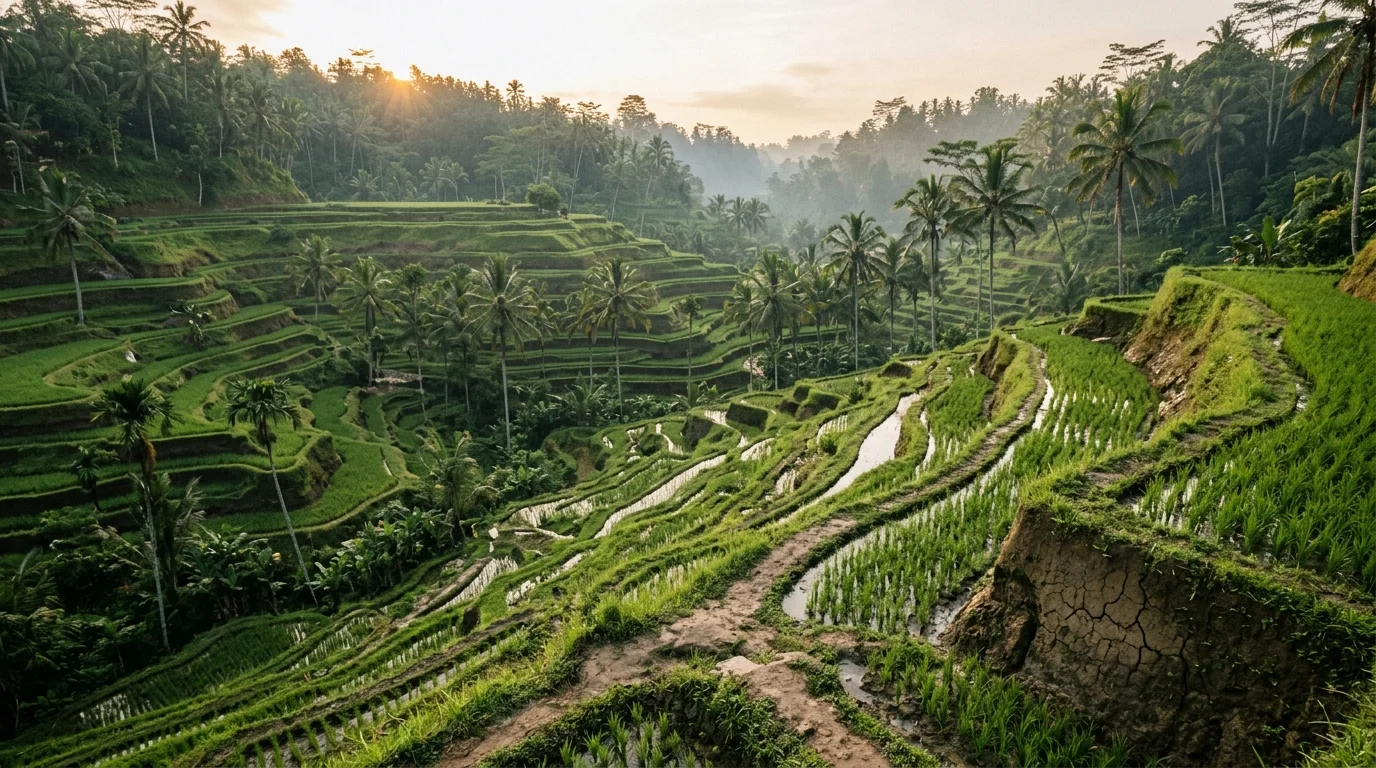
The first thing I did when I landed in Bali was walk straight into a religious ceremony.
Not on purpose. I was following the map to my guesthouse in Canggu, turned a corner, and suddenly there was a procession moving through the street. Women in white and yellow kebaya carrying offerings on their heads. Incense smoke rising in thick drifts. Gamelan music from somewhere I couldn’t see. The whole street paused, respectfully, and I stopped too because there was nothing else to do.
Someone standing next to me smiled and said “Odalan,” which I later learned is a temple anniversary ceremony, one of hundreds that happen across Bali every week based on a 210-day Balinese calendar. You can plan your trip down to the hour and still find your entire itinerary casually reorganised by a procession of a hundred people carrying coconut-leaf offerings.
I’ve been to Bali three times. Each time it surprised me. That’s a harder trick than it sounds.
Canggu: digital nomad central, and not entirely undeservedly
Canggu gets mocked in certain circles. Too many cafes with fast WiFi and smoothie bowls, too many people on laptops doing “digital nomad stuff,” too many rice paddies with boutique hotels built right through the middle of them.
This is all accurate. It’s also, genuinely, a nice place to be.
Batu Bolong beach has a surf break that beginners can actually use. The main street (Jalan Canggu) has more good coffee per metre than any place I’ve been outside of Melbourne. Echo Beach, five minutes further up the coast, gets better waves and a much more local crowd. At sunset, half of Canggu seems to migrate there to watch the swell and drink Bintang.
The food. Canggu has an absurd density of excellent places to eat. Warung Dandelion for nasi campur (a plate of rice with various small dishes heaped on top, and I’ll get to why this matters in a moment). Shelter for coffee. The Slow for everything else. The warning: prices in Canggu have crept toward Seminyak levels in the last few years. Budget for more than you think you’ll spend and you’ll probably end up about right.
The scooter situation. You will rent a scooter. Everyone rents a scooter. The traffic follows rules that are partially visible and partially operating on vibes. Go slowly, leave space, tap your horn on narrow corners, and remember that cows, chickens, dogs, and offerings can all appear in the road at any moment without warning. I have stalled three times in Canggu at intersections and have been waved through by motorbike taxis who were kinder about it than they needed to be.
Ubud: still worth it, go at the wrong time
Ubud has become extremely Instagrammed. The rice terraces at Tegallalang now have a viewing fee and a rope marking where you’re supposed to stand. The monkey forest has been upgraded, ticket-gated, and given a small souvenir shop at the exit.
And yet.
Go early. The Tegallalang rice terraces at 7am, before the tour buses, in the mist that sits in the valley before the sun burns it off, with the sound of water running through the irrigation channels: it’s one of those moments where you stop and feel vaguely overwhelmed in a good way. By 9am there are queues for the same photo spot. The window is small. Use it.
Ubud itself. The town centre is genuinely lovely when the tour groups thin out in the early morning or late afternoon. The Ubud Palace (Puri Saren Agung) hosts Kecak dance performances most evenings in the courtyard. Watch one. The fire dancing is genuinely spectacular and the setting, inside an actual royal palace compound at night, makes it better than seeing the same performance at a hotel.
Eat at Ibu Oka. Babi guling (Balinese suckling pig) served from a warung that’s been running since the 1950s. The skin crackles. The spit-roasted pork gets combined with crispy intestines and lawar (a spiced minced meat and coconut mixture) and turmeric rice. Anthony Bourdain went. This is not a recommendation I make lightly and I stand behind it fully.
Uluwatu: the part of Bali that doesn’t care if you’re there or not
Drive south from Canggu past Seminyak and Kuta, past the airport, and the island changes character. The Bukit Peninsula is limestone cliffs, temple-topped headlands, surf beaches at the bottom of steep staircases, and a general feeling of being at the edge of something.
Uluwatu Temple sits at the tip of a cliff above the Indian Ocean. Waves break 70 metres below. The temple is a real place of worship, not a tourist set piece. Sarongs are provided at the entrance (and required). The monkeys that live around the temple are bold and experienced thieves. Do not underestimate them. They will take your sunglasses directly off your face.
Padang Padang. The beach at the bottom of a narrow crack in the cliff, accessed by a staircase through a temple gate. Small, crowded in high season, worth it anyway. The water is clear and the waves, on the right day, are the kind that make you understand why people organise their entire lives around surfing.
Uluwatu’s cliffside restaurants. There are several built into the cliff face, cantilevered over the ocean. They’re not cheap. Watching the sunset from one of them, with the waves crashing far below and the sky going orange, is an experience worth paying for at least once.
The ceremonies (just go with it)
There will be ceremonies. They will affect your plans. A road will be closed for a procession. Your guesthouse will have offering preparation happening in the courtyard at 6am. The beach will fill with people in traditional dress. A temple will be open one day and closed the next.
This is the point, actually.
Bali’s religious and cultural life isn’t a performance for tourists. It happens constantly, visibly, in the middle of daily life, and if you stay long enough, you stop seeing it as an inconvenience and start seeing it as what makes the island different from everywhere else you’ve been.
Canang sari, the small square offerings of flowers and incense that appear on every step, every threshold, every corner every single morning: they’re made fresh each day as an act of gratitude. Someone, somewhere in Bali, is making offerings right now. The island is perpetually in a state of ceremony. Once you accept that your schedule is secondary to this, the trip gets significantly better.
The practical stuff
When to go. Dry season is May to September. High season is July and August, when prices spike and accommodation needs to be booked well in advance. The shoulder months (May, June, September) have good weather and less chaos. The wet season (October to March) brings daily afternoon rain, lower prices, and a greener, calmer island. I’ve been in November and it was fine. Pack a light rain jacket.
Cash. Bali runs mostly on cash. Rupiah. ATMs are everywhere in tourist areas, with fees varying by machine. Avoid airport exchange counters. The best rates in Canggu and Seminyak are at dedicated money changers (look for the ones with digital boards showing rates, not hand-written signs). Check the current rate on Google before you go to the counter so you know if you’re being low-balled.
Connectivity. 4G coverage is solid in Canggu, Ubud, Seminyak, and Uluwatu. It gets patchy in the north and in the mountains around Kintamani. If you’re island-hopping to the Gili Islands or Lombok, data coverage varies. I’ve tested the main options and put together a guide on eSIMs for Indonesia with current pricing here.
What Bali actually is
Bali is a place that has absorbed enormous amounts of tourism and somehow retained a core identity that’s genuinely its own.
It shouldn’t work. Nothing about a place with a Starbucks and a Potato Head Beach Club and a Kecak dance performance happening simultaneously in three different locations should cohere. And yet it does.
Maybe it’s because the religion is real, the ceremonies are continuous, and the landscape (rice terraces, volcanic mountains, ocean on all sides) is too distinctive to be drowned out by the cafes. Maybe it’s because Balinese people are genuinely warm in a way that doesn’t feel performed. Maybe it’s because the light in the late afternoon is extraordinary everywhere you go.
I went the first time half-expecting to dislike it for being too obvious. I’ve been back twice and I’m already planning a fourth trip.
If you need to eat something before you leave: the nasi campur at a good warung. Rice piled with jackfruit curry and braised tofu and pork satay and a fried egg and chilli sambal and something green I’ve never successfully identified. Wrapped in banana leaf if you’re getting it takeaway. Eaten standing up because there’s nowhere to sit and you’re too hungry to care.
That’s Bali.
More from the region
Heading to Indonesia? Sort your eSIM first.
I've compared the main providers, checked the real pricing, and put together a guide on the best eSIM options for Indonesia.
Best eSIM for Indonesia →