Four days in Dubai: the cynical traveller's guide to not being as cynical as you planned
 Mika Soren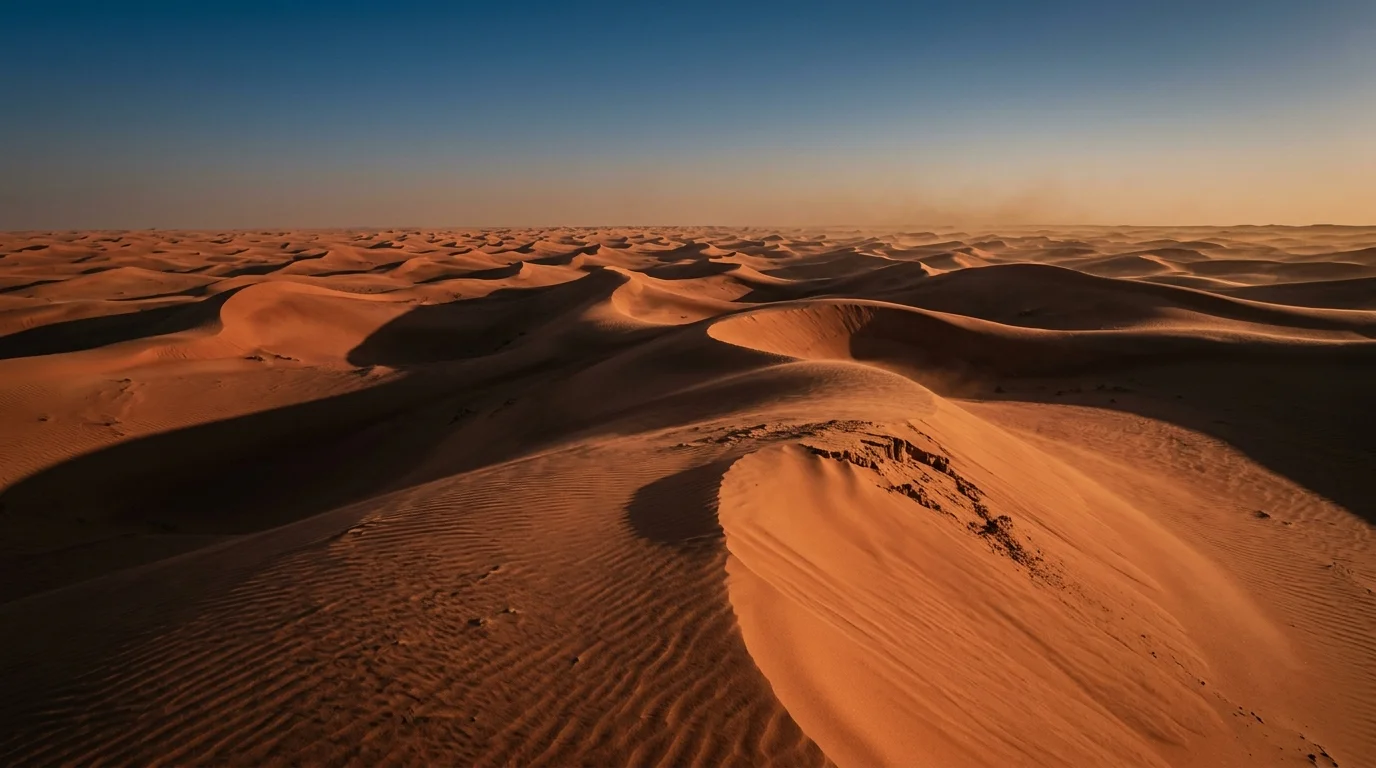
I had a list of opinions about Dubai before I arrived.
Most of them were things I’d absorbed from other people who’d never been either: air-conditioned excess, constructed glamour, the mall where you ski indoors next to a shopping centre the size of a small country. I packed my bag with a mild sense of superiority about being the kind of traveller who doesn’t particularly care about luxury or spectacle.
I stood under the Burj Khalifa at sunset on day two and revised several things.
The Burj Khalifa: just go, even if you think you don’t want to
828 metres. The tallest structure in the world, by a considerable margin. Visible from most of the city, which means you’re in a constant dialogue with it whether you want to be or not.
I booked the 124th floor observation deck (At The Top) about a week in advance and went in the late afternoon. The city visible below is staggering not because it’s beautiful in a conventional sense but because it’s ENORMOUS, and the desert visible beyond the edge of it makes the scale even more apparent. Dubai built a city that dense and that tall in forty years. There’s something genuinely strange about that fact when you’re standing above it.
The sunset from up there. I’m not going to oversell it. But I will say that I stood at the window for longer than I expected to, and that doesn’t happen to me very often.
Book in advance. Walk-up tickets cost significantly more and the queue is real. The online rate is around AED 149 for standard timing; golden hour slots (an hour before sunset) cost more and are worth it.
The old Dubai that everyone forgets to see
Before the towers, Dubai was a trading port on a tidal creek. Al Fahidi Historical Neighbourhood (sometimes called Al Bastakiya) is the original city: wind towers, courtyard houses, narrow lanes, no cars. The wind towers are passive cooling systems, four-sided structures on rooftops that catch the breeze from any direction and funnel it down into the rooms below. In a city with no air conditioning, this was everything.
The Dubai Museum in the Al Fahidi Fort tells the history of the trading port and the fishing village that preceded the current city. It’s cheap to enter and worth an hour. The permanent exhibition includes a full diorama of old Dubai life that’s unexpectedly moving.
The Creek abra. Take the traditional dhow water taxi across Dubai Creek from Al Fahidi to Deira. It costs three dirhams (about 80 cents) and takes five minutes and uses the same wooden boats that have crossed here for generations. The Dubai skyline behind you as you cross is quite something when you’ve just walked out of the 1800s-era old quarter.
The souks. On the Deira side: the gold souk (a covered arcade of gold jewellery at a density that’s almost theatrical; UAE jewellery is sold by weight of gold at market rate plus a small making charge, which is more transparent than most places) and the spice souk two blocks away (saffron in bulk quantities, dried limes, frankincense in bags, cardamom). The spice souk smells correctly. Buy the dried limes. They’re excellent in cooking and cost almost nothing.
The desert: the part that doesn’t feel constructed
Forty-five minutes southeast of the city, the desert starts. Proper desert. Red dunes, silence, the complete absence of the construction that defines Dubai’s skyline.
A desert safari is the standard way to experience it and it’s one of the things in Dubai I’d recommend without caveats. The evening safaris typically include dune bashing (4WD vehicles on the dunes, which is exhilarating or terrifying depending on your relationship with gradient), a camel ride that covers about 200 metres and takes three minutes but is still oddly satisfying, and dinner at a Bedouin-style camp under the stars with oud music and a fire.
The stars. Dubai’s light pollution mostly stays to the north. In the desert, away from the city, the sky is clear in a way that doesn’t match the surrounding context of tower cranes and luxury developments. I sat at the camp after dinner and looked at the Milky Way for a while and thought about how none of this makes sense and all of it happened simultaneously.
Book through a company that uses smaller groups. The large tour buses arrive, do the same activities in bulk, and leave. A smaller 4WD group with a knowledgeable guide is a different experience. The price difference isn’t large.
Where to eat (actually eat, not just take photos of the view)
Dubai’s food scene is international by default. Emirates has passengers from 150+ countries; the city has restaurants for most of them.
Al Ustad Special Kabab. On Al Dhiyafa Street in Satwa, run by the same Iranian family since 1978. The lamb kebab with saffron rice and grilled tomato is what you order. The bread is baked fresh and large and arrives warm. The bill is modest. This is the meal I think about when I think about Dubai.
The Ravi Restaurant. Pakistani restaurant near the Satwa roundabout, open since 1978 (same year, different street, different cuisine). The mutton karahi, dal tadka, and parathas are the order. Queue at the counter, find a table, eat with your hands if that’s how you eat. Around AED 20 for a full meal.
The fish market. Dubai Fish Harbour on the Deira waterfront. Not a restaurant. A wholesale fish market, operating from early morning. Enormous, fragrant, the catches from the Gulf laid out in rows. Some of the nearby restaurants will cook what you buy to your specification. This requires a bit of persistence to arrange but it works.
Brunch. Dubai’s Friday brunch culture is specific to the city and deserves mention: hotels compete to offer the most excessive multi-hour buffet experience in the world, often with unlimited beverages included, priced accordingly. It is an absurd amount of food. If you’re here on a Friday and want to understand one very specific local institution, book one.
What to know before you go
The heat. Summer (June to September) in Dubai is genuinely extreme: 40+ degrees Celsius with high humidity. Most of the city is indoors and air-conditioned, which is how it functions, but being outside for extended periods is unpleasant. The best travel window is October to April. December and January evenings are actually cold. Dress accordingly.
Ramadan. During Ramadan, eating, drinking, and smoking in public during daylight hours is restricted. Restaurants open after sunset (iftar). The city has a different energy during this period: quieter during the day, festive and busy at night. Not a bad time to visit if you understand the context.
Dress codes. Outside of the beach and pool, modest dress is expected in public areas, malls, souks, and mosques. Shoulders covered, knees covered. Dubai is more relaxed than other parts of the UAE on this, but the guidance is real and worth following.
Connectivity. Dubai has excellent 4G/5G coverage. The two main providers are Etisalat (e&) and du. VoIP apps (WhatsApp calls, FaceTime, Skype) are officially restricted in the UAE through standard SIMs. If you rely on these, an international eSIM running through foreign servers can work around this; I’ve tested the main options for UAE connectivity in my eSIM guide for UAE travel.
What Dubai is
Dubai is a city that was willed into existence by policy and capital and enormous numbers of people from everywhere in the world who came to build it and work in it.
It doesn’t fit neatly into categories. It’s not a cultural capital in the way that Istanbul or Tokyo is. It’s not a nature destination. It’s not ancient. It’s a forty-year-old city in the middle of a desert that decided to have the tallest building, the largest mall, an indoor ski slope, and a gold souk all within a few kilometres of each other.
Once you stop measuring it against a different city and just measure it against itself, it gets more interesting.
The old creek. The desert at night. The souks in the morning before the heat arrives. The view from the 124th floor at exactly the moment the light changes.
I went as a cynic. I came back something more like a convert, or at least a grudging fan.
That seems like a decent outcome for four days.
More from the region
Heading to UAE? Sort your eSIM first.
I've compared the main providers, checked the real pricing, and put together a guide on the best eSIM options for UAE.
Best eSIM for UAE →