eSIM vs Physical SIM vs International Roaming: Which One Actually Makes Sense?
 Mika Soren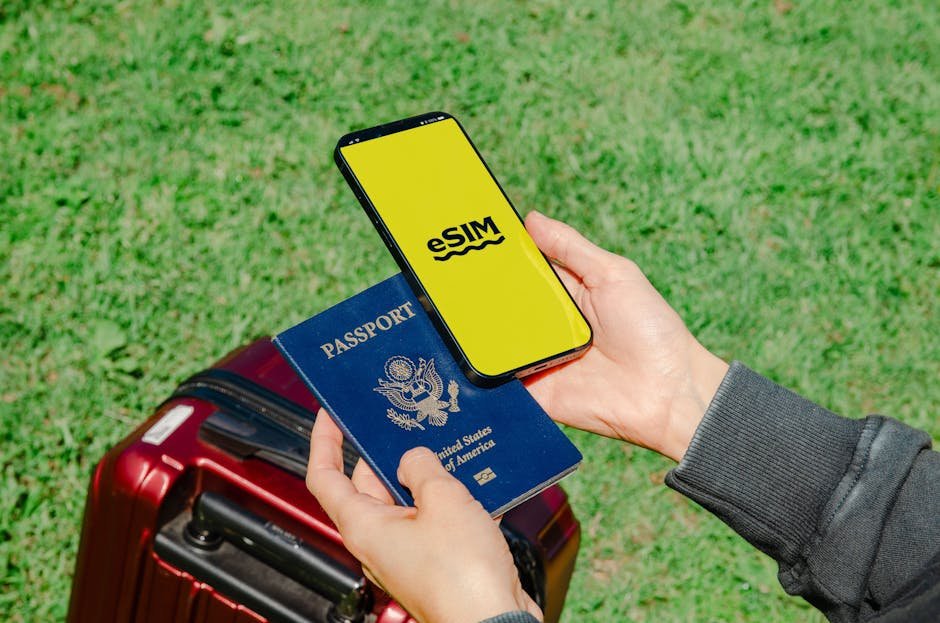
eSIM vs Physical SIM vs International Roaming: Which One Actually Makes Sense?
I have a small plastic bag in my desk drawer. It contains fourteen physical SIM cards from fourteen countries, each one carefully saved in case I ever needed it again. I have never needed any of them again. They sit there like tiny monuments to a time before I discovered eSIMs, back when “getting connected abroad” meant standing in an airport queue, handing my passport to a stranger, and hoping I’d picked the right plan.
I’ve used all three options: eSIMs (my current default), physical SIM cards (my old default), and international roaming (exactly twice, both times by accident, both times expensive). After 47 countries, I have STRONG opinions about which one wins and when.
This is the honest breakdown.
The quick answer
For most travelers in 2026: eSIM wins. It’s faster, cheaper than roaming, more convenient than physical SIMs, and works in the vast majority of countries. The only reason to choose something else is if your phone doesn’t support eSIM (increasingly rare) or you’re going somewhere with very limited eSIM provider coverage (also increasingly rare).
But “most travelers” isn’t everyone. So let’s break it down properly.
Option 1: eSIM
An eSIM is a digital SIM card built into your phone. You buy a plan online, scan a QR code, and your phone connects to local networks in your destination country. No physical card, no airport queue, no tiny metal tray you’ll inevitably drop on the floor.
How it works:
- Buy a plan from a provider like eSIMply before your trip
- Scan the QR code they send you (or install via their app)
- The eSIM profile downloads onto your phone
- Activate it when you land
- Your phone connects to local networks
Cost: Typically $5-25 for 1-10GB, depending on the country. European and Asian plans are cheapest. US and Canadian plans cost more. Competitive with or cheaper than physical SIM cards in most markets.
Pros:
- Install before you leave home (no airport scramble)
- Dual SIM means your home number stays active
- Switch between plans instantly for multi-country trips
- No physical card to lose, break, or jam in the tray
- Instant delivery (buy at midnight, install immediately)
- Can store multiple eSIM profiles for future trips
Cons:
- Requires a compatible phone (iPhone XS/2018 or newer, most Android flagships from 2020+)
- Needs Wi-Fi for initial installation
- Some countries have limited provider options
- Can’t physically hand it to someone else (it’s locked to your device)
Best for: Most travelers. City trips, multi-country itineraries, anyone who wants to land with data ready. Basically everyone with a compatible phone.
Option 2: Physical SIM card
The original. A small chip you insert into your phone’s SIM tray. You buy one at the airport, a local shop, or a carrier store in your destination country. It connects you to local networks just like an eSIM, but with a physical component.
How it works:
- Arrive at your destination
- Find a SIM card vendor (airport, convenience store, carrier shop)
- Buy a prepaid plan
- Pop out your home SIM, insert the new one
- Activate (sometimes requires passport registration)
Cost: Varies wildly. $5-30 depending on the country and where you buy. Airport kiosks are typically the most expensive. Convenience stores and carrier shops are cheaper. Some countries (India, Indonesia) have lengthy registration processes that add time but not cost.
Pros:
- Works with any unlocked phone (no eSIM compatibility needed)
- Physical product you can see and hold
- Available in nearly every country on Earth
- Local vendors can help with setup in person
- Sometimes includes local call minutes and SMS
Cons:
- You have to physically be there to buy one
- Requires removing your home SIM (losing your home number temporarily unless your phone has dual physical SIM support)
- Airport SIM kiosks charge premium prices
- Language barriers when buying in some countries
- The tiny SIM tray tool that came with your phone is in a drawer at home
- Risk of getting scammed or upsold by aggressive airport vendors
- Registration requirements in some countries can take 30+ minutes
Best for: Travelers with older phones that don’t support eSIM. Budget travelers in countries where physical SIMs are significantly cheaper. Extended stays where a local SIM with call minutes makes sense.
Option 3: International roaming
Your existing home carrier extends your service to the country you’re visiting. You don’t change anything on your phone. You land, it connects to a local partner network, and your carrier charges you for the privilege. Usually a lot.
How it works:
- Check if your carrier offers an international roaming package
- Either buy a roaming package before you go or just turn on data and hope for the best
- Land at your destination
- Your phone automatically connects to a partner network
- Your carrier bills you at roaming rates
Cost: This is where it gets painful. Without a roaming package: $5-20+ PER MEGABYTE in some cases. With a carrier roaming package: $10-15 per day in many countries, or $40-60+ per week. Compare that to a $10 eSIM that gives you 5GB for two weeks. The math is not subtle.
Pros:
- Zero setup required (it just works when you land)
- Keeps your home phone number fully active for calls and texts
- No need to change anything on your phone
- Some premium plans include international roaming (check yours)
Cons:
- Dramatically more expensive than eSIM or physical SIM
- Bill shock is real and common
- Roaming speeds are often throttled
- Some carriers have confusing daily/weekly rate structures
- Accidental roaming charges from background apps
- Not all carriers have good partner networks in every country
Best for: Very short trips (overnight layover) where the convenience outweighs the cost. Business travelers whose company pays the bill. People who genuinely need their home phone number active for calls (not just WhatsApp).
Side-by-side comparison
| Feature | eSIM | Physical SIM | Roaming |
|---|---|---|---|
| Setup time | 3-5 min at home | 15-60 min at destination | 0 min |
| Cost (1 week, 5GB) | $8-20 | $5-25 | $40-100+ |
| Need compatible phone? | Yes (2018+) | Any unlocked phone | Any phone |
| Keep home number active? | Yes (dual SIM) | Usually no | Yes |
| Available before arrival? | Yes | No | Yes |
| Multi-country flexibility | High (regional plans, easy switching) | Low (new card per country) | Medium (depends on carrier) |
| Risk of surprise charges | Low (prepaid) | Low (prepaid) | HIGH |
| Language barrier | None (buy online) | Sometimes | None |
When each option wins
eSIM wins when:
- You have a compatible phone (most phones from 2018+)
- You want data ready the moment you land
- You’re visiting multiple countries
- You want to keep your home number active
- You value convenience and predictable pricing
Physical SIM wins when:
- Your phone doesn’t support eSIM
- You’re on an extended stay (months) and want a local number
- You need local call minutes and SMS (not just data)
- You’re in a country where physical SIMs are dramatically cheaper
- You want to hand a SIM to someone else (like a travel companion)
Roaming wins when:
- You’re on a very short trip (24-48 hours) and can’t be bothered with setup
- Your employer pays your phone bill and you don’t care about the cost
- You specifically need to receive calls on your home number (not WhatsApp)
- Your carrier has a genuinely good international plan (rare but they exist)
The hybrid approach (what I actually do)
Here’s my real setup for most trips:
-
eSIM for data. Buy a plan from eSIMply before I fly. Install at home. This handles all my internet needs: maps, messaging, social media, everything.
-
Home SIM stays active. My Australian SIM sits in the physical SIM slot. It handles texts and calls from home. Dual SIM means both work simultaneously.
-
WhatsApp for calls. I make all my calls over WhatsApp or FaceTime using the eSIM’s data connection. This is free and works everywhere.
-
Roaming disabled. I turn off data roaming on my home SIM to prevent any accidental charges. It only uses Wi-Fi or nothing.
This gives me the best of everything: local data speeds, my home number active, free calls, and zero surprise charges. It’s the setup I recommend to everyone.
Common objections (and my honest answers)
“eSIMs seem complicated.”
They’re really not. If you can download an app and take a photo, you can install an eSIM. The first time takes five minutes. After that, it’s three minutes. I’ve installed over 30 of them.
“What if the eSIM doesn’t work when I land?”
This has happened to me exactly once in 47 countries (a network issue in rural India that resolved itself after a phone restart). If it genuinely doesn’t connect, restart your phone, check your APN settings, and contact the provider. It’s the same troubleshooting you’d do with any connectivity issue.
“Physical SIMs are cheaper in some countries.”
True in a few places (India, Thailand, Indonesia). But the price difference is usually $2-5, and you’re paying for that savings with your time (airport queue, registration, language barrier). For most people, the convenience premium of an eSIM is worth it.
“I don’t want to lose my home SIM.”
You don’t. That’s the entire point of eSIM + dual SIM. Your home SIM stays in your phone. The eSIM is digital. Nothing gets removed, nothing gets lost.
Frequently asked questions
Can I use an eSIM and a physical SIM at the same time?
Yes. This is called dual SIM and it’s exactly how most travelers use eSIMs. Physical SIM for your home number, eSIM for travel data. Both active simultaneously.
Is an eSIM the same speed as a physical SIM?
Yes. An eSIM connects to the same networks at the same speeds. The technology is identical. The only difference is whether the SIM profile is on a physical chip or a digital one.
Can I switch back to my physical SIM after my trip?
You don’t need to switch. Your physical SIM stays active the whole time. When your trip ends, just turn off the eSIM and your phone goes back to using your home SIM for everything. The eSIM profile stays on your phone in case you want to reactivate it later.
What about Google Fi and similar international plans?
Google Fi, T-Mobile’s international plans, and similar offerings are a form of carrier roaming. They’re better than traditional roaming rates but typically more expensive than buying a dedicated eSIM. If you already have one of these plans and the pricing works for your trip, there’s nothing wrong with using it. But for most travelers, a dedicated travel eSIM is cheaper.
My take
I’ve used all three options across six continents. Physical SIMs were great before eSIMs existed. International roaming has always been expensive and almost never worth it. eSIMs are the clear winner for the vast majority of travelers in 2026.
The technology is mature, the pricing is competitive, the setup is easy, and the convenience of landing with data already working on your phone is genuinely life-improving. It’s not exciting technology. It’s not something you’ll tell your friends about over dinner. But it quietly makes every single trip better.
If your phone supports eSIM (and if you’ve bought a phone in the last five years, it almost certainly does), there’s no good reason to choose anything else for travel data.