What three trips to France taught me about actually eating well there
 Mika Soren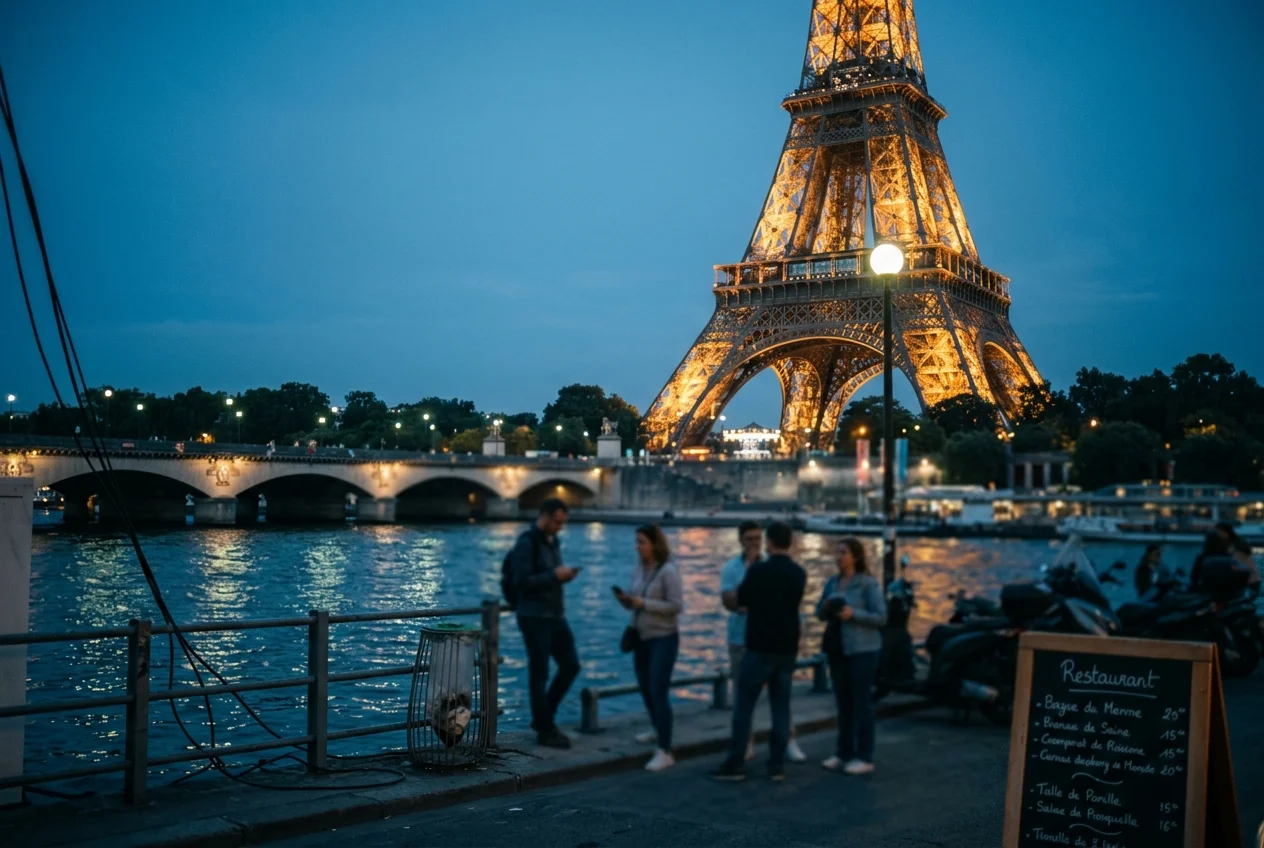
The first time I went to Paris, I ate badly for a week straight and I have nobody to blame but myself.
I did everything you’re supposed to do. Went to the places in the guidebook. Sat outside because it looked nice in photos. Ordered the croque-monsieur from a place with a laminated menu because I didn’t know any better.
The croque-monsieur tasted like sadness between two pieces of bread that had never met butter in their lives.
I got home, told people Paris was “fine,” and felt vaguely cheated.
The second trip, I knew better. The third trip, I ate so well I genuinely considered not leaving.
Here’s what changed.
The rule that fixed everything
Stop looking at menus from the street.
That sounds obvious now but it genuinely wasn’t to me at first. In Paris especially, the restaurants that are trying to catch tourists put their menus in the window with photos and English translations. The restaurants where locals actually eat don’t need to. You either know about them or you don’t. Walk past the places with photos of the food in the window. Look for the handwritten specials board. Look for the tables that are actually full at lunchtime.
That’s it. That’s the whole thing.
Paris: the places I keep going back to
Le Marais for mornings. I stay near Le Marais whenever I can now, specifically because of the breakfast situation. There’s a pastry shop on Rue de Bretagne (I’m not going to name it because it’s already full enough) that makes a kouign-amann that I think about at embarrassing frequency. Get there before 9am. Get a black coffee and something with a lot of butter and sit outside if the weather allows.
The covered markets. Marché des Enfants Rouges in Le Marais is the one I always take people to. It’s Paris’s oldest covered market and it is PACKED on a Saturday morning. Moroccan food, Japanese food, Italian food, actual French food. Get there when it opens, grab a standing-room spot at one of the food stalls, eat something messy. This is not a tourist attraction that happens to have food. It’s a place where people actually eat lunch, and you get to be one of them.
Bistros in the 10th and 11th. These two arrondissements have what I think of as the real Paris restaurant scene right now. Nothing precious. Good wine lists. The kind of place where you can order the omelette at 9pm without anyone looking at you sideways. Le Servan on Rue Saint-Maur is the one I recommend to everyone. It’s always full. Book ahead.
Canal Saint-Martin on a Sunday. Not for a specific restaurant, just for the vibe. Buy wine and cheese from a shop on the canal, find a spot on the bank, sit there for two hours. You’ll see roughly 400 people doing the exact same thing. It’s perfect.
Lyon: the city that made Paris feel like it was trying too hard
I went to Lyon because someone dared me to, essentially. I’d been saying “Paris is great but I want something more local” for years and my friend basically called my bluff by buying me a train ticket.
Lyon is a two-hour TGV from Paris and it is, without question, the best food city in France.
Possibly Europe.
I’m aware that’s a take. I stand by it.
The thing about Lyon is that the food culture is built around the bouchon, which is a type of traditional Lyon restaurant that serves hearty local food (offal, sausages, gratins, a lot of things your cardiologist would side-eye) in a room that usually fits about thirty people maximum. The bouchons are certified by an association that takes this extremely seriously. Look for the “Authentique Bouchon Lyonnais” plaque by the door.
Daniel et Denise on Rue de Créqui is where I had the quenelles de brochet (pike fish dumplings in a cream sauce) that genuinely made me reconsider my entire relationship with French food. I’d been avoiding the “heavy” dishes for years and thinking lighter meant better. Wrong. Completely wrong.
Les Halles de Lyon Paul Bocuse is the indoor market on Cours Lafayette and if you go to Lyon and don’t go there, you have made an error. Cheese counters, charcuterie counters, praline tart stands, wine merchants, proper oyster bars at 10am where businesspeople are already having champagne. It’s a whole thing. Budget a morning.
One more Lyon tip: the traboules. These are the passageways that cut through the old buildings in Vieux Lyon and Croix-Rousse, some of them hundreds of years old. You walk through a door in a wall and suddenly you’re in a courtyard, then another door, then a completely different street. They’re not widely signposted on purpose. Ask the people at your accommodation for a map. Wander for an afternoon without a plan.
Provence: the farmhouse, the market, and slowing all the way down
The Provence trip was the most accidental one.
I’d been in Paris for ten days on a work trip (yes, digital nomads have work trips, it’s complicated) and I had two weeks free afterward and I didn’t have a strong opinion about what to do with them. A friend offered me a farmhouse outside Apt, in the Luberon, for a flat fee. No neighbours. No agenda. A car.
I said yes before she finished the sentence.
The Luberon in late September is, and I mean this, one of the most beautiful places I’ve ever been in a way that’s hard to describe without sounding like a wine advert. Rolling hills, lavender fields (mostly over by September but the smell is still in the air), stone villages perched on hilltops. The light does something in the late afternoon that makes you want to just stop walking and look at it for a while.
The Friday market in Apt. This is apparently the biggest market in Provence and it genuinely takes over the entire town. Every Friday from early morning. Olives, honey, cheese from farms you’ve never heard of, tapenade, lavender products you’ll buy and never use, an extraordinary amount of pottery. I went every Friday for two weeks and found something new every time.
The village markets elsewhere in the region. Almost every village in the Luberon has a weekly market. Gordes on Tuesday. Bonnieux on Friday mornings. Lourmarin on Friday. Pick a village, get there early, buy whatever looks good, find a bench, eat it.
Eating at the farmhouse. This sounds like nothing but it was actually revelatory. I started shopping at the markets and cooking properly for the first time in years. I made ratatouille with vegetables from a farm stand outside Apt. I ate it on the terrace at 8pm watching the sky go dark.
Reader, I almost cried.
The two weeks I was there, I covered roughly forty kilometres of territory total. I kept thinking I should go to more places, do more things. I never did. I don’t regret it even slightly.
A few practical things
Get a Navigo Découverte card for Paris. It’s the weekly transit pass. Covers everything. Makes the metro and RER effortless. Buy it at any metro station on arrival and you will immediately feel less like a tourist.
Eat lunch like a local. The prix fixe lunch (called a “formule”) is how French people eat out during the week. Two or three courses, fixed price, usually excellent value compared to the dinner menu. Often the exact same kitchen producing the exact same food. Go to places you’d otherwise consider too expensive for dinner, at lunch, and eat like you deserve it.
Learn a few words, use them every time. “Bonjour” when you walk in. “Merci” when they bring things. “L’addition, s’il vous plaît” when you want the bill. French people are genuinely much warmer when you at least attempt this. I say this as someone who has been attempting French for five years and still sometimes accidentally asks for the bathroom when I want water.
The TGV is genuinely great. Paris to Lyon: two hours. Paris to Marseille: three and a bit. Getting between French cities by train is fast, comfortable, and takes you directly into the centre rather than to an airport forty kilometres away. Do not rent a car unless you specifically need one outside the cities.
On staying connected
France has excellent mobile coverage across Paris and the major cities. The TGV has wifi (patchy, but it exists). Rural Provence is where you’ll notice the difference. Signal in the village of Apt was fine. The farmhouse I was staying in, down a small road outside town, had one bar on a good day.
That’s a very French problem to have and I’m not complaining.
If you’re sorting out data before a France trip, I’ve tested five providers and written up which eSIM actually works best in France with real 2026 pricing. Short version: rural Provence will humble any plan. Get more data than you think you need.
The third France trip ended with me at Charles de Gaulle airport at 6am, eating a croque-monsieur from one of the terminal cafés, and actually enjoying it because I knew by then that it wasn’t the fault of the dish, only the circumstances.
Even airport food tastes better when you’ve just had two weeks in Provence.
Go to France. Eat the lunch formule. Take the TGV to Lyon. Find the farmhouse eventually.
That’s the whole advice.
More from the region
Heading to France? Sort your eSIM first.
I've compared the main providers, checked the real pricing, and put together a guide on the best eSIM options for France.
Best eSIM for France →