Hong Kong is a city I can't fully explain: the density, the food, the mountains in the middle of it
 Mika Soren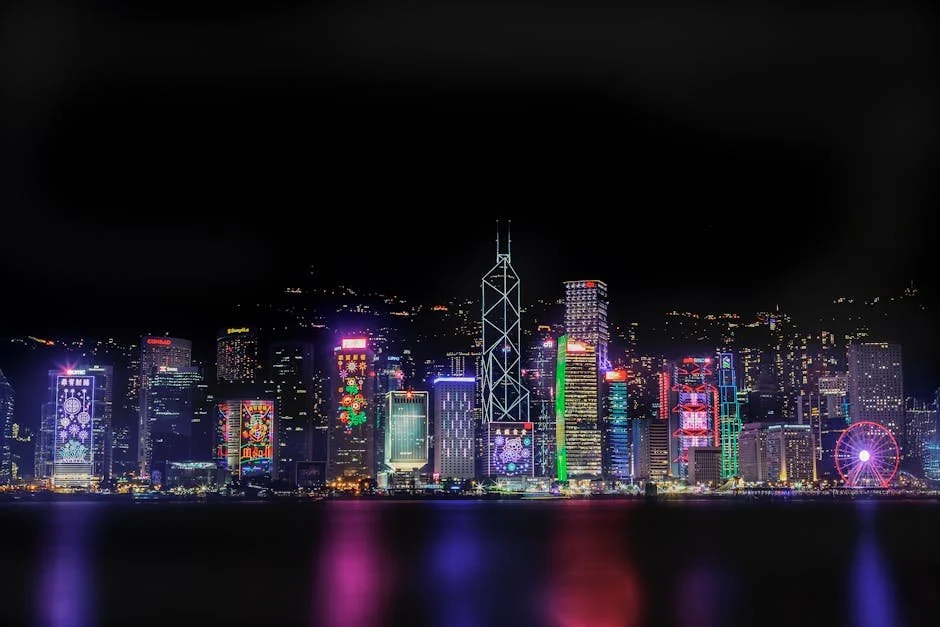
Hong Kong is a city I find very difficult to explain to people who haven’t been.
Not because it’s obscure. Because it’s so many things simultaneously that any single description is inadequate: British colonial history overlaid on Chinese culture overlaid on global financial centre overlaid on one of the world’s great food cities, all compressed into 1,100 square kilometres of which most is mountains and water and only a fraction is the city you’ve seen in photos.
I was there for four days and I needed eight.
The density as an experience
Hong Kong has a population density in its urban areas that requires recalibrating your scale for what cities are. The Kowloon area has approximately 44,000 people per square kilometre. Walk down Nathan Road in Mongkok and the crowds and the signage and the noise are a physical thing, not just an observation.
This sounds like a warning. It isn’t.
It’s one of the defining experiences of the city and after two days you start to move through it differently. Your pace adjusts. You learn the MTR’s rhythm. You find the side streets.
The MTR. One of the best metro systems in the world: clean, punctual, air-conditioned, covers everything relevant. The Octopus card works on all transit and at convenience stores and many restaurants. Get one at the airport.
The Octopus card for food. Many of the faster restaurants and cha chaan tengs (the Hong Kong diners) take Octopus. Useful.
The food, which is why you’re really here
Hong Kong is one of the great eating cities of the world and I say this having considered the competition carefully.
Dim sum. The Cantonese dim sum tradition is at its highest expression in Hong Kong: trolleys navigating between tables in traditional teahouses, ordering by pointing, the har gow (shrimp dumplings) and siu mai (pork and shrimp) and char siu bao (barbecue pork buns) and cheung fun (rice rolls) and turnip cake and all of it arriving in stacked bamboo steamers. The Lin Heung Tea House in Sheung Wan is the traditional choice (been operating since 1926, chaotic, sharing tables with strangers, the real thing). Go on a weekend morning and wait for a seat.
Cha chaan teng (Hong Kong diners). The uniquely Hong Kong hybrid cafés that emerged from British influence meeting Chinese food culture: milk tea (made with black tea and evaporated milk, stirred vigorously, served hot or cold, the best in the world), pineapple buns (bo lo bao: no pineapple, named for the appearance of the glazed top, eaten with a thick slab of cold butter melting inside), egg tarts, the set breakfast with toast and scrambled eggs. The Tsui Wah chain is reliable; the local neighbourhood versions are better.
Roast meats. The Cantonese roast meat tradition: char siu (red-tinged barbecue pork), siu yuk (crispy roasted pork belly), soy sauce chicken, roast duck. All displayed hanging in restaurant windows. All served over rice or noodles. All correct.
Sham Shui Po. A working-class Kowloon neighbourhood with some of the most concentrated street food and market activity in Hong Kong: the Apliu Street electronics market, the fabric and button districts, the stalls selling cheung fun and curry fish balls and egg waffles (gai daan zai) from street carts. This is the neighbourhood I spent the most time eating in.
The Peak and the hike
Victoria Peak: the mountain at the top of Hong Kong Island, accessible by the Peak Tram (the funicular that has run since 1888) or by hiking.
The Peak Tram is excellent: the angle of the ascent, the city appearing at different angles as you rise. Go at dawn before the crowds. The view from the Peak itself on a clear morning, with the towers of Hong Kong Central below and Kowloon and the harbour and the outlying islands beyond: this is the view.
The Peak Circular Walk. The path that runs around the Peak at the 400-metre contour: mostly flat, about 3km, the forest on the hillside and the towers visible below through the trees. Possible to start the hike from Central (the Hatton Road route) and emerge at the Peak. Allow 2 hours up from the bottom.
The Dragon’s Back trail. On the southeast side of Hong Kong Island, accessible from Shek O village: a ridge walk with views over the South China Sea and the outlying islands. One of the best urban hikes I’ve done: the trail runs along an exposed ridge with the sea on both sides and the city visible over your shoulder. Descend to Big Wave Bay for a swim.
The ferry and the street art
The Star Ferry. The cross-harbour ferry between Kowloon and Hong Kong Island has run since 1888 and is one of the cheapest, most pleasant ways to see the harbour: HK$3.20 for the lower deck, the city on both sides, the view of the skyline that looks exactly like the photos and better.
The trams (ding ding). The double-decker trams running along the north shore of Hong Kong Island: one of the cheapest and most atmospheric ways to see the Hong Kong Island streetscape. Slow, always the right pace.
PMQ. The converted former police married quarters in Central: now an arts and design centre, boutiques, studios, the courtyard with food trucks and the surrounding galleries. The building itself, from the 1950s, is worth looking at.
The outlying islands
A 25-minute ferry from Central brings you to Lantau Island: the Tian Tan (Big Buddha) statue at Po Lin Monastery, the cable car up from Tung Chung, the Po Lin vegetarian lunch at the monastery (a fixed menu, very good, eaten in a large dining hall with other visitors).
The fishing village of Tai O on the west coast of Lantau: houses on stilts over the water, the shrimp paste industry that has operated here for generations, the narrow channels with the small boats.
Lamma Island, 30 minutes by ferry: the seafood restaurants on the waterfront at Yung Shue Wan, the hike across to the other side, the absence of cars.
Practical things
Cantonese. The primary language in Hong Kong, not Mandarin. English is widely spoken in commercial areas, hotels, and with younger people. Less so in the street markets and traditional restaurants.
The heat and humidity in summer. May-September: very hot (32-36°C) and very humid. The MTR and shopping malls are extremely air-conditioned. This is the city’s compromise with its climate.
Costs. Hong Kong is expensive, particularly for accommodation. Food, transport, and activities are more reasonable; the hawker stalls and cha chaan tengs are extremely affordable.
Coverage in Hong Kong is excellent. Among the world’s best mobile networks. An eSIM is the straightforward solution. I’ve put together a guide to eSIMs for Hong Kong with current pricing.
Hong Kong is a city I find very difficult to explain.
Go for four days. Leave wanting eight.
That’s probably the right way to do it.
More from the region
Heading to Hong Kong? Sort your eSIM first.
I've compared the main providers, checked the real pricing, and put together a guide on the best eSIM options for Hong Kong.
Best eSIM for Hong Kong →