The international travel checklist: what to do 6 weeks out, 2 weeks out, the day before, and at the airport
 Mika Soren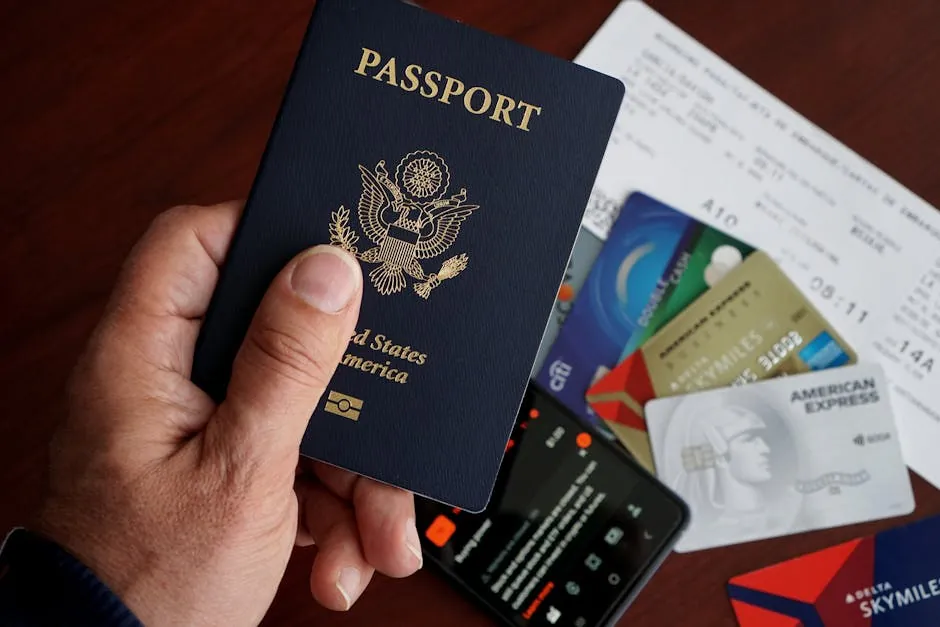
I missed a visa requirement once. Not the visa itself (got that fine). A specific supporting document for the visa application that I only discovered was required when I went to submit my application and found a field labeled “proof of onward travel” that I didn’t have filled in.
This was two days before my flight.
I spent an afternoon booking and then canceling a refundable onward ticket, submitting the application, and refreshing the approval page approximately every six minutes until it came through. My flight was fine. My blood pressure was not.
The thing is: this is entirely a timing problem. If I’d gone through the process six weeks out instead of two weeks out, I would have found the onward travel requirement with plenty of time and zero drama.
International travel has a fixed set of things that need to happen. Almost all the stress comes from doing the right things too late. Here’s the sequence.
6 weeks before departure
Passport check. Does your passport expire within 6 months of your return date? Many countries require at least 6 months of validity beyond your stay, not just the duration of the trip. If you need to renew, do it now. Passport renewal times vary by country and can run 3-6 weeks or longer during busy periods.
Check that you have at least 2 blank pages (preferably more). Some countries want a full empty page for their stamp. Multiple countries in the same trip can fill up pages faster than expected.
Visa research. Do you need a visa for your destination? For your nationality, for EACH country on the itinerary? Check the official immigration site for each destination, not third-party summaries that may be out of date. If you need a visa, read the full requirements now. Common requirements that catch people out:
- Proof of onward travel (a return or connecting flight ticket)
- Hotel booking confirmation for the full stay
- Bank statements showing sufficient funds
- Invitation letter or travel itinerary
- Specific photo dimensions that don’t match your existing passport photo
E-visa vs visa on arrival vs pre-registration. Some countries offer e-visas (applied for online, approved before travel). Some offer visa on arrival (get it at the airport, sometimes with fees, sometimes with queues). Some require you to pre-register or fill out an arrival form online before you land. These are three different systems and the requirements are different. Confirm which category your destination uses.
Notable current requirements (as of 2026):
- US: ESTA for visa-waiver countries, applied for online, valid for 2 years (not a visa but required for entry from eligible countries)
- UK: ETA (Electronic Travel Authorisation) for many nationalities post-Brexit
- EU Schengen countries: ETIAS launch expected; check current status for your nationality
- Japan: visa required from some nationalities, e-Visa option expanded significantly
- Australia: ETA for eligible passports, e-Visa for others, specific visa for most
- India: e-Visa for most nationalities, applied 4-30 days before travel
Vaccinations. Some countries have entry requirements for specific vaccinations. Yellow fever is the most common: several sub-Saharan African countries and some South American countries require proof of yellow fever vaccination for entry if you’ve been in a yellow fever zone in the previous 10 days, or simply require it for all visitors. You’ll need an official yellow fever vaccination card (the yellow booklet), not just a record.
Beyond required vaccinations, recommended vaccinations for certain regions include Hepatitis A, Hepatitis B, typhoid (South Asia, Southeast Asia, Africa, parts of Latin America), rabies pre-exposure (if you’ll be in remote areas or around animals), Japanese encephalitis (rural Southeast and East Asia). Travel health clinics are the best resource; they’re current on outbreaks and can give personalized recommendations. Book now. Some vaccines require multiple doses over several weeks.
Travel insurance. Sort this now, not the night before you leave. Read what’s covered and what isn’t. Key things to check: medical cover amount (at minimum $1 million for US and anywhere with expensive private healthcare), medical evacuation cover, trip cancellation and interruption, pre-existing condition exclusions. If you take prescription medication, check whether it’s covered. If you’re doing anything adventurous (skiing, diving, hiking above a certain altitude, motorcycle riding), confirm the activity is included. Many “standard” policies exclude everything that’s vaguely fun.
2 weeks before departure
Sort your data connectivity. This is the thing that’s most useful to sort in advance and most often left to the last minute or the airport, where options are limited and expensive.
For most countries, an eSIM activated in advance is the simplest solution. You set it up at home with a working internet connection, it activates when you land, and you have data the moment you touch down without looking for a SIM shop. I’ve compared options for most countries I visit. France is a good reference point — popular destination, multiple providers, and the pricing spread is wider than you’d expect. Sort it now.
Inform your bank and cards. Call or use the app to tell your bank you’re traveling, where, and when. Card blocks in a foreign country are genuinely miserable. If your bank has a travel notification function, use it. Also: confirm that your card works for foreign transactions and know what the fees are. Most standard bank cards charge 2-3% on every international transaction. Consider getting a fee-free card (Wise, Revolut, Monzo, Charles Schwab) before you leave if you haven’t already.
Digital document backup. Photograph your passport photo page. Screenshot your travel insurance details including the emergency phone number. Screenshot your visa approvals and hotel confirmations. Save all of these to a cloud folder AND download them to your phone’s local storage. You need this stuff accessible without internet. The “my hotel confirmation is in my email” situation at an immigration counter with no signal is its own kind of adventure.
Prescription medications. Make sure you have enough for the full trip plus a buffer. Some countries have restrictions on specific medications: Japan prohibits certain over-the-counter medications common in Western countries (some cold medications containing pseudoephedrine, codeine), and travelers have had prescriptions confiscated at customs. Indonesia has strict drug laws, including for some prescription medications. Research the rules for your destination before you travel with anything prescription.
If you’re going anywhere with malaria risk, get your malaria prevention prescription and start it on the correct schedule. Doxycycline requires starting 1-2 days before travel. Malarone requires starting 1-2 days before. Lariam requires starting 3 weeks before. These are not interchangeable and the timing is not flexible.
Notify someone of your full itinerary. Not just “I’m going to Vietnam.” Full hotel names, booking references, flight numbers, dates. When they should expect contact from you. What to do if they don’t hear from you.
The day before
Confirm your flight check-in is done. Most airlines let you check in 24-48 hours before departure. Budget airlines in particular can charge significant fees for airport desk check-in. Do it online, save your boarding pass to your phone and as a PDF offline.
Know how you’re getting to the airport. Time the journey, add a buffer for unexpected delays, and get to the airport with time to spare. For international flights, 3 hours before departure is safe. For budget flights with strict checked bag deadlines, earlier.
Pack your carry-on with the liquids rule in mind. Any liquid, gel, cream, or paste in containers over 100ml goes in checked baggage. Your entire liquids allowance for the cabin must fit in one clear ziplock bag. This includes: toiletries, hair products, face creams, sunscreen, drinks. Large containers of nice things are confiscated at security without mercy.
Check the weather at your destination. Not to pack, it’s too late for that, but to know what you’re arriving into. 30 degrees and humid means don’t wear your heavy coat on the plane.
Charge everything. All devices, power bank, AirPods, headphones, Kindle. Everything you have. The plug situation at your destination may take time to figure out; start from full.
At the airport
Allow extra time for:
- Check-in desk queues (if you have checked baggage)
- Security (always unpredictable)
- Long walks between gates (airports like Heathrow, Dubai, Changi are large)
- Immigration/passport control at large airports on arrival
Have accessible:
- Boarding pass (phone or printed)
- Passport
- Any visa documentation or pre-registration confirmation
- Hotel address for your first night (for immigration forms)
- Your data plan confirmed and ready to activate
At security: laptop and tablet out in their own tray, liquids bag out in its own tray, jacket off, metal out of pockets. Move through efficiently. The people behind you will appreciate it.
On arrival: the immigration process
Arrival cards. Many countries give you a form to fill out on the plane or require a digital form completed before landing. Japan’s disembarkation card, India’s e-disembarkation form, Australia’s digital arrival card. Fill these out before you join the immigration queue, not while you’re in it.
Immigration questions. What’s the purpose of your visit (tourism/business/transit). Where are you staying. How long are you there. Answer truthfully and briefly. Don’t volunteer information they haven’t asked for. If you’re asked to show onward travel or hotel bookings, have them in your offline screenshots.
Customs. After baggage claim, you pass through customs. Most countries have red (items to declare) and green (nothing to declare) channels. Common declaration triggers: cash over $10,000 USD or equivalent, commercial goods, certain foods and plants, medications over a standard amount.
Australia and New Zealand: Declare everything on their biosecurity form. Food, plant material, soil on footwear. They take this seriously with significant fines and sniffer dogs. “I didn’t know I needed to declare it” is not a successful defense.
China: Have a VPN set up BEFORE you land. The Great Firewall blocks Google Maps, Gmail, WhatsApp, Instagram, and most Western services. You cannot download VPN apps or visit VPN websites from inside China. This is a day-one mistake made by experienced travelers who forget or don’t know. Do it at home, test it works, then fly.
The specific things people most commonly miss
Yellow fever vaccination card if traveling to/from sub-Saharan Africa or parts of South America. Not the record in your health app. The physical yellow booklet issued by your vaccination clinic.
ESTA/ETA/pre-registrations for countries that don’t require visas but do require advance registration. Often overlooked because “I don’t need a visa” leads to skipping this step.
Forward travel proof for countries that require evidence you’ll be leaving. A booked onward flight or bus ticket. Not always requested but sometimes required and occasionally verified.
Adequate photo ID for connections. If you’re connecting through a country and going through immigration temporarily (US connections, for example), you need your passport, not just the boarding pass.
International driving permit if renting a car in countries that require it. Japan, Germany, South Korea, and others require an IDP in addition to your home license. Get one before you leave (issued by your national automobile association in most countries, usually available same-day, costs around $20-25).
The list looks long. The actual effort, done early, is not. What makes international travel stressful is trying to compress six weeks of logistics into the three days before you leave. Start early, work through the list in order, and by the day before your flight there’s nothing to do except charge your devices and check whether you remembered to pack the adaptor.
You did remember the adaptor.
More on solo & first-time travel