Three weeks in Japan: Tokyo, Kyoto, Osaka, and the food that ruined me for everywhere else
 Mika Soren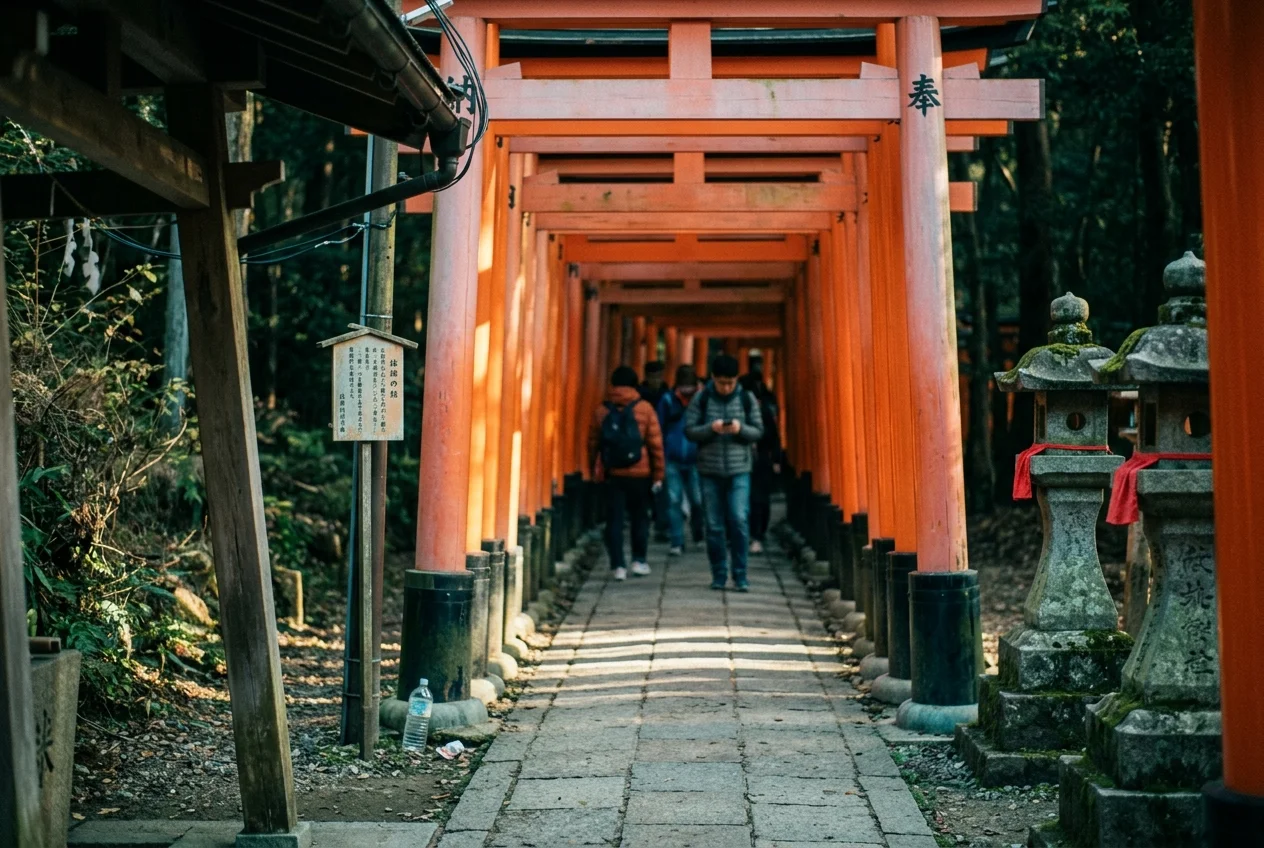
I have a theory about Japan.
The theory is that everyone who goes there comes back slightly broken. Not badly. Just… recalibrated. You eat one bowl of ramen in a tiny ten-seat shop in Shinjuku at 11pm and something shifts in your understanding of what food can be, and then you go home and sit in front of a perfectly acceptable meal and think, quietly, that it is not good enough and it will never be good enough and you need to go back to Japan.
This has happened to me three times now. Each time I go back. Each time it gets worse.
Three weeks the first trip, split between Tokyo, Kyoto, and Osaka. Two weeks the second. A quick week the third time, Tokyo only, which felt like visiting a friend you haven’t seen in a while: familiar but you’re aware of how much you’re missing.
Here’s what I know.
Before you land: one thing to understand about navigating Japan
Japan is the one country where I’d say you genuinely cannot travel comfortably without data.
Not because there’s no Wi-Fi. There is Wi-Fi everywhere: hotels, 7-Elevens, Starbucks, train stations. But the Wi-Fi is patchy and slow and you will need Google Maps constantly, in a way you don’t in most other countries.
Here’s the problem. Japanese signage is beautiful and, if you can’t read kanji, almost entirely useless for navigation. Shinjuku station has around 200 exits. You want to leave through the right one. You want to know this before you’re already standing in the middle of a crowd of commuters trying to rotate your phone 45 degrees to figure out which direction you’re facing.
Get an eSIM with a proper data plan before you fly. I’ve compared the main options and put together a breakdown of the best eSIMs for Japan with real 2026 pricing. Sort it before the flight. Future you will be grateful.
Tokyo: give it more time than you think you need
I gave Tokyo ten days on my first trip because that felt like a lot. It was not enough.
This is not because there are that many specific attractions to tick off. It’s because Tokyo is a city you need to just walk around in for a while before it starts making sense, and making sense takes longer than you’d expect.
Start in Shinjuku, then leave Shinjuku. Shinjuku is where a lot of people stay and it’s fine as a base. But the best version of Tokyo is not in Shinjuku. It’s in the quieter neighbourhoods around it.
Shimokitazawa is where I spent most of my time and where I’d tell anyone to go first. It’s a neighbourhood of vintage clothing shops, small live music venues, coffee roasters in converted spaces, and an atmosphere that feels nothing like what people imagine when they think of Tokyo. No neon. No crowds. Just very good coffee and people flipping through vinyl records at noon on a Tuesday.
Yanaka in the northeast is the other one. This is old Tokyo, somehow mostly intact after everything the city has been through in the last century. Small temples, traditional craft shops, cemetery paths you can wander through in the early morning without seeing another tourist. A street called Yanaka Ginza that still functions as an actual neighbourhood shopping street with fishmongers and tofu shops and a cat sitting outside almost every third door.
Where to eat in Tokyo:
The honest answer is: almost anywhere that has a queue and no English signage outside.
More specifically: the ramen shop near Shinjuku station that has exactly eight seats and a vending machine where you order your ramen before sitting down, which is a system I find both confusing and brilliant. The standing sushi bars in Tsukiji outer market (the old outer market still operates, the inner auction has moved but the food stalls are very much still there). The izakaya under the train tracks in Yurakucho, where the ceiling shakes gently every time the Yamanote Line passes overhead and everyone keeps eating without looking up.
Convenience stores are not a guilty pleasure, they are actual food. The onigiri from 7-Eleven in Japan is genuinely good. The sandwiches are good. The hot foods counter at Lawson is good. The egg salad sandwich from FamilyMart is, without qualification, one of the best sandwiches I have eaten in my life and I include many things in my life’s sandwich count.
Eat from convenience stores without embarrassment. Everyone does.
Kyoto: go early, cycle everywhere, skip the crowds
Kyoto is the obvious contrast to Tokyo. Smaller, slower, built around temples and traditional architecture. The version of Japan that gets used in photos. It’s beautiful and it’s real and it is also extremely crowded in ways that can make the beautiful and real parts hard to access.
The solution: get there early.
Fushimi Inari before 7am. This is the shrine with the ten thousand orange torii gates that goes up a mountain. It is on every list of things to do in Japan and rightly so. It is also absolutely packed from about 9am onwards. I went at 5:45am on a September morning and walked the full path to the top in almost complete silence.
The light through the gates at dawn does something I don’t have adequate words for. Worth every bit of the alarm clock.
Arashiyama bamboo grove: same principle. The bamboo path is very short (about five minutes to walk through) and very beautiful and completely shoulder-to-shoulder by mid-morning. Go at sunrise. The bamboo in the early light and quiet is exactly what you hoped Japan would be.
Cycling as the main mode of transport. Kyoto is extremely bikeable in a way that not enough people take advantage of. I rented a bicycle on my second morning there and basically didn’t get off it for four days. The route along the Kamo River, south to north, is lovely. The backstreets of Higashiyama are far better by bike than on foot because you can cover more ground slowly and stop wherever something catches your attention. Nishiki Market (the “Kyoto kitchen,” a narrow covered market street full of pickles, tofu, sweets, and extremely small restaurants) is best reached by weaving through the streets around Gion.
The Philosopher’s Path. A canal path lined with cherry trees that runs north-south through the eastern part of the city. In spring the cherry blossoms are what every photo of it promises. Outside cherry blossom season it’s just a very pretty, quiet walk along water with temples and small cafés every few hundred metres. Worth doing regardless of time of year.
Where I ate in Kyoto:
Kyoto food is different from Tokyo food: lighter, more seasonal, more visually considered. Kaiseki (the multi-course tasting menu tradition) originated here and you can do it at various price points, from very expensive to just expensive. I did it once properly and it was the right call.
For daily eating: tofu restaurants (Kyoto has a whole tofu cuisine tradition that sounds boring until you’ve had it), noodle shops near Nishiki Market, yudofu (simmered tofu) at a restaurant with a garden, which is a sentence I would not have written before Japan and which now describes one of my favourite meals of my life.
Osaka: went for two days, stayed for five
The food.
That’s the whole explanation. I was going to spend two days in Osaka before flying home. I ate takoyaki from a street stall on my first evening and pushed my flight back.
Osaka has a different energy from Kyoto. More working-class, louder, less precious about its food culture in a way that makes the food culture better.
The phrase in Japanese is kuidaore, which translates roughly as “eat until you drop.” Osaka takes this seriously.
Dotonbori is the neon-and-food street you’ve seen photos of. It’s touristy and also genuinely good for eating. The takoyaki here (octopus dumplings, made in front of you on a gridded iron) are the best I’ve had anywhere. The kushikatsu (skewered and deep-fried things dipped in sauce, strict single-dip rules apply and the rules are enforced) is something I ate three separate times in five days. No regrets.
Kuromon Ichiba Market. This is Osaka’s main food market and it functions as a working market in the mornings and a street-food destination the rest of the day. Fresh seafood, grilled scallops on the shell, wagyu beef skewers, crab legs eaten standing up. I went twice. The second time I had a better plan.
Shinsekai. An older neighbourhood in the south of the city that used to be a theme park and still has some of the energy of something that’s slightly confused about what it is now. Retro kissaten (old-style coffee shops), kushikatsu joints on every block, a tower with a viewing platform. Go in the evening when it’s lit up and eat dinner somewhere that has been there for thirty years and doesn’t care about being photogenic.
Namba and Shinsaibashi. The main shopping areas. I’m not a shopping person but I spent two hours in a bookshop in Namba that had a whole floor of design books and art books and I emerged with three things I had to stuff into my already full bag. The covered shopping arcades (Shinsaibashi-suji and Namba Walk) are enormous and worth getting lost in just for the experience.
A few things worth knowing
The IC card (Suica or ICOCA) is not optional. Load one of these transit cards at any station machine on arrival. It covers the metro, buses, local trains, and pays for things at convenience stores. You will use it twenty times a day. Do not arrive in Japan without one.
Cash still matters more than you’d expect. Japan is moving toward cashless but slowly. Smaller restaurants, some market stalls, temples with entry fees: still cash only in many cases. Get some yen at the airport ATM on arrival. 7-Eleven ATMs reliably accept foreign cards if the airport ones have queues.
The bowing thing. You don’t need to perfect it. A small head nod when someone helps you, when you’re thanked, when you enter and leave a shop. You’ll see the locals doing it naturally. Match the energy. Nobody expects a tourist to have the bowing calibration exactly right, but the attempt reads as respectful and it is.
Book the popular places ahead. Restaurant reservations matter in Japan in a way they don’t everywhere else. The specific ramen shop, the kaiseki restaurant, the popular izakaya: book ahead or line up early. Walk-ins work more often than you’d think, but for anything with a specific reputation, don’t assume availability.
The jet lag is significant. Japan is far from everywhere except East Asia. The jet lag going east, especially for European travellers, is the bad direction. Plan your first two days as gentle. Arrive, walk, eat, sleep early, start properly on day three. Don’t try to compress everything into the first day because you’ll be useless.
The thing I keep coming back to about Japan is that it asks something of you.
Not in a demanding way. In a way where it offers you so much that you feel the need to be present enough to actually receive it. The ramen that’s worth the queue. The temple that’s worth the 5am alarm. The neighbourhood that reveals itself only if you slow down enough to notice it.
I’m already planning the fourth trip.
If you go: take your time, eat everything, and get your data sorted before you land. Japan on bad connectivity is a significantly worse experience than Japan with reliable data.
The rest you’ll figure out when you’re there.
More from the region
Heading to Japan? Sort your eSIM first.
I've compared the main providers, checked the real pricing, and put together a guide on the best eSIM options for Japan.
Best eSIM for Japan →