A giraffe licked my hand in Nairobi and I haven't been the same since: Kenya from the city to the bush to the coast
 Mika Soren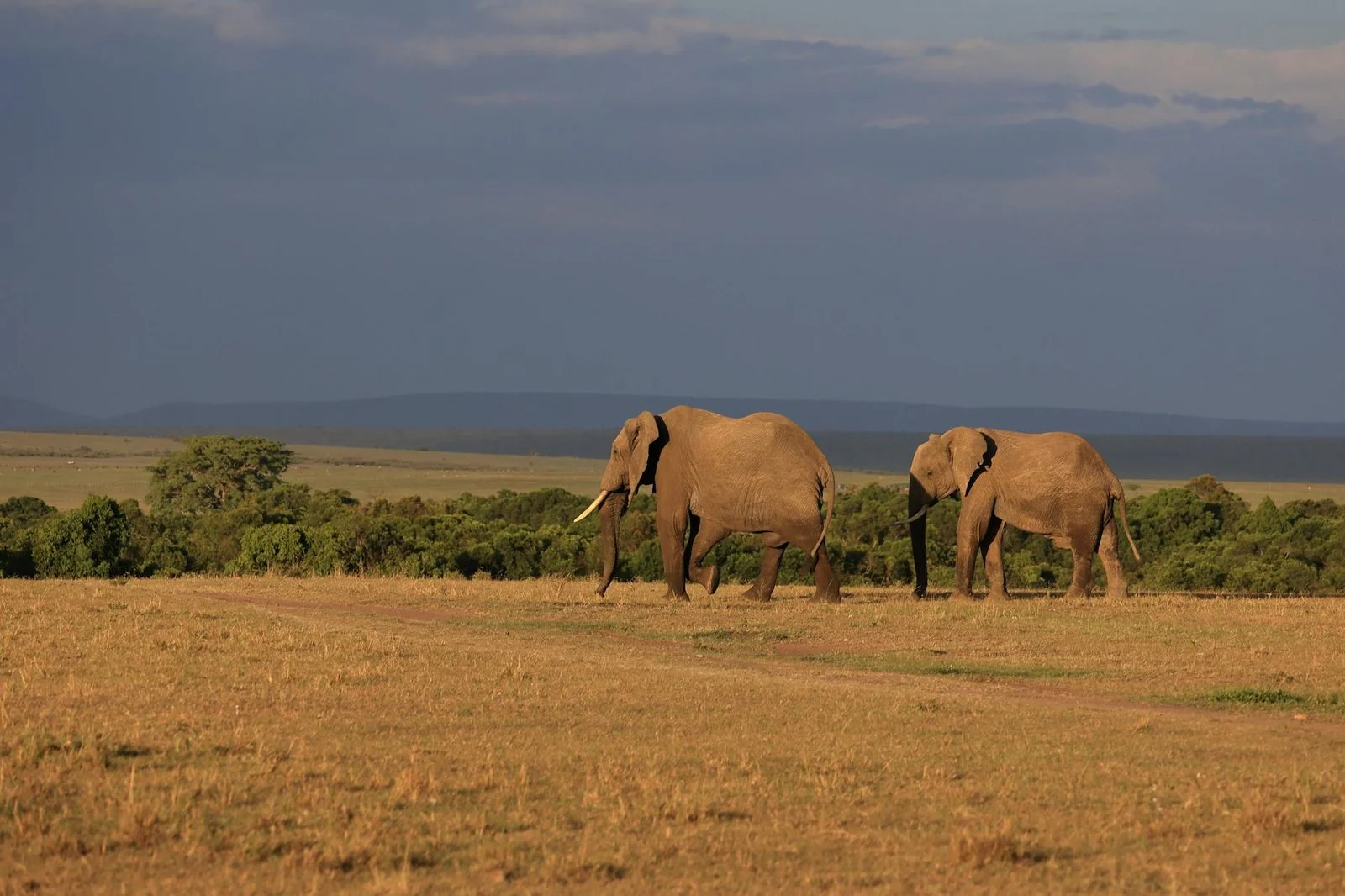
The giraffe bent its neck down to my hand and its tongue was about 45 centimetres long and a colour I can only describe as “aggressively purple.”
I was at the Giraffe Centre in Nairobi, holding a food pellet on my palm like the staff showed me, trying to look calm while a Rothschild’s giraffe the height of a small building decided I was acceptable. Its tongue wrapped around the pellet and about three of my fingers. The texture was somewhere between sandpaper and a very determined cat.
I made a sound. Not a dignified sound.
The twelve-year-old next to me did not make a sound. She fed the giraffe like she’d been doing it her whole life (she probably had) and then looked at me with an expression that communicated, very clearly, “tourists.”
Kenya did this to me repeatedly. Took something I thought I understood (Africa, safari, wildlife, city) and replaced my assumption with something more specific, more alive, and frequently more ridiculous than whatever I’d imagined.
Nairobi: not what I expected (this is a compliment)
I had been told Nairobi was a city you passed through on the way to the animals.
This is wrong.
Nairobi is one of the most interesting cities I’ve visited in Africa, and I spent three weeks in it over two trips, which is about two weeks more than most safari itineraries give it. The creative scene alone is worth staying for. The food scene is worth flying for.
The coffee. Kenyan coffee is INCREDIBLE. I knew this intellectually. I did not know it in my body until I sat in a specialty café in Westlands and drank a pour-over of Nyeri AA that tasted like blackcurrant and brown sugar and made me briefly angry at every cup of coffee I’d had before it. Kenya grows some of the best coffee on the planet and exports most of it. The specialty cafés that have opened in Nairobi in the last few years are correcting this injustice one cup at a time.
Karen. The suburb named after Karen Blixen (yes, the Out of Africa one). The Karen Blixen Museum is her actual farmhouse, preserved with her furniture and her garden and the Ngong Hills in the background exactly as she described them. The museum is small, quiet, and oddly moving. The area around it is green and suburban and full of good restaurants.
The food scene. Nairobi eats well. Nyama choma (grilled meat, usually goat, served with a side of ugali and a cold Tusker beer) is the thing you eat in groups, with your hands, at a place with plastic chairs and smoke from the grill drifting across the table. I went to a nyama choma spot in Hurlingham on a Friday night and the goat ribs were the best grilled meat I’ve had outside of Argentina.
Ugali and sukuma wiki. Ugali is the cornmeal staple (dense, starchy, you tear pieces off and use them to scoop up whatever’s next to it) and sukuma wiki is collard greens sautéed with tomatoes and onions. Together they cost almost nothing and are served everywhere. The name “sukuma wiki” translates roughly to “push the week” or “stretch the week,” which tells you everything about its origins.
Kenyan chai. Not the chai latte situation from your nearest coffee chain. Kenyan chai is tea and milk and spices simmered together in one pot until they become a single thing, thick and sweet and served in a small cup. I drank it every morning. I tried to make it at home in Melbourne once. It was not the same.
The street food. Mandazi (fried dough, like a denser doughnut, sometimes with coconut), samosas (the Kenyan version is excellent, spiced differently from the Indian ones I knew), roasted maize from vendors on the street corners. The maize vendors are everywhere and the corn is rubbed with lime and chili and costs less than a dollar and is perfect.
The matatu experience
I need to talk about the matatus.
Matatus are the minibuses that run Nairobi’s public transport. They are painted in elaborate murals (I saw ones dedicated to Tupac, Manchester United, Obama, and what I think was a Netflix series I didn’t recognise). They play music at volumes that make conversation optional. They stop when they feel like it. They are driven with a confidence that I would describe as “aspirational” and my travel insurance company would describe as “concerning.”
I took matatus several times. Each ride took years off my life and was deeply entertaining. The tout (the guy who hangs out the door yelling the destination and collecting fares) has a job that requires the lung capacity of an opera singer and the spatial awareness of a Tetris champion.
Nairobi traffic, by the way, is its own phenomenon. The city was built for far fewer cars than it has and the result is a gridlock that has its own culture and rhythm. People sell things between the cars. Conversations happen between windows. A trip that should take twenty minutes takes ninety and nobody is surprised.
Maasai Mara: the part where I couldn’t speak
The Maasai Mara is the Kenyan section of the Serengeti ecosystem, and it’s where the Great Migration crosses the Mara River between July and October. I went in August.
I will try to describe the game drive at dawn and I will fail, but here it is anyway.
You leave the camp at 5:45am. It’s cold. This surprises you because you forgot that Kenya is on a plateau and the Mara is at 1,500 metres. You’re in an open-top Land Cruiser with a blanket over your legs and your driver (who is also your guide, and who grew up in a village near the reserve, and who can spot a leopard in a tree from 300 metres away) is driving across grassland in the grey pre-dawn light.
The sun comes up and the Mara is gold.
That’s it. That’s the image. The grass is waist-high and catches the early light and everything is gold and the horizon is flat and there are animals in every direction and your brain goes quiet.
I mean actually quiet. The internal monologue that has been running since approximately 2003 just stops.
We saw lions. A pride of seven, two males, lying in the grass about fifteen metres from the vehicle.
They did not care about us. This was somehow more intimidating than if they had.
One of the males yawned and his mouth was the size of my entire torso.
We saw elephants crossing a dry riverbed, a mother and calf, the mother keeping herself between us and the baby. Giraffes doing their slow-motion thing across the plain. A cheetah sitting on a termite mound, scanning the horizon, looking like a Renaissance portrait of focus.
The migration crossing. Thousands of wildebeest gathering at the edge of the Mara River, pacing, panicking, and then one goes and they all go and the river is suddenly full of animals swimming and scrambling and crocodiles waiting. It is chaotic and violent and beautiful and one of those things where you understand why people spend their lives studying it.
I cried a little bit. I’m not going to pretend I didn’t.
The camp. I stayed at a tented camp (mid-range, not the $2,000-a-night kind but not a backpacker situation either). Canvas tent with a real bed, a shower with hot water that came and went, and absolutely nothing between me and the sounds of the Mara at night. Hyenas laughing. Something (I chose not to investigate what) walking past the tent at 2am. A level of proximity to wildness that you cannot replicate in a zoo or a documentary or a VR headset.
Mombasa and Diani Beach: the other Kenya
After the bush, the coast.
Kenya’s Indian Ocean coastline is a completely different country. Mombasa is the main coastal city, and Old Town Mombasa has Swahili architecture (carved wooden doors, narrow streets, the Fort Jesus from the Portuguese colonial period) and a pace that slows down by about 60% from Nairobi.
But the real coastal destination is Diani Beach, about an hour south of Mombasa.
Diani is a long white sand beach with palm trees and warm turquoise water and reef for snorkeling and the kind of relaxation that feels medicinal after a week of 5am game drives.
I spent four days there doing almost nothing and it was exactly right.
The seafood in Diani. Grilled prawns with coconut rice at a beach bar where the tables were in the sand and the waiter brought everything barefoot. Fresh tuna steaks. Crab in garlic butter. The Indian Ocean provides and the Kenyan coast knows what to do with it.
The contrast between the Mara (vast, wild, cold at dawn, full of large things that could eat you) and Diani (warm, gentle, the biggest threat is sunburn) is one of the best things about Kenya as a destination. You get both. They’re a short flight apart.
Lake Nakuru: the flamingos
Day trip from Nairobi (about three hours by road, which in Kenyan road conditions means “approximately three hours, possibly five, depending on the truck situation”).
Lake Nakuru is famous for flamingos. When conditions are right, the shallow alkaline lake turns pink with millions of lesser flamingos feeding on algae. The numbers fluctuate (they move between East African lakes depending on water levels and food), but when they’re there, it’s surreal. A pink horizon. An entire lake that looks like it was colour-graded in post-production.
The national park around the lake also has rhinos (both black and white), which I saw, and leopards, which I did not see but was told were definitely there (sure).
Practical things
Visa. Kenya has an eTA (electronic Travel Authorization) system. Apply online before you go.
The currency. Kenyan shilling. Very affordable for most travellers. Mobile money (M-Pesa) is used for everything in Kenya, and I mean EVERYTHING. Taxis, restaurants, market stalls. Getting M-Pesa set up as a tourist is a bit of a process but worth it.
Health. Malaria prophylaxis is recommended for the coast and the Mara. Yellow fever vaccination required for entry from some countries. The standard tropical travel health prep applies.
When to go. The migration is July to October. The short rains are November, the long rains April to May. The dry seasons (January to March, June to October) are the best for wildlife viewing.
Getting around. Internal flights between Nairobi, the Mara, and the coast are affordable and save enormous amounts of time. Safarilink and Fly540 run daily routes. Road travel is fine on main highways but the rural roads are an experience.
For staying connected, mobile coverage in Nairobi and Mombasa is excellent. The Mara and rural areas are spottier. I’ve written up the best eSIM options for Kenya with current pricing if you want data sorted before you land.
Kenya is one of those countries that makes you feel stupid for waiting so long to go.
The animals, obviously. But also the food. The coffee. The people. The creative energy in Nairobi that nobody talks about enough. The coast that feels like a different continent from the savannah.
Go. Take a matatu at least once. Let a giraffe lick your hand.
You’ll make the same sound I did.
More from the region
Heading to Kenya? Sort your eSIM first.
I've compared the main providers, checked the real pricing, and put together a guide on the best eSIM options for Kenya.
Best eSIM for Kenya →