I got lost in Fes for three hours and it was the best part of my trip: Morocco without a plan
 Mika Soren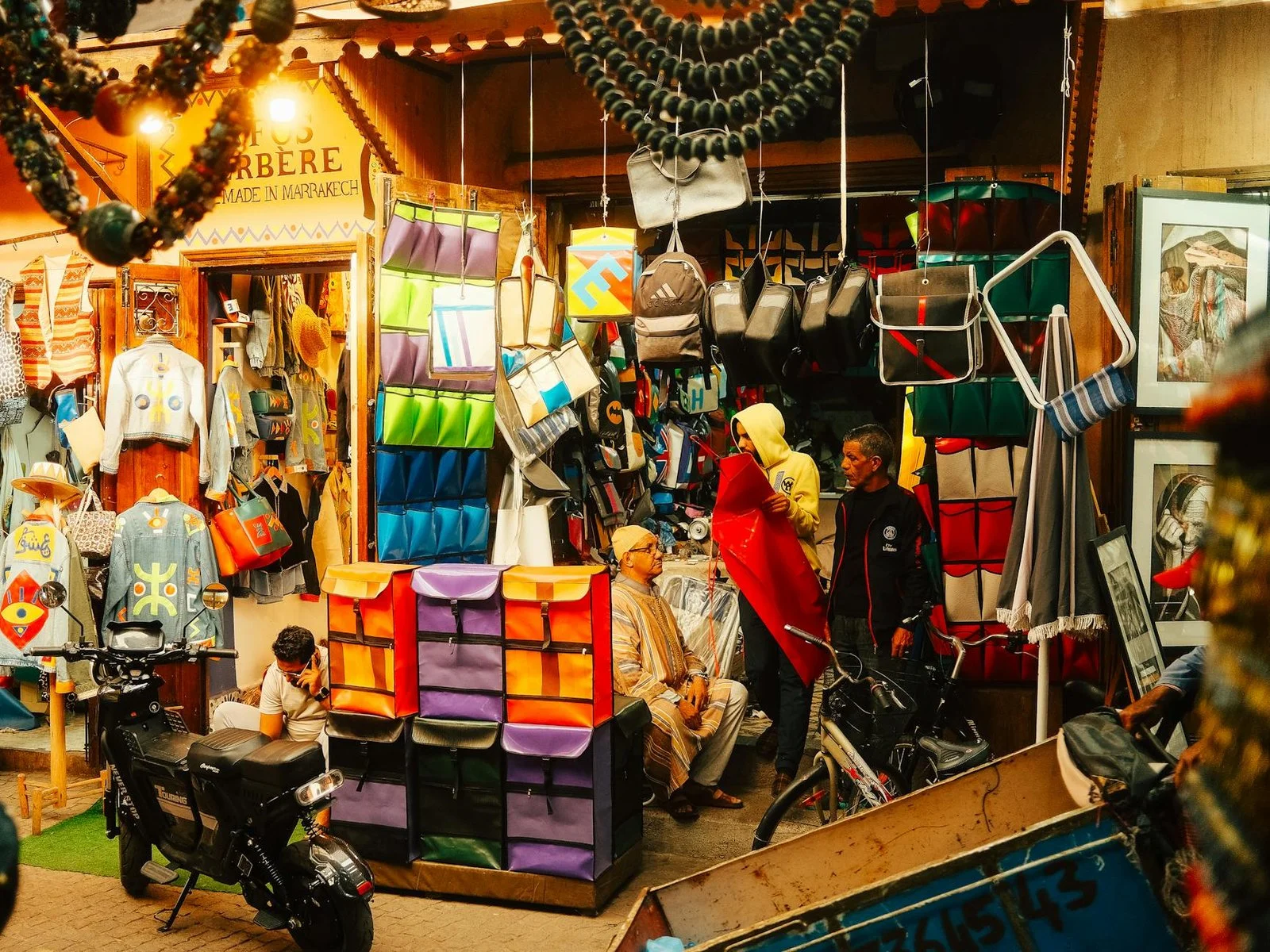
The man at the riad in Fes told me the medina was simple to walk around.
“You just follow the main street,” he said, gesturing at something outside the door that looked less like a street and more like a crack between two buildings. “If you get lost, ask anyone for Bab Bou Jeloud.”
I got lost within six minutes. Asked for Bab Bou Jeloud. Was pointed in a direction. Got more lost. Asked again. Was pointed in a different direction. Eventually found a dead end with a cat sitting on a pile of leather bags, looking at me like she’d seen this exact situation play out a hundred times before.
She probably had.
Morocco was the first country that genuinely overwhelmed me. Not in a bad way (mostly). In the way where your brain needs to process more information per square metre than it’s used to, and the only option is to let go of the idea that you’re in control of anything. Once I accepted that, it became one of my favourite places I’ve been.
Marrakech: sensory overload as a lifestyle
You arrive and Jemaa el-Fnaa hits you like a wall of sound and smoke and colour.
The main square in the medina. During the day it’s fruit juice carts (fresh orange juice, 5 dirham, about 50 cents, and it’s PERFECT) and henna artists and guys with monkeys on chains (don’t engage with this, it’s exactly what you think it is). At night it transforms into rows of food stalls with numbers on them, each one yelling at you to sit down, each one claiming to be the best. Smoke from the grills hangs in the air. Music from somewhere. Someone selling snails from a cart. The energy is relentless and specific and not like anywhere else I’ve been.
The food stalls. Pick a stall. Sit down. Point at things. Most of them serve similar stuff: grilled meats, merguez sausages, harira soup, salads, bread. The bread is excellent everywhere. The quality is remarkably consistent across stalls. I ate at Stall 14 three times because the woman running it was funny and remembered me and gave me extra bread on the third visit, which I took as a personal victory.
The souks. The market area extending north from the square into a maze of covered alleys. Leather, ceramics, textiles, lanterns, spices, things you didn’t know existed and don’t need but might buy anyway. The deeper you go, the less tourist-oriented it gets. The shops near the square sell things at tourist prices. The workshops three turns deep sell the same things at real prices. Navigation is impossible. Enjoy it.
Haggling. It’s expected. It’s part of the transaction. The starting price is not the real price. This is not adversarial, it’s cultural. My strategy: decide what I’d happily pay, offer about 60% of the opening price, meet somewhere in the middle. Walk away if it doesn’t feel right. They’ll call you back about half the time. The first time I haggled I was terrible at it. By day four I was slightly less terrible, which is probably the best you can hope for.
The riads. Stay in one. A riad is a traditional house built around an interior courtyard, converted into a guesthouse. Mine in Marrakech (Riad Yasmine, near the Mouassine fountain) had a small plunge pool in the courtyard, zellige tilework on every surface, a rooftop terrace with a view over the medina rooftops, and a breakfast of msemen (flatbread), honey, amlou (argan and almond paste), and mint tea that I still think about. The room was about $60 a night. Hotels in Marrakech are fine. But the riads are the point.
Fes: the medina that makes Marrakech look organised
Fes el-Bali is the oldest walled city in the world (according to Fes, and I’m not going to argue). The medina is a UNESCO World Heritage Site with over 9,000 alleys. Nine thousand. Some of them are wide enough for a donkey. Some of them are wide enough for a cat. Not a large cat.
This is the medina where I got lost for three hours. And I genuinely mean lost. Not charmingly-wandering-and-discovering-things lost. Lost lost. My phone had no signal in the deeper parts, the alleys all looked the same, and the sky was only visible in narrow strips above the buildings, which made the sun useless for orientation.
It was also, somehow, brilliant.
Because when you’re lost in Fes you end up in places that aren’t in any guidebook.
I found a bakery where people from the neighbourhood were bringing their own bread dough to be baked in the communal oven. I found a courtyard where three old men were playing a board game I didn’t recognise and drinking mint tea and one of them waved me over and poured me a glass without asking if I wanted one (I did). I found a metalworker hammering copper into a tray with a pattern so intricate it looked printed, except it wasn’t, it was just his hands.
The tanneries. Chouara Tannery is the famous one. You’ll smell it before you see it. The leather-dyeing process uses pigeon droppings, which is one of those facts that’s interesting exactly once and then just present. You view it from the terraces of the leather shops above. Someone will offer you a sprig of mint to hold under your nose. Accept it. The view down into the dye pits, with workers standing in pools of colour, is striking and strange and slightly medieval. Yes, the shop owners will try to sell you a leather jacket afterward. No, you don’t have to buy one.
Eating in Fes. Pastilla (bastilla) is the local speciality: a flaky pastry filled with shredded pigeon (or chicken, more commonly now), almonds, cinnamon, and powdered sugar on top. Sweet and savoury at the same time. It sounds like it shouldn’t work. It ABSOLUTELY works. I had it at a restaurant near the Bou Inania Madrasa that I found only because I was lost (again) and followed the smell. The restaurant had no sign. The pastilla was the best thing I ate in Morocco.
The Sahara: the overnight trip everyone should do
You book it through your riad or a tour company. Most trips leave from either Marrakech or Fes, drive through the Atlas Mountains, stop at various points along the way, and end at the edge of the Erg Chebbi dunes near Merzouga.
The drive is long. Like, REALLY long. Marrakech to Merzouga is about 9-10 hours by road. The scenery changes completely along the way: green valleys, mountain passes, kasbahs made of red earth, then flat hammada desert, then suddenly the dunes appear on the horizon like someone dropped them there.
You ride a camel to the camp. The camel’s name was Hassan. (I asked. The guide looked at me like nobody had ever asked before. Maybe they hadn’t.) Hassan walked slowly and I held on and the dunes in the late afternoon light were the colour of burnt orange and the shadows between them were deep purple.
It looked fake. It was not.
The camp. Berber tents with carpets and mattresses. Tagine cooked over a fire. Drums and singing after dinner. Stars like I have never seen, and I grew up in rural Victoria where the night sky is already pretty good. Out in the Sahara there’s nothing, no light pollution for hundreds of kilometres, and the Milky Way is just… there. Right above you. Absurdly, impossibly detailed. I lay on a dune and stared at it for a long time and had one of those moments where you feel very small and very lucky at the same time.
The sunrise over the dunes the next morning was worth the 5am wake-up. Which is the only time I will tell you a 5am wake-up is worth it.
Essaouira: the windy one
Two to three hours from Marrakech on the Atlantic coast. Essaouira is the antidote to the medina chaos.
Blue and white buildings. A harbour full of fishing boats. Seagulls louder than the call to prayer (almost). Wind. Constant wind. The wind in Essaouira is a personality trait. It defines the town. The kitesurfers and windsurfers love it. Everyone else just leans into it and holds onto their hats.
The medina here is smaller, calmer, walkable without a map (a genuine novelty after Fes). The seafood stalls at the port sell grilled sardines and calamari for almost nothing. I sat on the harbour wall and ate sardines straight out of paper and watched the boats and the sky did that low-Atlantic-light thing where everything looks like a painting.
Essaouira was used as a filming location for Game of Thrones (Astapor, if you care about these things). I care about these things. The ramparts look exactly like they do on screen. Walking along them at sunset with the wind trying to relocate you into the ocean is an experience.
Two nights here is enough. Three if you want to slow down properly, which I’d recommend.
The Atlas Mountains
Day trip from Marrakech or a multi-day trek if you’re more ambitious than I was.
I did a day trip to the Ourika Valley, about 60km south of Marrakech. Green valley, river, Berber villages built into the hillside, a series of small waterfalls you can hike up to. The drive from Marrakech takes about ninety minutes and the temperature drops noticeably as you climb. We stopped at a Berber family’s house for mint tea and homemade bread with olive oil and amlou. The tea was poured from a height (as always) into small glasses. I was told this aerates it. I believe this. The bread was baked in a clay oven in the courtyard. It was warm and dense and good.
For multi-day treks: Toubkal (North Africa’s highest peak) is the popular one. You need a guide. I didn’t do it. People who did told me it was challenging and beautiful and they’d never felt more tired. This tracks.
The stuff nobody warns you about
The “guides.” In Marrakech and Fes, people will approach you and offer to show you the way. Sometimes this is genuine helpfulness. Sometimes it’s a business transaction where the price is negotiated afterward (or not negotiated, just stated). The safest approach: be friendly, say you know where you’re going (even if you don’t), keep walking. If you actually need directions, ask a shopkeeper rather than someone on the street. This sounds cynical. It’s just practical.
Mint tea is a social contract. If someone invites you for tea, they’re being generous. If a shop owner offers you tea, they’re hoping you’ll buy something. Both situations are fine. Drink the tea. It’s delicious. Just understand the context.
The call to prayer. Five times a day, from every mosque, starting before dawn. If you’re not used to it, the first morning will wake you up. By the third day you’ll sleep through it. By the fifth day you’ll miss it when it’s not there. It’s the sound of the country.
Connectivity. Morocco’s cities have decent 4G but coverage gets patchy fast once you’re between towns or in the mountains. The Sahara is exactly as connected as you’d expect a desert to be (not very). Get your data sorted before you leave the city. I’ve tested the main eSIM providers for Morocco and put together a comparison with current pricing here.
What stays with you
Morocco is loud and complicated and occasionally exhausting.
I had moments of real frustration. I had moments of genuine wonder. Sometimes these were the same moment. Standing in the Fes medina being loudly informed that I was walking the wrong way while simultaneously staring at 800-year-old tilework that made my chest hurt from how beautiful it was. Both things, at once, and neither one cancelling the other out.
The thing I remember most is the light.
Morocco has this specific golden quality to the air in the late afternoon, especially in Marrakech, where the pink walls of the medina glow and the sky goes amber and everything looks like it was designed to be photographed but also like no photograph could actually get it right.
I went for two weeks. I should have stayed for three. I’ll go back for the parts I missed (Chefchaouen, the blue city in the Rif Mountains, is high on the list) and the parts I want to see again (Fes, always Fes, even though it will get me lost again).
Especially because it will get me lost again.
More from the region
Heading to Morocco? Sort your eSIM first.
I've compared the main providers, checked the real pricing, and put together a guide on the best eSIM options for Morocco.
Best eSIM for Morocco →