I climbed to 4,130 metres in Nepal and cried over a plate of dal bhat
 Mika Soren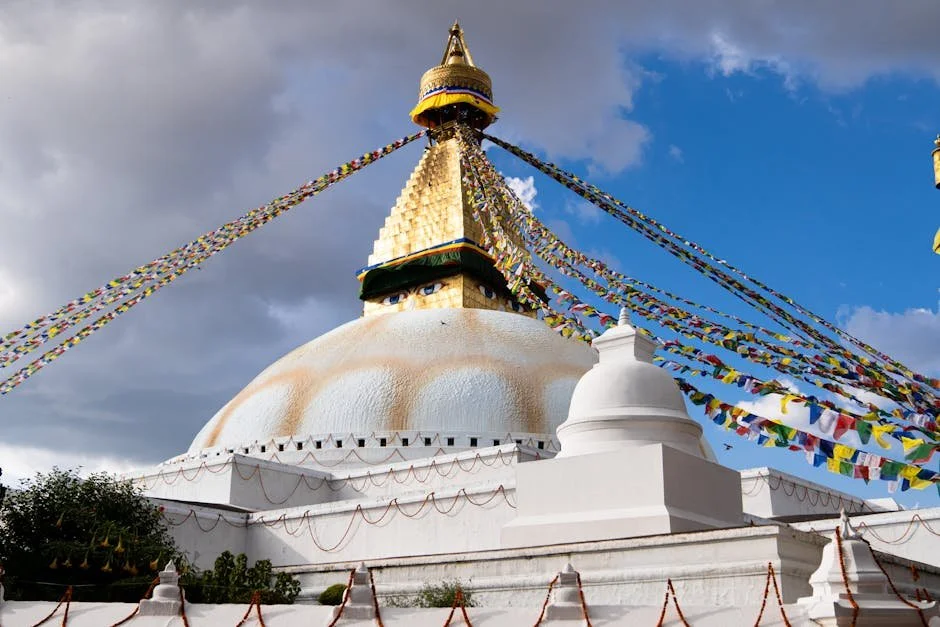
The momo lady on the corner of a street in Thamel whose name I never learned changed my entire relationship with dumplings.
I’m not being dramatic. (Okay, I’m being slightly dramatic.) But picture this: I’d been in Kathmandu for maybe six hours. Jet-lagged, coated in a fine layer of dust that appeared to have its own dust, slightly overwhelmed by the sheer VOLUME of everything. Horns. Music. A cow standing in the middle of a one-lane road that somehow had three lanes of traffic on it. And then I smelled them.
Steamed buffalo momos, served on a metal plate with a tomato-chilli achar that made my sinuses file a formal complaint. I sat on a plastic stool on the footpath, ate twelve of them, and thought: okay. Nepal, I get it.
That was day one. It only got better from there. And also worse, in the altitude-sickness-at-4,000-metres sense. But mostly better.
Kathmandu: sensory overload in the best way
Kathmandu is not a city that eases you in gently. It arrives all at once. Dust and diesel and incense and frying oil and about forty competing sound sources at any given moment.
Thamel, the tourist district, is where most people start. It’s a maze of narrow streets crammed with trekking shops, restaurants, bars, and guest houses stacked on top of each other. Every second shop sells North Face gear (the authenticity of which I will leave to your own judgment). The restaurants have menus twelve pages long that cover Nepali, Indian, Tibetan, Italian, Mexican, and “Continental” food. I found the best strategy was to ignore anything that wasn’t Nepali.
But here’s the thing about Kathmandu that nobody warned me about.
You turn a corner from the chaos of Thamel, walk through a low doorway or down some steps, and suddenly you’re in a temple courtyard that is DEAD SILENT.
Prayer flags strung overhead. A stone fountain dripping. Maybe a dog sleeping in a patch of sun. The contrast is so abrupt it feels like a glitch in the simulation.
Durbar Square is where this hits hardest. The old royal palace complex, partially damaged in the 2015 earthquake and still being restored, surrounded by temples and pagodas and carved wooden windows from centuries ago. You pay an entrance fee (foreigners pay more, which is fair), and then you just… sit there. Pigeons everywhere. The smell of sandalwood. Locals crossing through on their way to somewhere else, barely glancing at temples that would be the headline attraction in most countries.
Boudhanath wrecked me a little bit, if I’m honest. The enormous white stupa, one of the largest in the world, surrounded by a ring of buildings with rooftop restaurants and monasteries. The prayer wheels along the base that people spin as they walk the kora (the clockwise circuit around the stupa). The eyes of the Buddha painted on all four sides of the tower, looking out across the Kathmandu Valley. I went three times. Each time I did the kora with the monks and the grandmothers and the tourists and just walked in circles feeling something I can’t quite articulate.
(I’m not getting spiritual on you. I promise. It just does something.)
Pokhara: the view that made me shut up
I talk a lot. This is known. But the first morning I woke up in Pokhara and walked to the edge of Phewa Lake and saw the Annapurna range reflected in the water with Machapuchare (the fish tail mountain, the one that looks like it was designed by someone showing off) just SITTING there, white and perfect and enormous against a blue sky…
I didn’t say anything for about four minutes. Which might be a personal record.
Pokhara is the chill to Kathmandu’s chaos. It’s a lakeside town that serves as the staging point for most of the Annapurna treks, and it has the energy of a place that knows you’re either about to do something physically demanding or you just finished doing something physically demanding. The restaurants serve big portions. The massage places are everywhere. There are hammocks.
The lakeside strip is touristy in that comfortable way where you can get a decent latte and a banana pancake and free wifi and nobody’s trying too hard. Boats on the lake. The World Peace Pagoda visible on the hill across the water (worth the hike, the view from the top looking back across Pokhara to the mountains is the kind of panorama that makes you wonder why you ever complain about anything).
Paragliding. I did it. I’m slightly afraid of heights (which I disclosed to my tandem pilot approximately nineteen seconds before we ran off the edge of a hill at Sarangkot, and he laughed, which was not the reassurance I was looking for). Twenty minutes in the air above Pokhara, the lake below, the mountains ahead, the whole valley spread out like a map. Worth every moment of the pre-jump terror.
I have a photo of me mid-flight looking like I’m either having the best moment of my life or passing a kidney stone. The expression is genuinely ambiguous.
The trek: Annapurna Base Camp and the dal bhat that powered everything
I did the Annapurna Base Camp (ABC) trek. Ten days. No guide (I know, I know, but I’d done extensive research and the trail is well-marked and the tea houses are frequent). Just me, my pack, and an alarming faith in my own knees.
The tea house system in Nepal is one of the great inventions of trekking culture. Every few hours along the trail there’s a lodge where you can sleep in a basic room and eat dal bhat for dinner and breakfast. The rooms are simple (wooden walls, a bed, a blanket, sometimes a squat toilet down the hall that you learn to appreciate as a luxury). The dal bhat is a universe unto itself.
Dal bhat power, 24 hour. This is printed on t-shirts in Thamel and it’s not wrong. Dal (lentil soup), bhat (rice), tarkari (vegetable curry), achar (pickle), sometimes a piece of meat. It comes on a metal thali plate and they REFILL the dal and the rice for free. Unlimited refills. On a trek where you’re burning 3,000-plus calories a day, this is not a meal, it’s a contract between you and the mountain.
I ate dal bhat twice a day for ten days.
I never got tired of it.
Each tea house made it slightly differently: the dal thicker here, the tarkari spicier there, the achar a different colour. It was my favourite meal of the day, every day, both times.
The walk itself. The first few days are gentle. Subtropical forest, suspension bridges over rivers that look exactly like the ones in movies where the bridge breaks (they don’t break, I checked, repeatedly, with my eyes), villages where kids wave and yell “NAMASTE” with a volume that suggests they’ve been practising. Rhododendron forests when you gain altitude. Rice terraces stepping down the hillsides.
Then you climb above the tree line and everything changes.
The altitude. At around 3,500 metres I felt it. Headache, shortness of breath on uphill sections that would’ve been nothing at sea level, a general sense of my body asking me what exactly I thought I was doing. At 4,130 metres (Annapurna Base Camp), I was taking five breaths per step on the final approach. Not an exaggeration. I counted.
But here’s what I want you to know. The morning I woke up at ABC, stepped outside the tea house at about 5:30am, and saw the amphitheatre of mountains surrounding the camp on three sides, glowing orange and pink in the first light, with Annapurna I (8,091 metres, the tenth tallest mountain on Earth) directly in front of me…
I sat down on a rock. I cried a little. And then I went inside and ate dal bhat.
That’s Nepal.
The food beyond dal bhat (but also, more dal bhat)
Momos. I mentioned them. I need to mention them again. Steamed, fried, jhol (in soup), kothey (pan-fried on one side). Buffalo, chicken, vegetable. Available everywhere, at all times, for very little money. The best ones I had were from a tiny place in Patan (the city next to Kathmandu, with its own Durbar Square that’s less touristed and arguably more beautiful) called Momo Star. No sign. A counter and three tables. The chilli achar there should be classified as a controlled substance.
Newari food. The cuisine of the Newar people, the indigenous inhabitants of the Kathmandu Valley. Chatamari (a rice flour crepe with meat and egg, sometimes called “Nepali pizza” which is misleading but close enough). Yomari (sweet dumplings, seasonal). Choila (spiced grilled meat). Harder to find in tourist restaurants but worth seeking out. A place called Honacha in Patan did a Newari set meal that was eight small dishes of things I’d never seen before, all of them excellent.
The rooftop restaurants. Kathmandu is full of them. Climb four flights of steep stairs to a rooftop with plastic chairs and a view over the temple rooftops and order a plate of chow mein (the Nepali version: thick noodles, vegetables, a bit greasy, very satisfying) and a bottle of Everest beer and watch the kites circling above the stupas. This is a specific and reliable form of happiness.
The things nobody tells you
The roads. Nepal’s roads are, and I say this with love and respect for the country’s challenging geography, TERRIFYING. Mountain roads carved into cliff faces, single lane, with blind corners and no barriers and buses coming the other direction that show no intention of slowing down. The drive from Kathmandu to Pokhara (about 170km, which takes 6-8 hours by road because the road is the road) took years off my life. I took the tourist bus. I sat on the non-cliff side. I still gripped the armrest hard enough to leave marks.
Alternatively: fly. Domestic flights in Nepal are short, cheap, and offer views of the Himalayas from the window that are genuinely absurd. They’re also occasionally delayed or cancelled due to weather. The airport at Lukla (the gateway to Everest Base Camp) has been called the most dangerous airport in the world, which is a title I suspect the marketing department didn’t request.
The dust. In the dry season (October-November, the prime trekking and travel season), Kathmandu is dusty in a way that gets into everything. Your clothes, your bag, your lungs. A buff or scarf over your face for the dustier streets is not dramatic, it’s practical. By day three I’d stopped trying to keep anything clean.
The generosity. Nepali people are, genuinely and without qualification, some of the warmest and most generous people I’ve encountered anywhere. The tea house owner who wouldn’t let me pay for an extra blanket when the temperature dropped. The kids on the trail who shared their snacks with me. The taxi driver in Kathmandu who, when I accidentally overpaid, chased me down the street to return the change.
This happened more than once.
Staying connected (or, the art of letting go)
Here’s the interesting thing about Nepal and connectivity. In Kathmandu and Pokhara, you’ll have decent signal most of the time. On the trek, it comes and goes. Some tea houses have wifi (slow, sometimes working, sometimes a philosophical concept more than an actual service). Above 3,500 metres, your phone becomes a very expensive camera.
I found it weirdly freeing. But if you need to stay connected (work emails, emergency contact, uploading triumphant summit selfies), sorting out an eSIM before you go is worth the ten minutes it takes. Beats trying to haggle for a SIM card at Tribhuvan Airport at midnight, which is an experience I’ve had and do not recommend.
The version of Nepal you should know about
Nepal is not a soft destination. The infrastructure is developing, the roads are challenging, the altitude is real, and the power goes out sometimes. If you need everything to work perfectly all the time, you will have a bad time.
But if you can flex with it, if you can sit with the chaos and the dust and the occasional cold shower and the delays and the uncertainty…
Nepal gives you something back that I haven’t found in many other places. A specific combination of natural beauty, cultural depth, physical challenge, and human warmth that rearranges your priorities a bit.
I went for three weeks. I almost didn’t leave.
And I think about those momos at least once a week.
More from the region
Heading to Nepal? Sort your eSIM first.
I've compared the main providers, checked the real pricing, and put together a guide on the best eSIM options for Nepal.
Best eSIM for Nepal →