The Netherlands is not Amsterdam: what I found when I stopped treating it like a day trip
 Mika Soren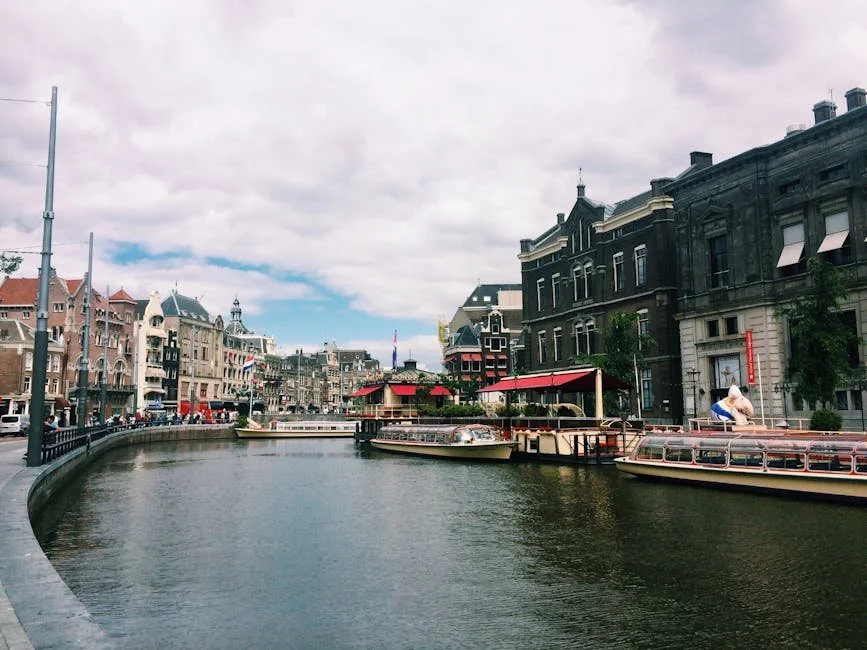
I almost did Amsterdam as a long weekend.
Three nights, the main museums, a canal boat tour, tick the box. This is how a lot of people do it and it’s a completely valid way to do it, but it’s also a version of Amsterdam that doesn’t get very far in.
I gave it a week and spent days three through seven in neighbourhoods I hadn’t planned to visit, eating at restaurants I found by walking rather than searching, doing absolutely no museums some days.
Then I went to Utrecht for what was supposed to be an afternoon and didn’t come back until the next evening.
Amsterdam: the museums first, then the city
The two museums that require full days and advance booking:
The Rijksmuseum. The national museum of Dutch and Flemish art. Rembrandt’s Night Watch, Vermeer’s interiors, the entire history of Dutch Golden Age painting in the most comprehensively curated collection outside of the smaller national galleries. Book ahead, buy the timed entry, go when it opens. The building’s renovation (completed in 2013) produced one of the most beautiful museum interiors I’ve been in.
The Anne Frank House. Book months ahead. This is not an exaggeration: the online tickets sell out weeks to months in advance for most days.
The experience of walking through the actual annex where the Frank family hid for two years is one of the more sobering museum visits available. Go having read the diary. The weight of the place requires context.
The Van Gogh Museum is also excellent and also requires booking ahead. If you’re doing all three in a week, book all three before you arrive.
The neighbourhood structure. Amsterdam’s canal ring is the famous part and it’s beautiful from every angle. The Jordaan (west of centre: independent shops, small galleries, the Noordermarkt on Saturday mornings with organic produce and vintage clothing) is where I spent most of my time. De Pijp (south of centre: younger, more gentrified than it used to be, the Albert Cuyp Market running through the middle of it, excellent for eating) is the other one.
Eating in Amsterdam: The Dutch food tradition is not particularly famous for good reason (stamppot is fine, herring is an acquired experience) but Amsterdam as a city eats internationally and well. The Indonesian rijsttafel (rice table: fifteen or twenty small dishes eaten together, a tradition from the Dutch colonial period) at a properly traditional restaurant. Stroopwafels warm from a market stall. Bitterballen (fried beef ragù balls, eaten with mustard, at a bar with beer) as the ideal Dutch bar snack.
The Albert Cuyp Market in De Pijp. The largest outdoor market in the Netherlands: produce, street food, clothes, flowers. The herring sandwiches (haring met uitjes: raw herring with raw onion, eaten by holding the tail and lowering it into your mouth, this is the correct method). The stroopwafels made fresh at the stall. The Dutch are serious about their markets and this one reflects that.
Cycling: it’s not a tourist activity, it’s how the country works
The Netherlands has more bicycles than people (true, approximately 23 million bikes for 17 million people) and a cycling infrastructure built over decades that makes riding a bike the fastest, cheapest, and most logical way to move in almost any weather.
Rent a bike.
A good bike, not a tourist hire with the big basket and the bell. A regular Dutch bike that you can actually ride.
Amsterdam by bike. The city makes immediate sense on a bike. The cycle lanes run alongside every canal, through every neighbourhood, across every bridge. You move at the pace of the city rather than the pace of a tourist. Vondelpark in the morning, the canals in the afternoon, the eastern docklands (the architecturally interesting modern residential area east of the centre) whenever.
Countryside between cities. The most surprising cycling I did: the route from Amsterdam to Haarlem (30km, mostly flat, through polder landscapes with windmills and tulip fields in spring). No hills. The whole country is below sea level. You can cycle for hours in a direction and nothing changes except the windmill positions.
The tulip fields. If you’re there in April, the Bollenstreek (bulb region) between Haarlem and Leiden: entire fields of tulips in long rows of colour. Free to ride past. The Keukenhof gardens (formal tulip park, ticket required) nearby for the curated version.
Utrecht: the one most people drive past
35 minutes from Amsterdam by train. I went for a few hours and came back the next day.
The Dom Tower and Dom Church. The Dom Tower is the tallest church tower in the Netherlands and the landmark you orient by. The Dom Church itself is unusual: the nave connecting tower to choir was destroyed in a 1674 storm and never rebuilt, leaving the tower standing separate. Walking through where the nave was, now an open square, is a strange architectural experience.
The Oudegracht. A canal running through the city centre at a lower level than the street, with the original medieval wharf cellars still intact along both sides. Now occupied by cafés and restaurants at water level, with terraces above them at street level. The most pleasant afternoon-to-evening location I found in the Netherlands: sit at the canal level with a beer and watch the light change.
Tasting Utrecht’s craft beer scene. Utrecht has an unusually strong craft beer culture for a Dutch city: small breweries and speciality bars in the old city. The Olivier brewery in a converted church is the architectural highlight. The café terraces along the Oudegracht for the ambience.
Delft: for the pottery and the quiet
An hour from Amsterdam by train, Delft is a smaller, quieter version of Dutch canal city that many visitors skip in favour of The Hague (adjacent). This is a mistake.
The market square (Markt). The New Church and the Town Hall facing each other across one of the most beautiful town squares in the Netherlands. The New Church (oddly called New, having been there since 1381) contains the royal crypt of the Dutch royal family. Climb the tower.
Delft Blue (Delfts Blauw). The white-and-blue pottery tradition is still active: Royal Delft is the only remaining original factory and the tour shows the hand-painting process from start to finish. The gift shop will take your money. The hand-painted pieces are worth what they cost; the machine-made ones are not (and are sold everywhere in the tourist shops under the same name, so Royal Delft is the only place to get the real thing).
The Vermeer Centre. Vermeer was born and died in Delft. The centre isn’t a gallery (none of his works are kept here) but an immersive exploration of his technique and the context of his paintings. Good if you’ve spent time in the Rijksmuseum and want the full picture.
Practical things
OV-chipkaart. The Dutch transit card that works on all buses, trams, and trains. Check in AND out on every journey or you’ll be overcharged. Get it at any station.
The rain. It rains in the Netherlands. Frequently. A good lightweight waterproof is mandatory. The Dutch don’t stop cycling in the rain; neither should you (the hire bikes usually have mudguards, which helps).
Dutch directness. Dutch people are famously direct. This is not rudeness. It’s efficiency. They will tell you exactly what they think. This is generally useful.
Cheese. The Netherlands produces Gouda and Edam and a hundred variations. The cheese markets at Gouda and Alkmaar (Friday mornings, April-August) are actual cheese markets, not staged events: cheese is carried on wooden carriers and weighed and sold by men in traditional white outfits because that’s how the cheese guild has always operated.
Coverage across the Netherlands is excellent. Very high mobile density, one of the best 5G rollouts in Europe. An eSIM covering EU roaming will work well here. For the detail, I’ve put together an eSIM guide for the Netherlands.
Go past Amsterdam.
Utrecht in the afternoon, canal level, a beer, the light.
That’s the one.
More from the region
Heading to Netherlands? Sort your eSIM first.
I've compared the main providers, checked the real pricing, and put together a guide on the best eSIM options for Netherlands.
Best eSIM for Netherlands →