Peru at altitude: Cusco, the Inca Trail, and the Sacred Valley I didn't want to leave
 Mika Soren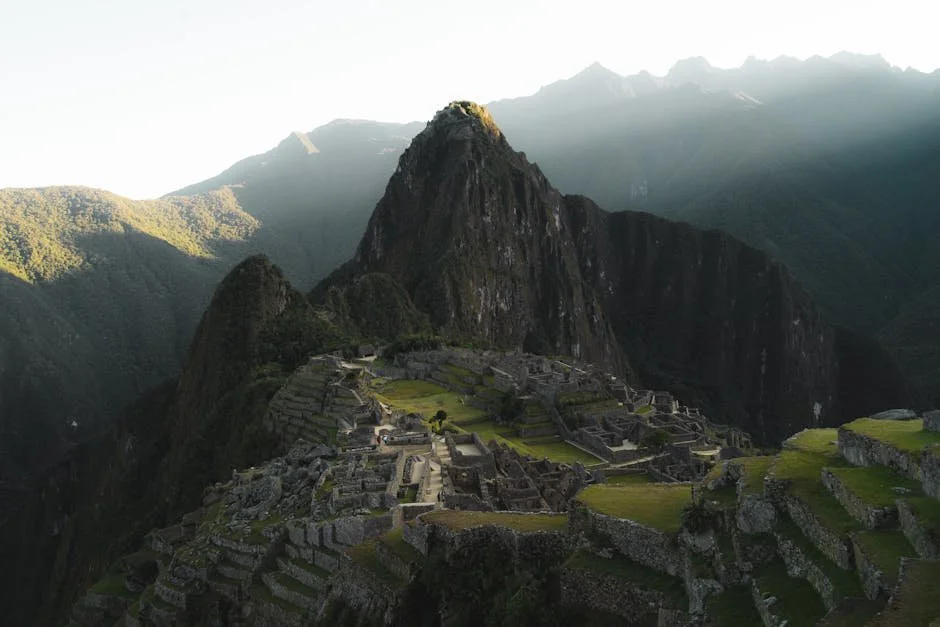
The altitude hit me in Cusco at around 10pm on my first night.
Headache, slight nausea, the sensation that someone had removed 30% of the available oxygen from the room. I’d read about altitude sickness. I’d taken the acetazolamide. It still took three full days before my body stopped treating the Andes as a personal affront.
This is not a deterrent. It’s information. Plan for it.
After those three days: one of the most extraordinary trips of my life.
Cusco: the city built on an empire
Cusco at 3,400 metres was the capital of the Inca Empire and the navel of the world (Qusqu, in Quechua). The Spanish built their colonial city directly on top of Inca foundations: you walk down a narrow street and the lower walls are Inca stonework, perfectly fitted, and the Spanish colonial architecture sits on top of it. This layering is visible everywhere in the city.
The Plaza de Armas. The main square, the centre of everything. The cathedral on one side (built partly from stones taken from the Inca Temple of the Sun), the Jesuit church La Compañía on the other, arcaded restaurants around the edges. Sit in the plaza in the afternoon and watch the layers of history.
Qorikancha (Temple of the Sun). The most sacred site in the Inca Empire, its walls once lined with gold. The Spanish built the Convent of Santo Domingo directly on top of the Inca foundations. You can see exactly where the Inca walls end and the Spanish begin: the Inca stonework is smoother and more precise. The 2001 earthquake damaged the Spanish building more than the Inca one.
The San Pedro Market. The local market that still functions as a market rather than a tourist attraction: produce, local food stalls, herbs, the chicha morada (purple corn drink) and fresh juice stalls. Have breakfast here. The empanadas and api (hot purple corn drink) at 8am.
Eating in Cusco: Peru has one of the better food cultures in South America and Cusco reflects this. Ceviche (the citrus-cured fish dish, lighter in altitude than on the coast), lomo saltado (stir-fried beef with tomatoes and chips and rice, the Chinese-Peruvian chifa influence), cuy (guinea pig, roasted whole, a traditional Andean dish that you either try or you don’t, I tried it, it’s mild). The coffee is Peruvian, which is better than its international reputation suggests: the altitude of Cusco means the coffee that grows below it (in the cloud forest regions) is at ideal elevation.
The Sacred Valley: the week that became ten days
The Sacred Valley of the Incas runs northwest from Cusco along the Urubamba River: a wide, fertile valley at slightly lower altitude (about 2,800m at the valley floor) where the Incas built their agricultural terraces and secondary capitals.
I went to recover from the altitude and see the sites.
I stayed because the valley is one of the most peaceful places I’ve found in the Americas.
Pisac. Village at the eastern end of the valley with a Sunday market (the big one: artisan crafts, textiles, local produce, still visited by people from the surrounding communities in traditional dress) and a substantial Inca terraced complex above the town. The ruins at Pisac are less visited than Machu Picchu and extensively worthwhile: walk up to the agricultural terraces in the morning, the views across the valley are considerable.
Ollantaytambo. At the western end of the valley, the only Inca town still inhabited. The temple complex above the town is built on a scale that demonstrates the engineering capacity of the Inca: massive stone platforms fitted without mortar, water channels still running after five centuries. The train to Aguas Calientes (for Machu Picchu) departs from here.
The valley life. Cycling the valley floor (rental bikes in Pisac and Ollantaytambo). The evening light on the terraces. The guesthouses in the rural communities. A walk from one village to the next along the valley road with the mountains above. This is the part that’s harder to describe than the sites: the quality of being in the Sacred Valley.
The Inca Trail and Machu Picchu
Everyone goes to Machu Picchu. Most people go by train from Ollantaytambo. This is fine.
I did the four-day Inca Trail, which is what I’d recommend to everyone.
Booking. Book six to eight months ahead. Permits are limited to 500 people per day on the trail and they sell out. You must go with a licensed agency and a guide.
The trail. Four days, roughly 42km, with three days of hiking including the Dead Woman’s Pass (Warmiwañuska) at 4,215m. Day two is the hard day: you gain 1,200 metres of elevation to the pass. I went very slowly. I made it. Everyone made it.
The porters carrying camp infrastructure flew past us at twice our speed and I found this both humbling and impressive.
Day four: the Sun Gate at dawn. Wake at 3:30am. Walk the last section of trail to the Inti Punku (Sun Gate) in the dark with headlamps. Arrive as the light comes over the mountains. Machu Picchu below you, the cloud in the valley beginning to lift, the ruins visible and then clearer as the sun rises.
This is the view. This is why you walk.
Machu Picchu itself. The citadel is extraordinary, in the clichéd-because-true sense. Llamas wandering between the terraces. The Temple of the Sun. The Intihuatana stone (the hitching post of the sun). The views in every direction over the cloud forest valley. The fact that the Spanish never found it. Have the full day at the site; the trail walk lets you arrive early before most visitors.
The Amazon from Puerto Maldonado
From Cusco, a 45-minute flight drops you 3,000 metres in altitude into the Amazon lowlands at Puerto Maldonado. This is one of the more abrupt transitions available in travel.
A boat into the Tambopata Reserve (4km by road, then river) to a lodge in primary rainforest: the macaw clay lick at dawn (hundreds of macaws descending to eat mineral clay from the riverbank), the caiman spotting at night with a torch from the boat, the three-toed sloth that the guide spotted from fifty metres that I required him to point at directly before I saw it.
Two or three nights is the right stay. More and you’ve acclimatised; less and you haven’t fully arrived.
Practical things
Altitude acclimatisation. Arrive in Cusco and do nothing for two days. No hiking, no ruins, no ambitious meals. Drink coca tea (the traditional remedy, genuinely mildly effective, widely available and legal in Peru). Drink water constantly. Eat light. Sleep as much as you can. On day three you’ll feel human again.
The Soles. Peruvian Soles, the currency. USD accepted at some tourist sites. Cards accepted in Cusco and the main towns. Bring cash for smaller villages and markets.
Booking ahead. Beyond the Inca Trail, book Machu Picchu entrance tickets well ahead (they’ve limited daily visitors and introduced time slots). Huayna Picchu (the mountain behind the ruins, the steep one with the better view looking down onto the ruins) and Machu Picchu Mountain are separate bookings with their own limits and both sell out.
The local food. Aji amarillo (yellow chilli) is the base of most Peruvian cooking. If something is spicy, it’s usually the aji. The ceviche in Lima (if you pass through) is the best ceviche I’ve had: brighter, more acidic, the leche de tigre (tiger’s milk, the citrus-chilli marinade) drunk from the bowl after the fish is gone.
Coverage in Cusco and the Sacred Valley is reasonable for a high-altitude area. The Inca Trail has no signal from day two onward. The Amazon lodge is similarly offline. I’ve put together a current guide to eSIMs for Peru for the connectivity question.
The altitude will humble you for three days.
Then Peru gives you everything.
More from the region
Heading to Peru? Sort your eSIM first.
I've compared the main providers, checked the real pricing, and put together a guide on the best eSIM options for Peru.
Best eSIM for Peru →