The Philippines is 7,641 islands and I've been to four: Palawan, Siargao, Cebu, and Manila in transit
 Mika Soren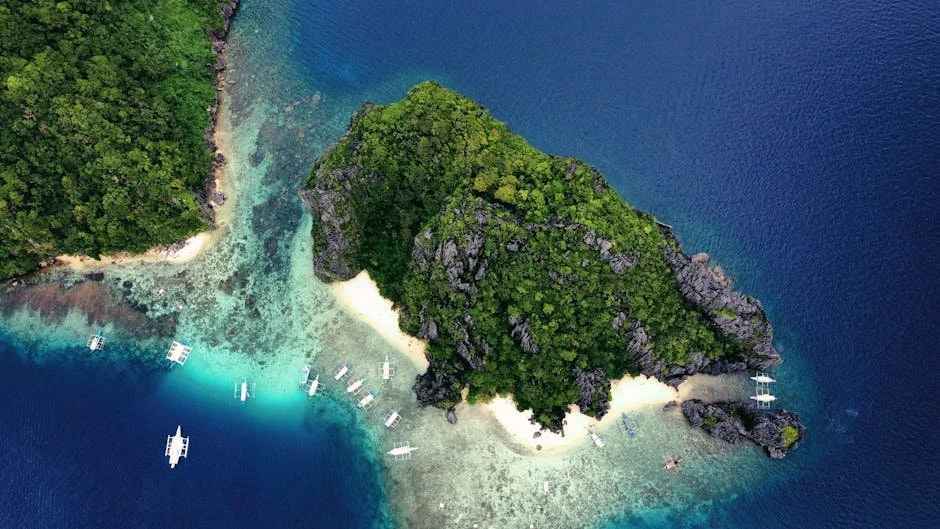
The Philippines is the country that most consistently makes my travel plans irrelevant.
I go with a plan and the islands rearrange it. The boat is cancelled for weather. The beach I was heading to is better than expected and I stay two more days. Someone on a bangka (outrigger boat) mentions an island I haven’t heard of and I end up there instead.
I’ve been four times. I’ve been to four islands. There are 7,637 more.
Palawan: the island with the lagoons
El Nido on northern Palawan is the entry point for the Bacuit Archipelago: 45 islands in a bay, limestone cliffs rising from turquoise water, lagoons accessible only through small gaps in the rock.
The island-hopping tours. Four tour routes (A, B, C, D) cover different parts of the archipelago. Tour A is the famous one: the Big Lagoon, the Small Lagoon (swim through a narrow gap in the limestone to reach the enclosed lagoon behind it), Shimizu Island for snorkelling, Secret Beach (same gap principle). Book through any operator in El Nido; price and quality are similar across most of them.
The Big Lagoon: kayak through the turquoise water with the limestone walls above, no other boats visible from certain angles, the water warm and clear. The kind of place that makes you forget whatever you were worried about.
Coron (north Palawan, separate island). The Japanese WWII shipwrecks for diving: ten ships sunk in 1944 during a US air raid, sitting in 15-35 metres of water, now coral-covered and extraordinary. One of the best wreck diving sites in the world. Also: Kayangan Lake (the clearest freshwater lake in the Philippines, accessible by a short hike, swimming in the emerald water).
Puerto Princesa Underground River. A UNESCO World Heritage Site: a navigable underground river running through a cave system, accessible by boat. The stalactites and the darkness and the bats. Book ahead; daily visitor numbers are limited.
Siargao: the surf island that got discovered
Siargao is in the south, a teardrop-shaped island off the northeast coast of Mindanao, and it has Cloud 9: one of the most famous reef breaks in Asia.
I’m not a surfer. I went for the beaches and the vibe.
I stayed for eleven days.
Cloud 9. The break that put Siargao on the map: a hollow right-hand tube over a reef. Watching from the viewing platform above the break is free. The quality of the wave is obvious even to a non-surfer. In the competition season (September) the world’s best compete here.
The beaches I was actually there for. Taktak Falls (a waterfall you can swim under, thirty minutes from General Luna). The Naked Island, Daku Island, and Guyam Island (three small islands reachable by bangka boat tour, each with a different character). The Secret Beaches north of General Luna that require a local to show you how to reach.
General Luna. The main town: beach bars, the main surf area, the restaurants that stay open until late. The coconut shake situation: fresh young coconut with ice and a little coconut cream, sold everywhere, better than any cold drink has a right to be.
The slower islands offshore. La Janosa and Naked Island by bangka for the afternoon: sandbank that disappears at high tide, swimming in the clear shallow water, fresh grilled fish for lunch at the sole restaurant.
Cebu and Malapascua
Cebu City is a practical hub: the second-largest city in the Philippines, with good flight connections and the departure point for the islands north and south.
Malapascua. A small island 60km north of Cebu: the main attraction is the thresher sharks that come to a cleaning station at Monad Shoal every morning at depth. Thresher sharks (unusual: they have a tail fin as long as their body) are rarely seen at accessible depth; at Monad Shoal they’re reliable. Dive briefing at 4:30am, descent at first light, the sharks arriving in the blue water at 25 metres.
I saw four. This is now one of my most-recommended dives.
Oslob and the whale sharks. South of Cebu, whale shark interaction is available at Oslob: the sharks are fed by operators to keep them in the bay. The ethical question around feeding is real and ongoing; many divers prefer to see whale sharks in unguided ocean conditions (Donsol in the Bicol region of Luzon is the alternative). I mention Oslob because it’s widely done; the ethics are yours to evaluate.
Manila: the transit city that deserves more time
Everyone says to spend as little time in Manila as possible and transit straight to the islands. This advice is not entirely wrong but it’s not entirely right either.
Intramuros. The 16th-century walled city built by the Spanish: the original Manila, entirely contained within walls still mostly intact. Fort Santiago, the Manila Cathedral, the Jesuit church of San Agustín (the oldest stone church in the Philippines, from 1587, survived every war and earthquake). Walk the walls in the late afternoon.
Binondo (Chinatown). The oldest Chinatown in the world (established 1594): the food stalls and dim sum restaurants, the busy commerce, the temples. Eating in Binondo at lunch: the pork dishes, the hopia (mooncake-style pastries), the goto (rice porridge with offal, the traditional Binondo breakfast).
BGC (Bonifacio Global City). The modern district built on the former Fort Bonifacio military base: elevated walkways, street art, the Ayala Museum, the food hall at the Bonifacio High Street. A completely different Manila from Intramuros.
Practical things
Island-hopping logistics. Getting between Philippine islands requires either domestic flights (Air Asia Philippines, Cebu Pacific, Philippine Airlines) or ferries (slow, useful for shorter island hops). Plan connections carefully: weather can cancel boats with little warning.
The typhoon season. The Philippines is typhoon-prone from June to November. The eastern seaboard (Samar, Leyte, eastern Mindanao) gets the worst of it; the western coast (Palawan) is more sheltered. Travel in the dry season (November-May) for certainty.
The hospitality. Filipino hospitality is extraordinary. People go out of their way to help strangers to a degree that consistently surprises. This is real, not performance.
Coverage in Cebu, Manila, and the main islands is reasonable. Remote islands can have very limited or no signal. Siargao’s coverage has improved but is still variable. I’ve put together an eSIM guide for the Philippines with current coverage maps.
7,641 islands.
I’ve been to four.
I need to go back.
More from the region
Heading to Philippines? Sort your eSIM first.
I've compared the main providers, checked the real pricing, and put together a guide on the best eSIM options for Philippines.
Best eSIM for Philippines →