Poland is the country I didn't know I needed: Kraków, Warsaw, and the days that got heavy
 Mika Soren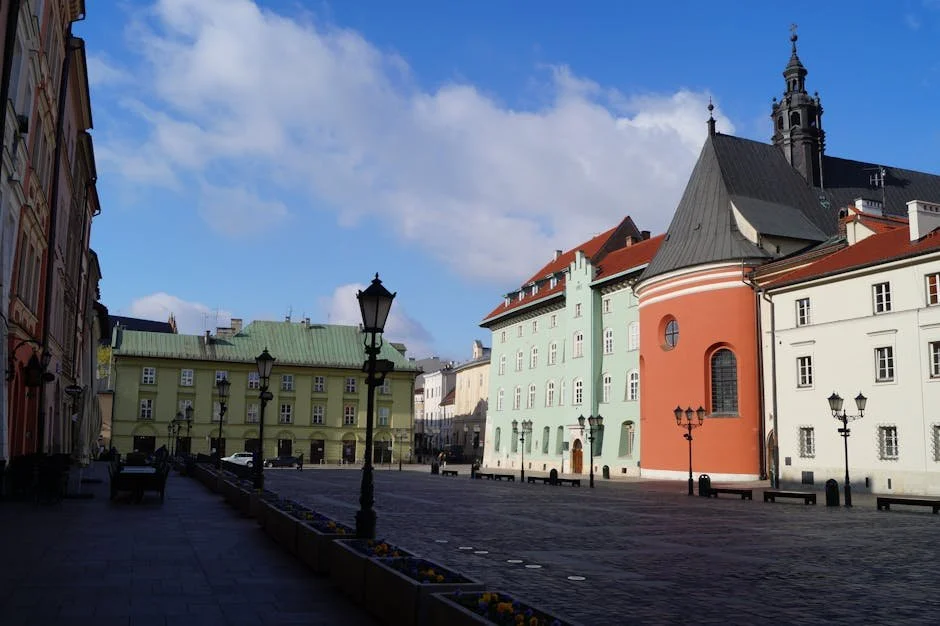
Poland wasn’t on my radar in the way other European countries were.
Not because I’d thought about it and dismissed it. More that it existed in a vague middle space in my mental map of Europe: between Germany and Ukraine, between the Baltic and the Carpathians, a country whose history I knew in outline without having engaged with seriously.
Ten days in Poland changed this in several directions simultaneously.
Kraków: the most underrated city in Central Europe
I am going to be direct about this: Kraków is better than most of Western Europe’s famous cities and costs a fraction of what they cost and has a quarter of the tourists.
The old town is a UNESCO World Heritage Site and genuinely intact: the Rynek Główny (the central market square, one of the largest medieval squares in Europe), the Cloth Hall in the centre of the square (an active market selling amber and folk crafts since the 13th century), the St. Mary’s Basilica with the hourly hejnał (a trumpet call from the tower that stops mid-phrase, commemorating a 13th-century trumpeter who was shot while sounding the alarm during a Mongol attack). It happens on the hour, every hour, and it’s one of the stranger and more moving small traditions in Europe.
The Wawel Castle and Cathedral. On the hill above the old town: the royal castle of the Polish kings, the cathedral where they were crowned and buried. The Dragon’s Den under the castle (a cave with a fire-breathing dragon sculpture outside, beloved by children and also by adults who appreciate absurdity). The view from the castle hill over the Vistula River.
Kazimierz. The old Jewish quarter: a neighbourhood of synagogues (some restored, some memorialised), restaurants, the antique market, the klezmer music performances in the cafés. Schindler’s Factory museum in the adjacent Podgórze district (the building where Oskar Schindler ran his enamelware factory; now an excellent and serious museum covering Kraków under German occupation 1939-1945). Required.
The food. Polish food is excellent and extremely affordable. Pierogi (dumplings: potato and cheese, sauerkraut and mushroom, meat) from any milk bar (bar mleczny) or restaurant.
Żurek (sour rye soup served in a bread bowl with hard egg and white sausage) as the single most satisfying lunch I ate in Poland. The beer (żywiec, tyskie, okocim: all fine, all cheap). The vodka (served ice cold, Polish tradition and not a tourism gimmick).
Auschwitz-Birkenau
I’ll say this simply: go.
The Auschwitz-Birkenau Memorial and Museum is about 70km from Kraków. Go with a guide. Give it a full day. Don’t take selfies.
The experience of being in Auschwitz I and Birkenau is one of those things that I can’t usefully describe beyond: it requires your full attention and your full presence and it will affect you and that’s appropriate.
Book tickets ahead online. Guided tours are recommended and informative.
Warsaw: the rebuilt city
Warsaw was almost completely destroyed in World War II: 85% of the city was demolished, 700,000 of its 1.3 million residents killed. What you see today in the Old Town is almost entirely reconstructed from historical records, paintings, and photographs, rebuilt brick by brick in the postwar decades.
This makes it a paradox: a UNESCO-listed Old Town that is both entirely authentic in intent and entirely reconstructed in execution.
Standing in the market square, knowing this, changes how you look at it.
The Old Town Market Square (Rynek Starego Miasta). Colourful facades, the mermaid fountain in the centre (the Syrenka, Warsaw’s symbol), the cafés at ground level. Beautiful and rebuilt and worth understanding in that context.
The Warsaw Uprising Museum. The 1944 Warsaw Uprising: the Polish resistance fighting against German occupation for 63 days, the city’s deliberate destruction afterward. The museum is one of the best and most moving I’ve been in: comprehensive, intelligent, personal. It covers the uprising through individual accounts and artefacts. Leave two to three hours.
The Palace of Culture and Science. The Stalinist-era skyscraper given by the Soviet Union to Poland in the 1950s, towering over the centre. Complicated symbol (the Poles have complicated feelings about it). The observation terrace on the 30th floor: the view over Warsaw is the best available.
The Polin Museum of the History of Polish Jews. The most important Jewish history museum in Central Europe, built on the site of the former Warsaw Ghetto. The collection covers the thousand-year history of Jewish life in Poland. Extraordinary.
Practical things
The Złoty. Polish currency, not the Euro. Exchange at the city centre kantors (exchange offices), which have better rates than banks or airport exchanges.
The milk bars (bar mleczny). Subsidised cafeteria-style restaurants serving traditional Polish food at prices that require a double-take: a full meal for 20-30 złoty (€4-6). Cafeteria-style, ordering at a counter, sometimes language barrier (the menus are often only in Polish), always honest and filling.
Poland in summer versus winter. Summer (June-August): warm, festivals, the best time for most visitors. Winter: cold but manageable, the Christmas markets in Kraków and Warsaw are among the best in Europe, the crowds at Auschwitz are smaller in winter (which feels appropriate).
Coverage in Warsaw and Kraków is excellent. Rural areas can be more variable. I’ve put together an eSIM guide for Poland with current pricing.
Poland asks things of you.
The history is present in a way that it isn’t in Western Europe. The food is excellent. The cost is low. The cities are extraordinary.
Go properly.
More from the region
Heading to Poland? Sort your eSIM first.
I've compared the main providers, checked the real pricing, and put together a guide on the best eSIM options for Poland.
Best eSIM for Poland →