Singapore as a base: why I keep coming back to the city-state that shouldn't work as well as it does
 Mika Soren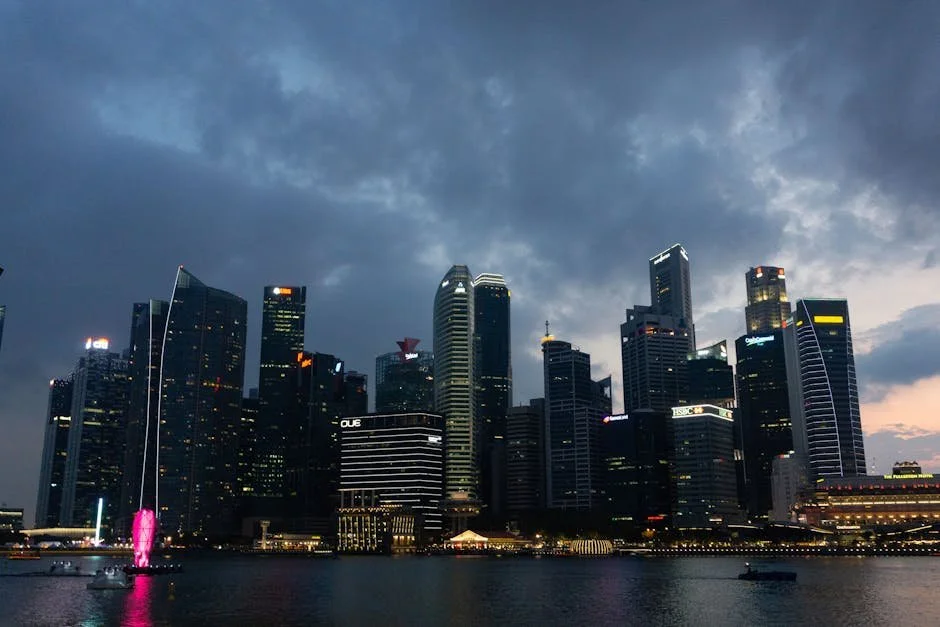
Singapore is the city people keep telling you isn’t worth the cost.
I disagree with this.
It is expensive relative to the rest of Southeast Asia. It is small. It is famously efficient and clean in a way that people sometimes use as a criticism (the fine culture, the chewing gum ban). And yet every time I’ve passed through, I’ve extended my stay by several days without regret.
Three times now. Each time, the same pattern: arrive thinking a night or two, leave having found something I didn’t expect.
The hawker centres
This is what I need to talk about first.
Singapore’s hawker centres are one of the best food systems available to a hungry person anywhere in the world. Hundreds of stalls under a covered open-air structure, each one specialising in one or two dishes developed over generations, prices starting at around SGD $3-4 for a full plate of something extraordinary.
There is a hawker centre stall (Liao Fan Hawker Chan on Smith Street in Chinatown) that has a Michelin star. The price: SGD $3.
This should tell you everything about the level of cooking available and the price at which it’s available.
The dishes you need to know:
Hainanese chicken rice (poached chicken over fragrant rice with three sauces: ginger, dark soy, chilli, a consommé soup on the side) is the national dish and it is what it sounds like: simple, perfect, endlessly satisfying. Maxwell Food Centre in Chinatown has Tian Tian Hainanese Chicken Rice, which always has a queue and deserves it.
Char kway teow (stir-fried flat rice noodles with egg, bean sprouts, Chinese sausage, cockles, dark soy) cooked over very high heat with wok hei (the smoky char from the wok). This is the dish where the quality range is broadest: a very good char kway teow is one of the great noodle dishes; a mediocre one is just fine. Find the stall with the queue.
Laksa (coconut curry noodle soup, rich and complex and deeply warming despite the ambient heat). Sungei Road Laksa and 328 Katong Laksa are the two names you’ll see everywhere. The Katong area specifically has a laksa tradition (cut into short pieces with scissors so you can eat it with a spoon) that’s distinct from the rest.
Chilli crab. The famous one. Expensive relative to other hawker food (around SGD $50-80 for a crab), but one of those dishes that justifies a trip. The sauce is tomato-based with egg stirred through, sweet and spicy and completely sticky. Served with mantou (fried bread buns) for scooping. East Coast Seafood Centre does a good version in a casual setting.
The hawker centres I kept returning to: Maxwell Food Centre (Chinatown, easiest, most tourists but genuinely good), Lau Pa Sat (financial district, good for lunch among office workers), Old Airport Road Food Centre (farther from the centre, less touristed, better).
The unexpected green
Singapore is the most green capital city I’ve been in and I mean this literally: the city has a serious urban biodiversity programme and the result is trees EVERYWHERE, rooftop gardens, highways with planted walls, the constant presence of something growing.
Gardens by the Bay. The famous supertree structures with the light show at night: genuinely spectacular rather than just impressive. The Cloud Forest dome (a misty mountain inside a cooled glass dome) is better than the Flower Dome next to it, but do both. The indoor temperature is cold enough that wearing a light layer is wise.
The Singapore Botanic Gardens. UNESCO World Heritage Site, been running since 1859. Free entry except for the National Orchid Garden section. One of the best botanic gardens I’ve walked through: mix of manicured and naturalistic, a genuine forest section in the middle, the orchid collection is the world’s largest. Go on a weekday morning when it’s quiet.
MacRitchie Reservoir and Treetop Walk. In the middle of the island, the reservoir is surrounded by secondary rainforest with macaques and monitor lizards and the occasional sun bear footprint (I’m told). The Treetop Walk is a 250-metre suspension bridge through the forest canopy. Takes a half-day. Good trail running in the early morning.
The neighbourhoods
Singapore’s diverse immigrant communities have produced distinct neighbourhoods that reflect their histories.
Chinatown. The oldest Chinese enclave, UNESCO-listed heritage streetscapes, temples, the Maxwell Food Centre, the Chinatown Complex wet market, the good coffee shops on Teck Lim Road. Shop-houses with traditional facades. Most authentic on weekday mornings.
Little India (Tekka). Mustafa Centre (a 24-hour department store selling everything, a legend of Southeast Asian shopping), the Tekka Market (wet market and food centre in a single building), sari shops on Serangoon Road, the Sri Veeramakaliamman temple. Go on a Sunday evening when the area is at its most alive.
Kampong Glam. The former Malay royal district: Sultan Mosque at the centre, Arab Street textile shops, Haji Lane (narrow alley with boutiques and cafés), good Middle Eastern food in the area around the mosque. The kampung spirit (village feel) survives in the back streets.
Tiong Bahru. Pre-war public housing turned into one of the better café and bookshop neighbourhoods in the city. The art deco buildings from the 1930s. Books Actually (an independent bookshop that publishes Singapore literature). Good coffee, good breakfast, relatively quiet.
Singapore as a hub
The practical reason I keep using Singapore as a base: Changi Airport is the best-connected airport in Southeast Asia and genuinely the best airport in the world to spend time in (there is a butterfly garden in the transit area, there is a full waterfall indoors, the transit hotel is good and bookable by the hour).
Budget flight connections to everywhere in the region are cheap and frequent.
Two weeks in Bali from Singapore: one-hour flight, no long haul required. Kuala Lumpur: one hour. Bangkok: two hours. Penang: one hour. Japan: seven hours on budget carriers.
Using Singapore as a reset point between longer regional trips works well: the food is excellent, the infrastructure perfect, the city liveable even in the heat if you know where to be (the areas under the continuous shophouse shade paths, the air-conditioned transit system).
Practical notes
The MRT. One of the most efficient metro systems in the world. Ez-link card (get one at the airport) covers all transit. Essentially the whole island is reachable by MRT plus a short walk. Taxis and GrabCar for the gaps.
The heat. Singapore is approximately 1 degree north of the equator. It is hot and humid every day of the year without meaningful variation. The city accommodates this: extensive shade walking paths, the covered pedestrian network between buildings in the CBD, ubiquitous air conditioning. Acclimatise by day two, hydrate constantly, dress in linen.
Cost management. Singapore is expensive relative to the region but hawker centres significantly lower the food cost. Accommodation is the main expense. Hostels are clean and good. Outside the centre, there are neighbourhoods (Geylang, Toa Payoh) where accommodation is cheaper if you’re not spending all your time in the tourist areas.
The rules. Yes, certain things are prohibited and fines are real. No smoking outside designated areas. No eating or drinking on the MRT. No chewing gum (sale is prohibited; possession for personal use is technically legal but not something to worry about either way). None of these affect normal behaviour.
Mobile coverage in Singapore is excellent across the entire island. One of the highest mobile network densities in the world. An eSIM is easy. I’ve compared options in my guide to eSIMs for Singapore for anyone who wants the details.
Singapore is the city that shouldn’t work at the scale it works and works harder than anywhere.
Go for the hawker centres. Stay for the rest.
More from the region
Heading to Singapore? Sort your eSIM first.
I've compared the main providers, checked the real pricing, and put together a guide on the best eSIM options for Singapore.
Best eSIM for Singapore →