Solo female travel tips: what actually keeps you safe (and what's just fear someone planted in your head)
 Mika Soren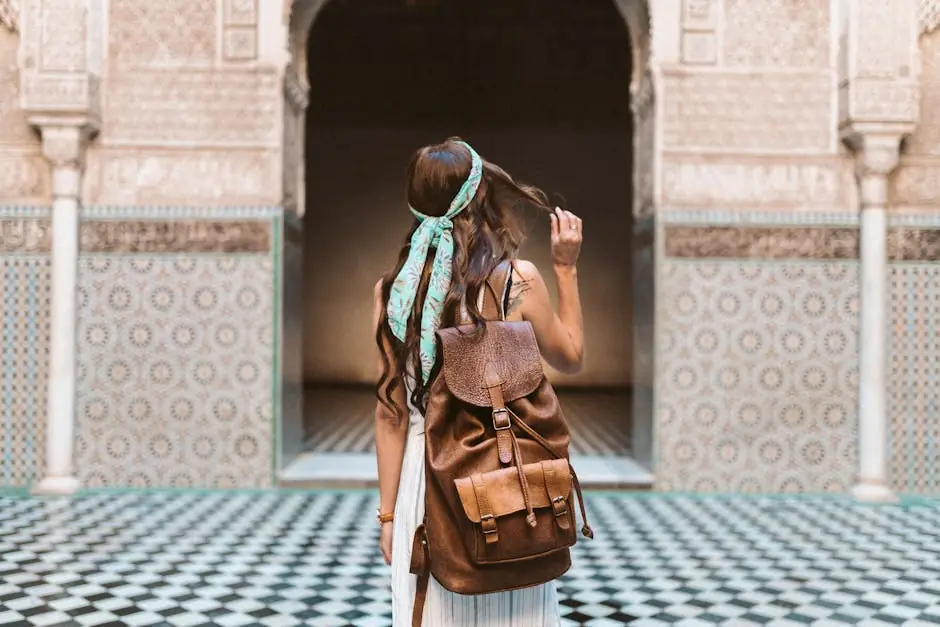
Every time I’ve told someone I was traveling alone as a woman, there’s been a version of the same conversation.
“But isn’t it dangerous?”
Usually asked by someone who hasn’t left the country in three years. Sometimes asked by a close family member whose concern is genuine and sweet and based on a complete misunderstanding of what the world outside their home country looks like. Occasionally asked by a stranger at a dinner party who then proceeds to list countries I shouldn’t visit based on things he’s read in headlines.
Here is what I actually know, after six years and forty-odd countries alone.
The danger is real in specific ways and in specific places. The general ambient fear that female solo travel is uniquely foolhardy is not. And the conflation of those two things stops a lot of women from doing something genuinely life-changing.
The real safety considerations (not the media version)
Harassment. In most places you’ll travel, you will experience some degree of unwanted attention. Catcalling, persistent touts, someone following you for a block trying to get your attention, men sitting next to you on transport when there are empty seats elsewhere. This ranges from mildly annoying to genuinely uncomfortable, and the frequency varies enormously by country.
This is not the same as violence. The conflation is one of the most unhelpful things about the “isn’t it dangerous” conversation. Dealing with harassment is exhausting and real and worth knowing about. It is almost never a physical safety issue.
Drink spiking and drink-spiking culture exists in certain settings in certain cities, mostly in nightlife contexts. Know what you’re drinking, don’t accept drinks from strangers, keep your drink with you. This applies everywhere, not just abroad.
Theft targets solo travelers (of any gender) because solo people carry all their own valuables and there’s no second set of eyes. Keep your phone in a front pocket or a zipped bag in crowded areas, use a money belt or neck pouch in markets and bus stations, don’t leave bags unattended.
Medical situations alone are the underrated risk. Getting genuinely sick or injured while solo is harder. No one to take you to the hospital, no one to translate, no one to hold your hand. This is worth taking seriously. Travel insurance with medical evacuation cover, not just the basic stuff. Your insurance number saved somewhere offline. A small first-aid kit with the basics. Knowing how to find medical care in each country you’re visiting.
What’s overblown
The murder rate statistics people quote are almost always pulled from the worst neighborhoods in cities where travelers don’t typically go, or from domestic violence data that’s not relevant to visitors at all. The tourist areas of “dangerous” countries are often no more dangerous than city centers anywhere.
Walking alone at night is frequently presented as categorically unsafe for women. In Tokyo, Kyoto, Taipei, Zurich, Oslo, most of New Zealand: walking alone at night as a woman is completely fine. The risk varies ENORMOUSLY by city and neighborhood. Do research specific to where you’re going, not generic anxiety about walking after dark.
Being alone in a restaurant or cafe apparently unnerves some people. I have eaten alone at thousands of restaurants, in dozens of countries. I have never once had a problem. It is not a vulnerability indicator. (The sympathy spring rolls of Bangkok notwithstanding.)
Staying connected: the safety argument for eSIMs
Being able to call someone, use maps, and summon a cab matters more when you’re alone.
When I’m traveling in a group, someone can go find help if my phone dies. Someone can navigate if I’m sick. When I’m alone, losing connectivity means losing my ability to contact the outside world, navigate, or call for assistance.
I use an eSIM for every country I visit specifically because it means I have data the moment I land, without hunting for a SIM shop in an unfamiliar airport. It also means I can share my live location with someone at home (Google Maps and WhatsApp both have this feature) so someone always knows where I am without me needing to text constantly. I’ve covered specific eSIM options for most destinations. Morocco is one I’ve written up in detail — connectivity is patchier than you’d expect in the medinas and mountains.
Share your live location with at least one person who would notice if it stopped moving. It’s two minutes of setup and meaningful peace of mind.
Solo female travel by country: the real picture
Japan. The safest country I’ve ever traveled in. Crime rates are extremely low, harassment of tourists is minimal, public transport is excellent, and being a woman alone draws about the same attention as any other foreigner. The main issue is navigating the language barrier, which is very manageable in cities. I feel safer alone in Tokyo at 2am than in most European capitals in daylight.
Thailand. Very safe for solo female travelers in standard tourist circuits. Bangkok, Chiang Mai, Koh Lanta. Island-hopping: fine. Pay attention to your surroundings in nightlife contexts (drink spiking is a documented issue at certain tourist bars). The Thai people are genuinely warm toward foreign visitors. The biggest annoyance is tout culture, which is manageable once you learn the “no thanks, not today” walk without breaking stride.
India. This requires honest treatment. India is not the equivalent of Thailand or Japan for solo female travel. Sexual harassment is more common and can be persistent in some cities and contexts. This is well-documented and you should go in knowing it.
That said, millions of women travel India solo every year. The key differences: book your first accommodation in advance rather than figuring it out on arrival. Research area safety for specific neighborhoods. Use Ola or Uber rather than hailing cabs. Avoid traveling on public transport at night, especially in smaller cities. Dress for local norms in temples and conservative areas. The incredible food, the extraordinary history, the places that will genuinely rearrange your understanding of the world: all still there. Go with better preparation than you’d bring to Southeast Asia.
Morocco. I’ve been twice, once with a friend and once alone. The alone trip was fine and I’d go again. But the harassment in Marrakech and Fes medinas is consistent and I’d be doing you a disservice by underplaying it. Touts, men offering to “guide” you, persistent “where are you going?” as you walk through the souks. It tapers off outside the main tourist medinas. Knowing it’s coming blunts most of the effect. Learn “la, shukran” (no, thank you) and deploy it without eye contact.
What’s genuine about Morocco: the warmth of people when you’re in a cafe or a riad, the food, the landscape outside the cities, the unreal quality of light in Cherkaoui’s blue city. Worth it.
Colombia. Cartagena and Medellín are both popular and manageable solo female travel destinations now. Medellín has genuine hostel community, easy to meet people, excellent food scene. Use ride-share apps rather than hailing cabs. Don’t display valuables in public. The standard precautions you’d use in any Latin American city. Not inherently more dangerous than Mexico City or Lima for women who’ve done solo travel before.
East Africa (Kenya, Tanzania). Safari travel in East Africa tends to be structured, with guided activities and good infrastructure in tourist zones. Nairobi requires the same awareness you’d bring to any large city. The coast (Zanzibar, Mombasa) is Muslim-majority and more conservative dress norms apply, particularly when away from beach resort areas.
Japan, Taiwan, New Zealand, Iceland, Portugal, Slovenia: All routinely come up at the top of solo female travel safety lists, and in my experience that reputation is accurate. These are places where the ambient anxiety is genuinely minimal.
Practical safety setup
Tell someone your itinerary. Not “I’m going to India in November.” Hotel names, dates, check-in confirmation numbers. When to expect contact from you, and what to do if they don’t hear.
Different bag for day use vs accommodation. Keep your passport and backup cash at your accommodation in a locked bag or safe, not on your person on day trips. A stolen daypack contains your phone and small cash. Losing it is annoying, not catastrophic.
Research your accommodation’s immediate area. Is it in a well-lit, inhabited neighborhood? Is there a 24-hour front desk or a key code and no staff? Is the area around it known for anything you should know about? Five minutes on Google before you book.
The gut thing is real. There’s something that happens when a situation starts to feel off. Someone following you, a room where something feels wrong, a guide whose energy shifts in a way you can’t explain. Trust it. Leave first, analyze it later. Politeness is worth much less than safety.
Do not broadcast your solo status unnecessarily. You don’t have to lie, but you also don’t need to volunteer to a stranger that you’re alone, that no one is expecting you, and that you haven’t told anyone where you are. The “my husband is meeting me later” line exists for a reason.
The things nobody warns you about (and they’re mostly good)
Solo female travel gets you into conversations and connections that paired travel doesn’t.
You eat where you want. You stay as long as you want in the places that interest you and leave the ones that don’t. You meet people in hostels and guesthouses and free walking tours who are also doing this alone and who will become, occasionally, actual long-term friends. You make decisions entirely from your own instincts, which is a form of self-knowledge that takes years off a therapy bill.
You will have days that are genuinely hard. Lonely, disorienting, not photogenic. You will also have days that feel like the most alive you’ve ever been. The ratio is better than the warnings would lead you to believe.
Go. With preparation, with good insurance, with your location shared and your gut engaged. But go.
More on solo & first-time travel