Sweden in both seasons: Stockholm in summer and Kiruna in winter, which is genuinely a different country
 Mika Soren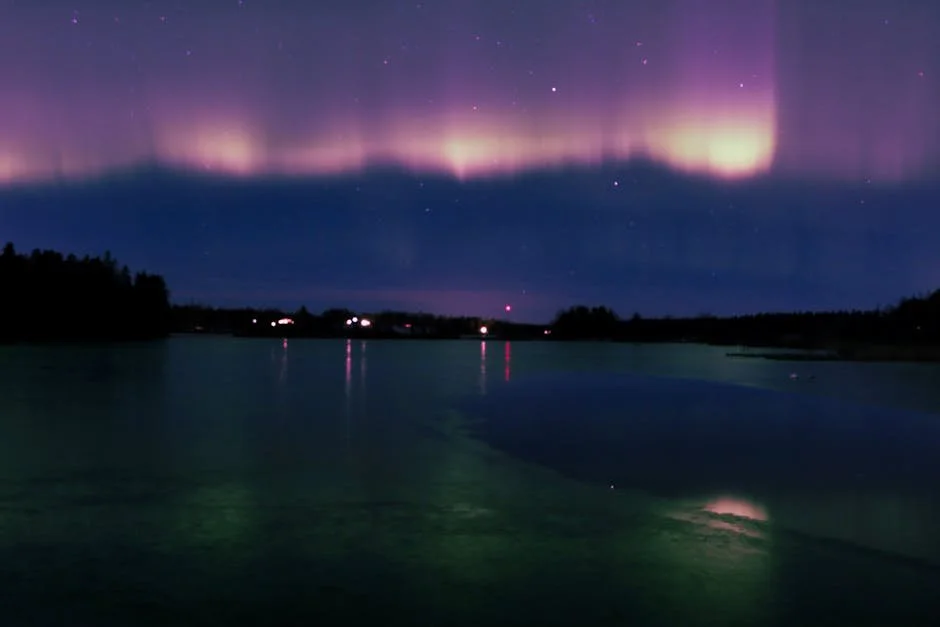
Sweden in June has a light problem.
Not a complaint. More that the sun sets at 10:30pm and rises at 3:30am and your body, calibrated to somewhere sensible, cannot decide what time it is.
I’d lie in a bright bedroom at midnight completely awake, hear the birds outside, and feel slightly betrayed by the whole setup.
I went back in January. The reverse: the sun rose at 9:30am and set at 3pm and I went to see the Northern Lights in the Arctic above the Arctic Circle and the darkness was, counterintuitively, the better experience.
Stockholm: the water city
Stockholm is built across fourteen islands where Lake Mälaren meets the Baltic Sea. This means that almost every view in the city has water in it and the distances between islands are bridged and boated across constantly. It gives the city a specific quality: everywhere you go there’s a body of water somewhere and you’re always slightly aware of being on an island.
Gamla Stan (the Old Town). Stockholm’s medieval island city: narrow cobblestone streets, the Royal Palace at one end, Nobel Museum at the other, restaurants in vaulted cellars, the changing of the guard at the palace at noon. Atmospheric in the evening when the day visitors have thinned. The Stortorget square (the site of the Stockholm Bloodbath of 1520, now considerably more pleasant, surrounded by 18th-century buildings) is the most photographed corner.
The Vasa Museum. A 17th-century warship that sank on its maiden voyage in 1628 in Stockholm harbour and was raised largely intact in 1961. The museum was built around the ship. The hull is preserved to an extraordinary level: paint residue, rigging, and nearly all of the carved decorations intact. One of the more impressive museum experiences in Northern Europe. Go first thing in the morning.
Djurgården. The island park: the Vasa Museum, the Skansen open-air museum (the world’s first, with reconstructed historical buildings from across Sweden and living farm animals), the ABBA Museum (comprehensive, warm, you get to sing along, it’s fine). Accessible by tram from the city centre, or by boat from the Nybroplan quay.
Södermalm. The southern island, the hip one: record shops, vintage clothing, the Monteliusvägen cliff walk with the views back over the Old Town and the City Hall across the water. The Hornstull Marknad on weekends for the market. The coffee shops on Götgatan.
Swedish food: The smörgåsbord at a proper restaurant: a long table of cold and hot dishes assembled in a specific order (pickled herring first, then salmon and eggs, then cold meats, then warm dishes). Swedish meatballs (köttbullar) with lingonberry jam and cream sauce at a Husmanskost (home-cooking) restaurant. Cinnamon rolls (kanelbullar) at any bakery, eaten immediately. The crayfish parties (kräftskivor) in August: entirely seasonal, very Swedish, extremely social.
The Swedish Arctic: a January trip that changed the calibration
Kiruna is Sweden’s northernmost city, above the Arctic Circle, accessible by overnight train from Stockholm or a 90-minute flight. I went in January specifically for the Northern Lights and the experience of polar winter.
The Northern Lights (Aurora Borealis). Unpredictable. This is important to accept before going: the aurora requires clear skies and solar activity and these don’t coordinate with your travel dates. I saw them on day three after two cloudy nights.
The experience when it finally happened (green waves across the sky, building in intensity, the silence and the cold and the starfield behind them) was exactly what I hoped.
The darkness. Above the Arctic Circle in January, there are about four hours of usable daylight. The rest is blue twilight or darkness. This sounds bleak and is in fact strangely beautiful: the snow reflects every bit of available light, the sky at 10am has the quality of a very long sunrise, and the darkness after 3pm feels like it belongs.
Ice hotel (ICEHOTEL in Jukkasjärvi). A hotel rebuilt every year from ice cut from the Torne River. Sleep in a room carved from ice with reindeer skins on an ice bed. It’s cold (about -5°C inside the hotel, which is warmer than outside) and genuinely extraordinary as an experience. Even if you don’t sleep there, the day tour lets you walk through the current year’s art installations.
Dogsled and snowmobile. Both available from operators around Kiruna. The dogsled: Alaskan huskies pulling you through birch forest in complete silence except for the panting dogs and the snow. One of the experiences that’s difficult to put a value on because it’s unlike anything else.
Gothenburg: the second city done properly
Gothenburg (Göteborg) on the west coast has what all Swedish second cities have: the relaxed self-assurance of not being the capital, a better food scene than expected, and locals who are delighted when you actually visit.
The fish market (Feskekôrka). The “fish church,” a covered fish market in a Neo-Gothic building. The freshest seafood in the country: the West Coast catches (crayfish in season, shrimp, the langoustines that are the best in Scandinavia) from the boats that dock at Gothenburg.
The archipelago. Gothenburg is the gateway to the Bohuslän archipelago: hundreds of small islands accessible by ferry, with the smooth sea-polished red granite rocks, the wooden holiday houses, the fishing villages. A day trip to Vrångö or Styrsö: simple lunch, a swim in the cold Baltic, the archipelago light in the afternoon.
The coffee culture. Swedes drink more coffee per capita than almost any nationality. The fika (coffee break with something sweet, a social institution) is real. The specialty coffee scene in Stockholm and Gothenburg is excellent.
Practical things
The Systembolaget. The government-owned alcohol retailer. Beer and wine above a certain strength can only be bought here; the supermarket options are limited. Hours are specific (closed Sundays). This catches visitors off-guard. Plan accordingly.
Cashless Sweden. Sweden is essentially cashless. Many places don’t accept cash at all. A card works everywhere. Swish (the Swedish mobile payment system) is ubiquitous between locals but requires a Swedish number.
The cold. January in the Arctic is serious cold: -20°C is normal, -30°C is not unusual at night. This requires actual cold-weather gear. The gear can be rented from the operators in Kiruna if you don’t own it. Merino wool base layer, insulated mid layer, wind and waterproof outer. Boots rated to -40°C. This is not optional.
Coverage in Stockholm and Gothenburg is excellent. Above the Arctic Circle, coverage follows the towns: good in Kiruna, drops quickly outside it. I’ve put together an eSIM guide for Sweden with current pricing.
Sweden in two seasons is two different places.
Both are correct. Go to both if you can.
More from the region
Heading to Sweden? Sort your eSIM first.
I've compared the main providers, checked the real pricing, and put together a guide on the best eSIM options for Sweden.
Best eSIM for Sweden →