Taiwan quietly became my favourite country in Asia and I'm here to make that everyone's problem
 Mika Soren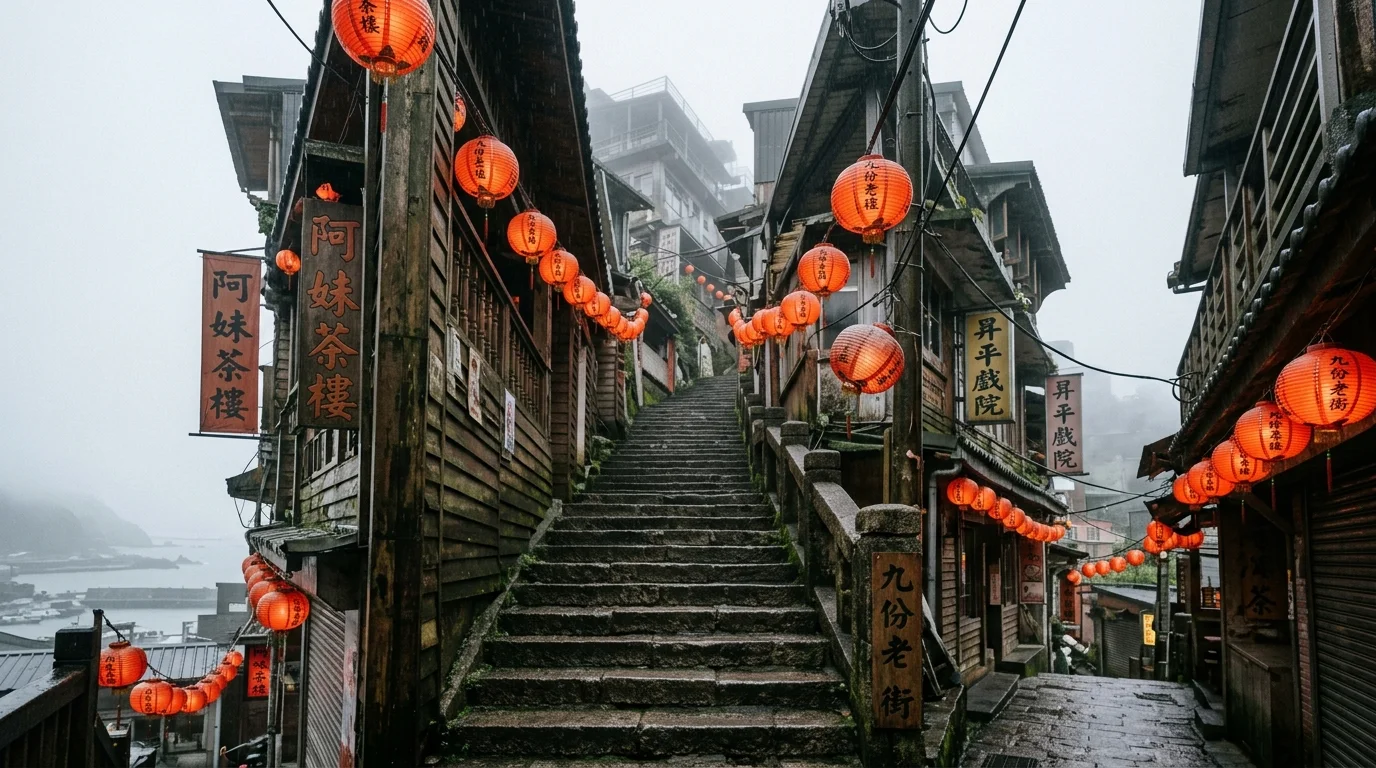
I went to Taiwan with no particular expectations, which is probably why it hit so hard.
I’d been doing Southeast Asia for a few weeks and a friend said “just go to Taipei, it’s easy and the food is insane” and I thought sure, four days, see what the fuss is about. I changed my flight at the airport to add two more days. I’ve been back once since and I’m planning a third trip specifically to eat my way through the south.
Taiwan is that kind of place.
Taipei: a city that works extremely well and has excellent noodles
Taipei is clean, efficient, extremely easy to navigate on the MRT (metro), and has a night market scene that’s been refined over decades into something close to perfection.
The EasyCard is an IC card you load with credit and tap on the metro, buses, convenience store purchases, some restaurants, and apparently eventually everything. Get one from any MRT station on arrival. It costs 100 NTD to start (about $3 USD) and it will make your life considerably simpler.
The night markets. There are several in Taipei. Shilin is the famous one: enormous, touristy, still worth going to for the scale and the oyster omelettes. Raohe (on the east side, near Songshan) is smaller and more local in feel, with a temple at the entrance and an alley dense with stalls selling scallion pancakes, stewed pork rice, and black pepper buns baked in a tandoor-style oven. Ningxia is the smallest of the main ones, a single covered street, local crowd, some of the best braised pork rice in Taipei.
The braised pork rice. Lu rou fan. Fatty minced pork slow-cooked in soy sauce, five-spice, and rice wine, spooned over white rice in a small bowl. There are restaurants in Taipei that have been serving only this, in the same recipe, for sixty years. A bowl costs about 50 NTD ($1.50). You can eat three of them. Some people eat four. I did not judge those people.
Din Tai Fung. The global chain. The original location on Xinyi Road. Yes, there’s a queue. Yes, it’s worth it. The xiaolongbao (soup dumplings) are made 21 folds per dumpling, to spec, every single time. The skin is thin enough to see the broth inside. You dip them in ginger soy. The shrimp and pork ones, the truffle ones, the egg fried rice: all exceptional. Go once, to the original, and then go find the smaller local dumplings places elsewhere in the city.
Jiufen: the mountain town that looks like a Studio Ghibli film
Forty minutes from Taipei by train to Ruifang, then a bus or taxi up a switchback road into the hills.
Jiufen was a gold-mining town that became briefly famous, then briefly forgotten, then rediscovered as a filming location for Spirited Away (the director has denied this; nobody fully believes him; the visual evidence is overwhelming). Red lanterns hang over narrow stairs cut into the hillside. Tea houses perch on the mountainside with windows looking out over the harbour and the sea.
Go on a weekday if you can. On weekends the main stairway (Jishan Street) is crowded enough to move at single-file pace. On a Tuesday morning in light rain (which is, I can report, a specific and wonderful condition) the lanterns glow through the mist and you can walk slowly and stop and look at things.
The tea houses. Sit in one. Order tea. Watch the clouds move through the valley below you. The tea ceremony is unhurried. The view changes every few minutes as the cloud cover shifts. Take the time. This is what Jiufen is for.
Taroko Gorge: the gorge that makes grown adults go very quiet
Three hours from Taipei by train to Hualien, then into the gorge by bus or scooter or tour vehicle.
Taroko is a national park in the east of Taiwan where the Central Mountain Range meets the Pacific Coast. The Liwu River has cut a gorge through marble and granite, in some places only wide enough for the road and the river, the walls rising hundreds of metres on both sides. The stone is banded white and grey and pink. The colour of the river is an improbable turquoise.
It’s the most dramatic landscape in Taiwan and it’s not close.
The Shakadang Trail. An easy 4km riverside path carved into the gorge wall, with views down into the clear river. Start early before the buses arrive from Hualien. The light in the gorge in the morning bounces off the white marble walls in ways I couldn’t predict or photograph properly. Good.
The Zhuilu Old Trail. Harder, permit required, sections cut into sheer cliff with a steel cable handhold and several hundred metres of nothing below you. I did not do this. People who did told me it was terrifying and extraordinary. Make of that what you will.
Spend a night in Hualien. The town at the base of the gorge. Small, easy, excellent sashimi (Hualien is on the Pacific coast and the fish market reflects this), a night market that runs on its own gentle schedule.
The food argument you’ll have with yourself
Taiwan has a specific food identity distinct from mainland China, Japan, and Southeast Asia. It’s been called everything from the best street food in Asia to the food capital of the world, both of which are hyperbole and neither of which is entirely wrong.
Beef noodle soup. Taiwan’s unofficial national dish. Braised beef and tendons in a deep red broth (typically with spicy bean paste and tomato), over noodles, with pickled mustard greens. There are annual competitions for the best beef noodle soup in Taipei. People have strong opinions. Lin Dong Fang in Zhongshan District has been at the top of those lists for years. Queue, eat, understand the fuss.
Bubble tea. From Taichung originally. The real version uses fresh-brewed tea, real milk (or milk powder if traditional), and tapioca pearls cooked that day. Not the global chain version. Chun Shui Tang in Taichung claims the original invention. Whether this is historically accurate is disputed; whether their bubble tea is excellent is not.
The 7-Eleven. This sounds like a joke. It isn’t. Taiwanese convenience stores (7-Eleven, FamilyMart, Hi-Life) have an elevated food culture compared to most of the world: hot food counters, good onigiri, tea eggs slow-cooked in soy broth, packaged lunch boxes that are actually decent. At 11pm when everything else is closed, the convenience store delivers.
The practical notes
Weather. Taiwan has a typhoon season (July to September) that can disrupt travel, particularly in the east. The best times are October to November (clear skies, lower humidity) and March to May. Winter (December to February) is mild in the south, genuinely cold in Taipei and the mountains.
The political situation. Taiwan exists in an unusual geopolitical position that I’m not going to fully get into here, but: Taiwan is Taiwan, not mainland China. Treat it accordingly. Don’t make comparisons that collapse the difference. The Taiwanese identity is distinct and people are clear about it.
Language. Mandarin is the official language. Taiwanese (Hokkien) is widely spoken. English is more common in Taipei and tourist areas than elsewhere. The MRT, most restaurants, and 7-Elevens have English signage and/or staff. Get out of the main tourist circuits and you’ll need Google Translate.
Connectivity. Taiwan has excellent 4G coverage across the island. In the mountains and some parts of the east coast, it gets thinner. A local SIM is cheap and available at the airport (Chunghwa Telecom or Taiwan Mobile). If you’re doing a broader Asia trip and don’t want a separate SIM for each country, a multi-country eSIM can be more convenient. My Southeast Asia and East Asia eSIM guide covers what’s worth getting.
What Taiwan is, actually
Taiwan is the trip that people come back from talking about in a way that sounds slightly evangelical, and then you go, and you get it.
It’s not dramatic about itself. There are no giant tourist billboards telling you what Taiwan is famous for. The night markets don’t have translated menus explaining cultural context. The sights aren’t gift-wrapped with interpretation centres. You just walk around and eat things and gradually build a picture of a place that has been doing its own thing, in its own way, at its own pace, and has no particular need for your validation.
Go to Taipei. Take the train to Jiufen on a grey morning. Eat braised pork rice from a counter that’s been there since your parents were born. Take the train across the island to Hualien. Stand in Taroko Gorge and feel the marble walls rise around you.
Then change your flight home to add two more days.
You’ll want to.
More from the region