Thailand keeps surprising me: Chiang Mai, Bangkok, and the north nobody told me about
 Mika Soren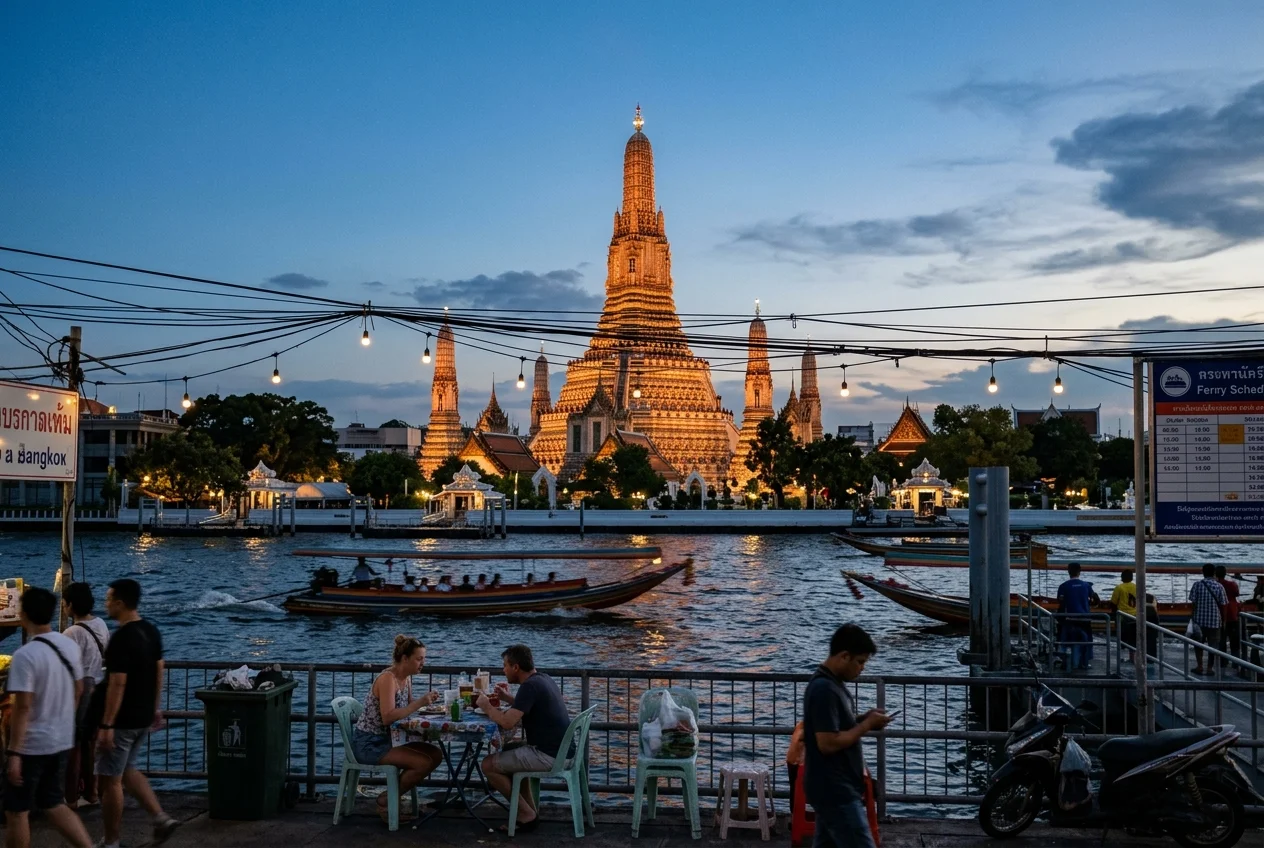
Thailand was the country that started everything.
I landed in Bangkok in October 2019 with a one-way ticket, a laptop, and a vague plan to figure the rest out.
The plan took about forty-eight hours to dissolve completely, and what replaced it was considerably better.
I’ve been back three times since. Stayed in five different cities. Know my way around a som tam order in a way that occasionally impresses Thai people, which I consider a personal achievement.
Here’s what I actually know.
Bangkok: the first week versus every week after
Bangkok takes a week to understand and then you don’t want to leave.
The first week, it’s just overwhelming. Heat, traffic, noise, size. You can’t walk anywhere because the footpaths run out and the streets are designed for scooters and tuk-tuks and the humidity is doing things to your physiology that you were not warned about. You retreat to air conditioning and wonder why everyone loves this city.
By day seven you understand.
The Skytrain (BTS) and subway (MRT) are the city. The areas connected to the elevated rail are functional and navigable. The areas not connected are a different equation entirely. Stay or base yourself near a station. Silom, Ari, Ekkamai, Thonglor: these are the neighbourhoods that make Bangkok make sense.
Ari is my pick for living in Bangkok. Not the most exciting neighbourhood on paper. Mostly locals, some good coffee shops, a market on weekends, quieter than the areas tourists gravitate toward. Walk down Ari Soi 4 on a Sunday and you find a market full of plants and second-hand clothes and good khao man gai (poached chicken on rice) for 50 baht.
Chatuchak Weekend Market. 8,000 stalls. Genuinely the largest market I’ve been in anywhere. Go when it opens at 9am before the heat becomes a tactical problem. Buy things you don’t need. Eat pad see ew from a stall. The plants section is enormous if you’re the kind of person who buys plants in countries they’re visiting (I’m not, but I can see the appeal).
Where to eat in Bangkok:
Jay Fai is the famous street food cook on Mahachai Road, one Michelin star, €30+ per dish, queue from dawn. Worth it once if you have a day to invest. For every other meal: the street stalls on Yaowarat Road (Chinatown) at night, the boat noodle soup places near Khao San (better than you’d think given the location), the lunch buffets in office buildings in Silom (95 baht for a full Thai meal, eaten next to people in suits, completely great), basically anywhere with plastic chairs, no English menu, and people actually eating.
The temples. Wat Pho (the reclining Buddha, huge and gold and worth twenty minutes), Wat Arun (best viewed from the opposite bank at dusk, less crowds than you’d expect), Wat Suthat (the giant swing area, far fewer tourists). Get them done on a single morning, start early.
Chiang Mai: the city that made remote work feel sustainable
I spent a month here and I’d do it again with almost no hesitation.
Chiang Mai is smaller than Bangkok, surrounded by mountains, old city wall still intact, moat around the centre, good coffee scene, digital nomad infrastructure that’s developed over about a decade into something genuinely functional. Fast internet everywhere. Coworking spaces in every neighbourhood. The air quality in March and April is not great (burning season), but the rest of the year it’s fine and sometimes excellent.
The Old City. The walled area with the moat. Full of temples (over 300 in Chiang Mai, the Old City has a dense cluster of them), guesthouses, good cheap restaurants. Pleasant to walk around at 7am when it’s quiet and the monks are doing alms rounds. Gets busy from mid-morning. The Sunday Night Walking Street on Wualai Road and the Saturday Walking Street on Wua Lai are both worth doing once: local food, crafts, live music.
Nimman (Nimmanhaemin Road) and surrounding streets. This is where the coffee shops and coworking spaces are. Lots of expat-heavy cafés with fast Wi-Fi, which is exactly what the working-remotely-while-being-in-a-beautiful-country project requires. Walk twenty minutes south from here and you’re in a completely different neighbourhood where the tourist infrastructure disappears.
The Night Bazaar. Every night, Tha Phae Road area. Thai food, tourist goods, some genuinely good street food in the southern section. Worth visiting once for the experience and then going to the less famous local markets (Warorot Market, open from early morning, actual market for actual locals, great for fresh fruit and cheap food).
Day trip to Doi Inthanon. Thailand’s highest peak, about 100km south of the city. The drive up is the experience: hill tribe villages, terraced rice fields, viewpoints into cloud. At the summit it’s genuinely cold enough to need a jacket, which felt surreal after weeks of sweating in the city. The royal pagodas at the top are beautiful. A guide helps but isn’t required.
The food in Chiang Mai: Northern Thai food is a different thing from the Thai food you know from restaurants abroad. Khao soi (curry noodle soup with crispy noodles on top) is the local hero and every place does it slightly differently. Khao Soi Khun Yai near the Old City has been recommended to me by more people than I can count and it’s correct. Also: sai ua (herb-stuffed pork sausages, eaten with sticky rice and raw vegetables), nam prik noom (green chilli dip), anything from the stalls around Warorot Market.
Pai: I was supposed to stay two days
Three hour minibus ride from Chiang Mai through 762 curves (they count, the sign says 762). Pai is a small town in a valley surrounded by mountains about 130km northwest of Chiang Mai. It has a reputation as a backpacker town and it is indeed that, but the surrounding area has a character that’s harder to categorise.
I was supposed to stay two nights.
I stayed eight.
Rent a scooter on day one. This is not optional. The town itself is walkable but everything interesting is outside it: rice fields, hot springs, waterfalls, viewpoints that appear at random around corners on mountain roads with no signage. The drive up to Yun Lai viewpoint for sunrise takes twenty minutes from the centre and the valley in the early morning mist is the kind of view you set an alarm for.
Pai Canyon at sunset. Narrow sandstone ridges, steep drops, a view of the whole valley going orange. Completely free. Gets crowded at peak golden hour but there’s enough space on the ridges to find a quiet spot. Don’t go in flip-flops.
Eating in Pai. Lots of fusion everything aimed at the backpacker market, which is fine if that’s what you want. For Thai food: the market stalls near the town centre in the evening for pad thai and barbecue skewers, the local noodle shops that open at dawn for boat noodles and rice congee.
A few things worth knowing
The heat in Bangkok is not a surprise, but it is a physical fact. May to October is the rainy season: shorter, more intense rain, often in the afternoon, humidity that makes a sauna feel refreshing. November to February is cooler, drier, and the best time. March-April: hot, Songkran water festival (extremely fun, or terrible if you don’t want to be soaked, depending on you).
Respect the temple dress code. Shoulders and knees covered. Both. Always. Not optional at any temple regardless of weather. Sarongs are sold at the entrances to most major temples for 20 baht if you forget.
Download Google Maps offline. Mobile coverage in Bangkok and Chiang Mai is excellent. In the mountain areas around Pai and Doi Inthanon, signal is variable. Download the offline map before you leave the city.
The local SIM situation. Getting a Thai SIM on arrival is easy and cheap. But if you’re doing regional travel, an eSIM that covers multiple Southeast Asian countries can be simpler than buying new SIMs in each country. I’ve compared the main options in my eSIM guide for Thailand with current 2026 pricing.
I keep going back to Thailand because it keeps being different.
Bangkok at 2am near Chinatown with the street food still going is nothing like Chiang Mai at 6am watching monks accept alms in the mist. Neither is anything like an evening in Pai watching the valley go dark from a rented bungalow porch.
Same country. Completely different experiences.
That’s why it’s on the list.
More from the region
Heading to Thailand? Sort your eSIM first.
I've compared the main providers, checked the real pricing, and put together a guide on the best eSIM options for Thailand.
Best eSIM for Thailand →