Tips for traveling internationally: the practical list I wish I'd had before my first trip abroad
 Mika Soren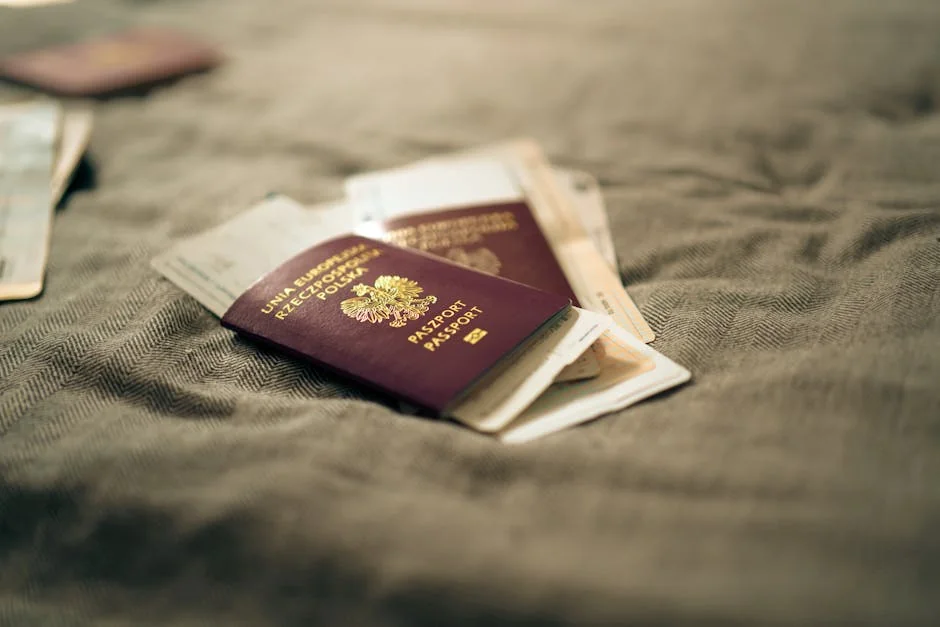
My first international trip alone was Budapest at 21. I had: a hostel booked, a vague plan to eat goulash, and the currency of precisely zero preparation for anything that might go wrong.
What went wrong: my card got blocked at a Budapest ATM (it had declined three times and my bank interpreted this as fraud; I had not called ahead to tell them I was traveling), I had no Hungarian forint or euros in cash, my British pounds were useless, and my hostel required payment on arrival.
I spent approximately forty-five minutes outside the ATM in a foreign city without local currency or a functioning card, mentally catastrophizing in real time, before I remembered that my hostel had WiFi (which was free), called my bank on Skype (which was free), got the block lifted, and went and had the goulash. It was fine. Eventually.
That was a $0 problem that felt like a crisis for 45 minutes because I hadn’t done 15 minutes of preparation. Here is the preparation.
Documents: what you actually need
Passport validity. Most countries require your passport to be valid for at least 6 months beyond your travel dates. Not your return date. 6 months past your return date. This is separate from your visa requirements. Check your passport expiry before you buy any tickets.
Visa requirements. Look them up specifically. Not “I think I don’t need a visa for X.” Look them up. The IATA Travel Centre (iatatravelcentre.com) is the industry source. Visa requirements change, exceptions exist, and the consequences for arriving without a required visa (or e-visa) range from inconvenient to being put on the next plane home.
E-visas vs. visas on arrival vs. pre-arranged visas. Many countries have moved to e-visa systems (India, Sri Lanka, Turkey, Egypt, Kenya among them). These require applying online and receiving approval before travel, usually 24-72 hours processing time. Don’t leave this for the night before. Kenya’s e-visa system specifically went through a redesign in 2024; check the current process rather than assuming it’s the same as what you read.
Two passport photos. Physical small photos. Some countries still want them at the border. Carry them in your passport document sleeve so they’re always with the documents that might need them.
Printed copies of your accommodation address. In the local script if you’re going somewhere like Japan, China, or Thailand where a Latin alphabet address means nothing to a driver. Immigration sometimes asks for your accommodation address. You won’t have wifi. Print it.
Travel insurance certificate. Not just the policy. The one-page certificate with the emergency number, your policy number, and the 24-hour medical line. This is the one you need when something has gone wrong and you can’t read a full policy document. Download it offline before you leave.
Money: the things that catch people out
Call your bank before you go. Two minutes. Tell them you’re traveling to [country] between [dates]. This single action prevents the single most common international travel problem: cards blocked for suspected fraud after the first foreign transaction. Most banks can also be told via their app now. Do it regardless.
Get a fee-free card if you’re traveling for more than a week. Your standard bank card is charging you 2-3% on every foreign currency transaction, plus often a flat transaction fee. On a 3-week trip, this adds up to $50-200 depending on your spending. Wise and Revolut work in most countries. Charles Schwab (US) reimburses all ATM fees globally. This is the one setup task with the clearest financial return.
Carry some cash in USD or EUR before you arrive. Not as your primary currency. As backup and for border fees, transport from airports, and the first few hours before you find an ATM. Countries like Kenya, Tanzania, and some others in East Africa widely accept USD directly for tourist transactions. Some borders require visa fees in USD or EUR cash. $100-200 of USD in your carry-on wallet (separately from your main wallet) covers the gap.
ATMs over currency exchange desks. The exchange rate at airport currency desks is usually the worst available. Local ATMs give interbank rates (or close to them). Use ATMs, preferably from major banks, and avoid the “Dynamic Currency Conversion” option that some ATMs offer, which means letting the ATM convert to your home currency at their rate rather than your bank’s. Always choose local currency.
The exception: Japan, South Korea, and a few others have ATMs that don’t accept foreign cards even if they look like they should. 7-Eleven ATMs in Japan and Shinsei Bank ATMs accept most foreign cards. Post Office ATMs (Japan Post) are also reliable. Know your Japan ATM options before you need them.
Connectivity: sort this before you land
Being offline in a foreign city is not romantic in the way that pre-smartphone travel guides made it sound. It is stressful.
Getting from an airport to your accommodation requires maps. Knowing whether your accommodation is on the right street requires maps. Calling someone if the plan changes requires data. Checking if that bus schedule you found online is current requires data. Translating the menu requires data.
The options, in order of how I’d rank them for most travelers:
eSIM activated before departure. No physical swap, no queue at the airport SIM counter, works from the moment you land. I use eSIMply for most of the 50 countries I cover on this site. You buy it, install it, and it activates when you land. Works in Japan, India, Morocco, South Korea, Southeast Asia, and most other places I travel regularly.
Local SIM on arrival. Often cheaper, but requires queuing at the airport SIM counter (sometimes a long queue), a language negotiation, and inserting a physical SIM. Completely fine if you have the time and patience. The SIM counters at major airports in Thailand, Vietnam, Japan, and South Korea are efficient and have English-speaking staff. At some airports (India’s smaller airports, some in Africa), this is more complicated.
International roaming add-on from your home carrier. Usually the most expensive option, sometimes provided in small add-on packages that are actually fine for short trips. Check the daily rate before assuming.
The specific countries where connectivity before landing matters most, in my experience: Japan (transit is complex without maps), India (the arrival process benefits enormously from working navigation), Morocco (arrival in Marrakech or Casablanca without data is a more pressured experience), and anywhere with a complex airport-to-city transfer.
Health and safety preparation
Vaccinations. Check the recommended and required vaccinations for your destination at least 6 weeks before travel, because some require multiple doses over several weeks. For most of Western Europe, no special vaccinations are required beyond whatever your home country recommends. For Africa, South Asia, and Southeast Asia: hepatitis A, typhoid, and yellow fever (required for some countries, recommended for others) are the common additions. Some countries in Africa and South America require proof of yellow fever vaccination on entry. Malaria prophylaxis for affected regions.
The yellow fever certificate. It’s called a Yellow Card, officially the International Certificate of Vaccination or Prophylaxis (ICVP). Kenya, Uganda, Tanzania, and many other countries require you to show it on arrival if you’re coming from a country with yellow fever risk. Get the vaccination and get the certificate. Some travelers have been vaccinated but don’t have the certificate and are held at the border. Get the certificate.
Travel insurance with medical evacuation. Medical evacuation from Thailand, Kenya, or Peru to a major medical center or home costs $50,000+. Travel insurance with evacuation coverage costs $80-150 per month. This is not an optional item for international travel. World Nomads, SafetyWing, and Allianz are widely used and reviewed options.
Medications for the specific region. Stomach issues affect nearly everyone who travels to India, parts of Southeast Asia, and East Africa. Not because the food is bad: because your gut microbiome isn’t prepared for the local bacterial environment. Pack rehydration salts, something for diarrhea, and if you’re going somewhere with more risk, discuss a course of antibiotics (for serious bacterial gastroenteritis) with your doctor before you leave. This is standard preparation, not paranoia.
Cultural preparation: the things that actually matter
Not a list of fun customs trivia. The things that will affect your trip if you don’t know them:
Dress codes. Japan: you’ll be asked to remove shoes in temples, ryokan, and many private homes. India: knees and shoulders covered at temples; very covered at more conservative sites; socks sometimes required at temple floors. Morocco and all Muslim-majority countries: covered shoulders and knees for women in most non-resort situations; the more conservative areas require a headscarf. Saudi Arabia: women must cover most of the body outside of designated resort areas. Israel: modest dress at religious sites.
Photography rules. Ask before photographing people in many cultures. Never photograph military installations, official buildings, or border crossings in most countries (this is sometimes technically illegal and always unwise). In Morocco, photographing people in the medinas without permission will cause friction. In some African countries, photographing official buildings or police is restricted.
Tipping norms vary dramatically. US: 15-20% expected at restaurants, taxis, and hotels, and withholding it is interpreted as a comment on the service. Japan: tipping is considered rude and will sometimes be politely refused or returned. Australia and New Zealand: optional, generous, no social obligation. Southeast Asia: not traditionally expected but appreciated; tourist-facing restaurants increasingly add a service charge. Europe: vary by country; France rounds up the bill or leaves coins; Germany 5-10%; Scandinavia increasingly service-included. Know what’s normal before you’re standing at the counter with cash in your hand.
Bargaining. Expected in markets in Morocco, India, Southeast Asia, Egypt, and many other places. Not expected in stores with price tags, restaurants with menus, or Japan. Not bargaining when it’s expected can result in paying the first price, which is often the tourist price. Starting too aggressively in cultures where bargaining is a social ritual can cause offense. A useful rule: start at about 40% of the first price offered, expect to land at 50-60%, be pleasant throughout.
The logistics of arriving
What will happen at immigration. You’ll present your passport, answer a few questions about purpose of visit and length of stay, have your photo and fingerprints taken (most countries now), and receive your entry stamp or an electronic entry record. For most travelers in most countries, this takes 5-20 minutes. Have your accommodation address accessible (printed or offline), know whether you’re visiting for tourism, and have your return ticket information ready if asked.
What the customs declaration involves. You’ll be asked whether you’re bringing in more than the duty-free allowance of goods (alcohol, tobacco, goods over a certain value threshold). In most countries the answer is no for the average traveler. Australia and New Zealand: declare any food, plant, or animal matter regardless. US: declare purchases over $800. Don’t make customs more complicated than it is; declare if in doubt.
Leaving the airport. Know in advance how you’re getting to your accommodation. Download the app of the local ride-share (Grab for Southeast Asia, Ola for India, Uber for most of the Americas and some of Europe) before you board. Know the public transport option as a backup. Have your accommodation address offline. Have some local currency or a working card. This 20-minute sequence from arrivals hall to accommodation base matters more than it sounds when you’re tired and in an unfamiliar environment.
The meta-principle
Most of the problems that ruin the first days of international trips are the result of things that take 20-30 minutes to sort before leaving: passport validity, visa requirements, card notification, cash backup, accommodation address offline, connectivity solution activated. The problems that can’t be prepared for are usually fine to handle in the moment once the logistical foundation is solid.
Budget travel tips and packing guides and activity lists all matter. But the logistics above are what the others sit on top of.
Sort them first. Then enjoy the goulash.
More on budget & planning