I haven't been to Ukraine yet and I think about it constantly: Kyiv, Lviv, Odesa, and why it's on my list
 Mika Soren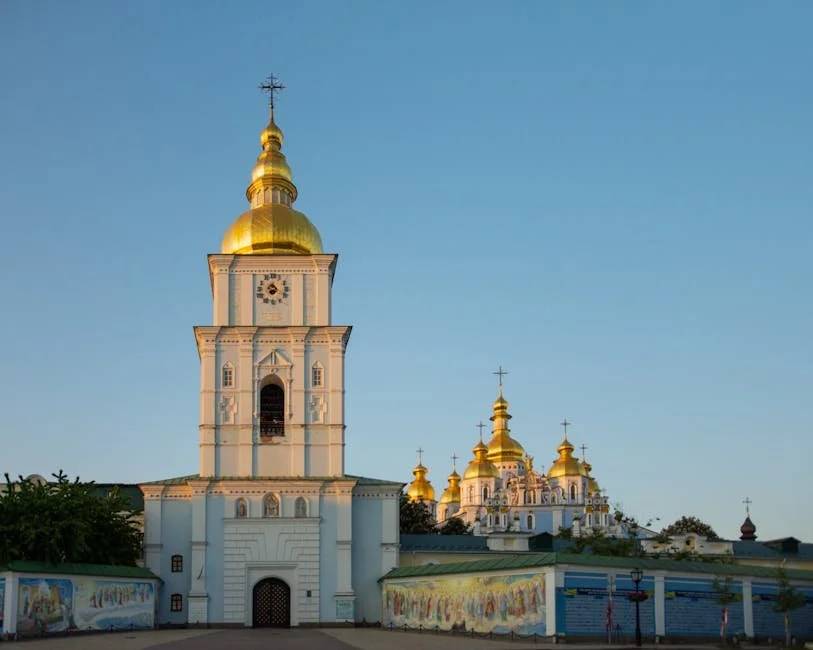
I need to be upfront about something: I haven’t been to Ukraine.
This is unusual for me. I don’t normally write about places I haven’t set foot in. But Ukraine has been sitting in my brain for years now, accumulating weight. Friends who’ve been. Hours of reading. A growing folder of saved restaurants and cafés and train routes that I keep adding to like a person who is definitely going and just needs to pick the month.
So this is different from my usual posts. This is the country I haven’t been to yet that I think about the most, assembled from the people I trust who have been there, and from the kind of obsessive research that probably qualifies as a personality trait at this point.
Why Ukraine
I’ve spent a lot of time in Eastern Europe. Poland, Romania, Hungary, the Czech Republic. I like the region in a way that’s hard to explain without sounding like I’m romanticising post-Soviet infrastructure (I’m not, the infrastructure is sometimes genuinely rough). What I like is the texture. The layered history visible in the architecture. The food that’s built for winter. The directness of people who don’t perform warmth but show it differently. The sense that these countries are still becoming something, still in motion, in a way that much of Western Europe is not.
Ukraine, from everything I’ve heard and read, has all of this turned up to eleven.
Kyiv: the golden domes
My friend Sara spent two weeks in Kyiv in 2019 and came back with the kind of intensity that usually means either a terrible experience or a transformative one.
Hers was the second kind.
The golden domes. Kyiv has more gold-domed churches and cathedrals per square kilometre than anywhere she’d seen, and she’s been to Moscow and St. Petersburg. St. Sophia’s Cathedral (11th century, UNESCO listed, the mosaics inside are original). The Kyiv Pechersk Lavra (the cave monastery complex on the bluffs above the Dnipro River, monks have lived there since the 11th century, the underground caves hold mummified monks in glass cases, which is exactly as intense as it sounds).
Maidan Nezalezhnosti. Independence Square. The site of the Orange Revolution in 2004 and the Euromaidan protests in 2013-2014. Sara said the square itself is architecturally unremarkable but emotionally enormous. The kind of place where the history is so recent that people around you lived it.
The food. This is where I get slightly unhinged with enthusiasm based entirely on secondhand reports and recipe research.
Borscht. Not the beet soup you’ve had from a jar or a can. Ukrainian borscht is a complex, layered thing. Every family has a version. Sara’s host made one with pork ribs and fresh beets and dill and sour cream so thick it held its shape on the spoon. She said it was the best soup she’d ever had and Sara is not someone who says things like that lightly.
Varenyky. Ukrainian dumplings, similar to Polish pierogi but (I’m told by Ukrainians and I believe them) better. Filled with potato and cheese, or with cherries, or with sauerkraut. Pan-fried with onions and sour cream. Street food and home food and restaurant food, all at once.
Salo. Cured pork fatback. Sliced thin, eaten on dark bread with garlic. This is either going to be your thing or very much not your thing. I’ve eaten enough weird stuff in enough countries that I’m confident it’s going to be my thing.
The café culture in Kyiv, from what I’ve gathered, is remarkable. Not in the Parisian “sit for three hours with an espresso” way. More like an actual working café culture where people go to get things done, the coffee is good, and the pastries are serious.
Lviv: the one everyone tells me to go to first
Every single person who has been to both Kyiv and Lviv says the same thing.
“Lviv is special.”
Lviv is in western Ukraine, closer to Poland than to Kyiv, and the cultural influence is visible. Austro-Hungarian architecture. Cobblestone streets. An Old Town that’s UNESCO listed and looks like Prague if Prague had fewer tourists and more personality.
But the thing about Lviv, the thing people keep telling me, is the coffee.
Lviv considers itself the coffee capital of Ukraine and possibly of Eastern Europe. The city has a coffee culture that dates back centuries (the first coffeehouse opened in the 1800s) and the current scene includes roasters, specialty shops, and a general civic attitude that coffee is serious business. My friend James, who is a coffee snob of the most committed variety, said the specialty coffee in Lviv was better than what he’d had in Vienna. James does not say things like this. James once sent back an espresso in Melbourne.
The Lviv Handmade Chocolate factory. Apparently there’s a workshop where you watch them make it and then eat an inadvisable amount. This is the kind of tourism I can fully endorse.
The Opera House. Built in the late 1800s, one of the most beautiful in Europe, tickets cost almost nothing by Western standards. Multiple people have told me to go to anything, regardless of what’s showing, just for the building.
Odesa: the Black Sea and the humour
Odesa has a reputation. Every Ukrainian I’ve talked to says the same thing about Odesans: they’re funny. Like, culturally, collectively funny. The city has a tradition of humour that’s baked into its identity in a way that I’ve only really seen in a few places (New York, parts of Australia, maybe Dublin).
The Potemkin Steps. The massive staircase descending to the harbour, famous from the Eisenstein film. 192 steps. The perspective trick where they look longer from the bottom than from the top.
The Black Sea beaches. Not Caribbean beaches. That’s not the point. The point is the beach culture: families and food stalls and the specific Eastern European approach to beach holidays that involves more vodka and grilled meats than sunscreen.
The catacombs under the city. Over 2,500 kilometres of tunnels, the largest catacomb network in the world, carved out by limestone mining. Used by partisans during World War II. Tours available. Claustrophobia not recommended.
The craft beer thing
I keep encountering this in my research and I’m noting it because it surprised me: Ukraine apparently has a legitimate craft beer scene. Kyiv and Lviv both have breweries and taprooms producing stuff that beer people (and I am tangentially a beer person) take seriously. This is a relatively recent development and one more reason on my list.
The resilience thing
I want to say this carefully because I don’t want to reduce a country to a single narrative.
Ukraine’s recent history is extraordinary and painful and ongoing. The courage and cultural identity that Ukrainians have shown is something I’ve watched from a distance with a mix of admiration and the discomfort of knowing that admiration from a safe distance is easy and costs nothing.
What I want to do, when I go, is engage with the culture and the people and the food and the cities on their own terms. Not as a war tourism exercise. Not as a poverty tourism exercise. As a traveller going to a country that has been on my list for years, that my friends have loved, that I believe I’ll love too.
When the time is right. I’ll go.
Practical notes (from research, not experience)
Visa. Many nationalities can enter visa-free for 90 days.
Currency. Ukrainian hryvnia. Very affordable by Western standards.
Language. Ukrainian is the national language. Russian is widely spoken, particularly in the east and south. English is increasingly common in Kyiv and Lviv, less so elsewhere.
Getting around. Ukraine’s rail network is extensive and the sleeper trains between major cities are a classic Eastern European experience (I’ve done them in Poland and Romania and I love them).
Safety. Check your government’s current travel advisory. The situation has been evolving and conditions vary by region. Do your research for the specific time you’re planning to travel.
For connectivity, I’ve put together a guide to eSIM options for Ukraine with current providers and pricing, so you can have that sorted before you arrive.
Ukraine is the country I haven’t been to that I talk about the most.
The golden domes. The borscht. The coffee in Lviv. The humour in Odesa. The train overnight from Kyiv to Lviv with the countryside going past in the dark.
I’ll get there. And when I do, I’ll rewrite this entire post from the inside.
More from the region
Heading to Ukraine? Sort your eSIM first.
I've compared the main providers, checked the real pricing, and put together a guide on the best eSIM options for Ukraine.
Best eSIM for Ukraine →