Vietnam will ruin you for other countries: a guide for people who don't know what they're about to walk into
 Mika Soren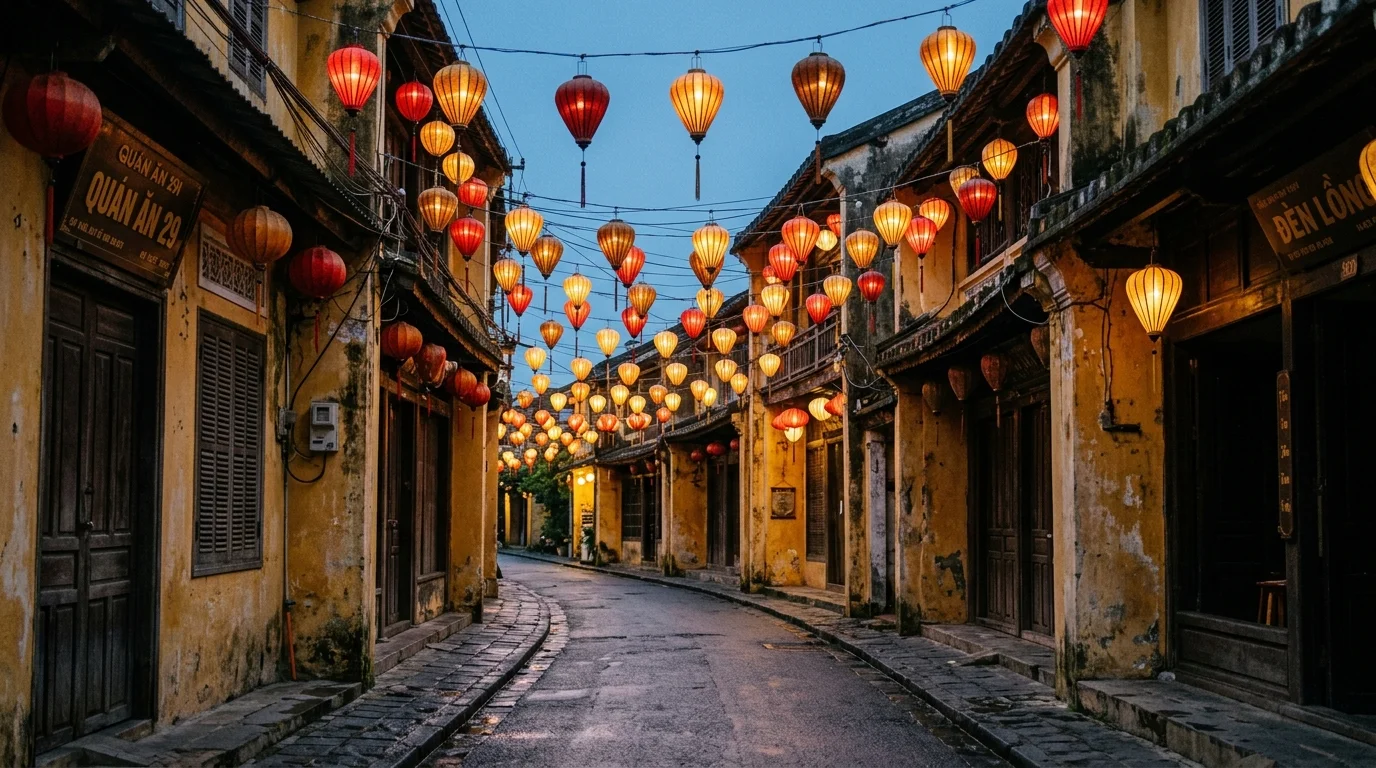
The motorbikes in Hanoi do not stop.
Not for red lights, not for pedestrians, not for people who’ve been standing at a crossing for six minutes working up the nerve to cross. The traffic flows around you like a river around a rock if you commit and walk at a steady pace and DO NOT STOP and DO NOT RUN. Every person who’s done this tells you the same thing: just walk. They’ll go around you. It works.
I crossed my first Hanoi street in a state of mild religious terror and arrived on the other side shaking and exhilarated in equal measure.
Vietnam does that. It asks something of you immediately and then gives back more than you put in.
Hanoi: chaos as an art form
The Old Quarter (Hoan Kiem District) is the part of Hanoi with the streets named after the trades that used to happen there: Tin Street, Paper Street, Bamboo Street. The trades have largely moved on but the names remain, and the streets are still dense with commerce. Fabric sellers, lacquerware shops, pho restaurants, bia hoi corners where plastic stools on the pavement count as furniture and beer costs roughly the same as oxygen.
Pho. You will eat pho for breakfast. This will feel strange for approximately one day and then completely obvious. The pho in Hanoi is different from the pho in the south: cleaner broth, less garnish, more focused. Pho Gia Truyen on Bat Dan Street opens at 6am and has a queue before the door does. The beef slices go into the boiling broth for seconds only. The broth is the point. Order it and don’t ask questions.
Hoan Kiem Lake. In the middle of the Old Quarter, a small lake with a red bridge and a pagoda on an island and turtles (theoretically; the famous turtle died in 2016, which saddened the city in a way that was reported internationally). In the early morning, locals do Tai Chi on the paths around the edge. At the weekend the streets around it close to traffic. It’s a good place to just exist for a while.
The egg coffee. Ca phe trung. Strong robusta espresso mixed with a thick whipped egg yolk and sugar, served either hot or iced. The texture is like drinking a tiramisu. It was invented in the 1940s when milk was scarce, using eggs as a substitute, and never stopped being made because it’s objectively excellent. Cafe Giang, down a narrow alley off Nguyen Huu Huan Street, is the original. Go there. Have two.
Ha Long Bay: yes, it’s real, yes, it’s worth it
The photos do not lie. The karst limestone islands rising from green water, mist in the valleys between them, fishing villages floating on the surface: it’s that good. I was prepared to find it overrated and did not.
Book an overnight cruise on a junk boat rather than a day trip. Two nights is ideal if you have the time. The boats range from genuinely budget to very comfortable; the main variation is the age of the boat and the quality of the food, both of which matter when you’re on the water for two days. Read reviews carefully for recent trips rather than photos.
The kayaking. Most overnight trips include a kayaking segment through sea caves and into enclosed lagoons that you can only reach by crouching through low openings in the rock. The lagoons inside are silent, ringed by cliffs, completely cut off from the outside. I paddled into one and sat in the kayak doing nothing for about ten minutes and felt extremely fortunate to be there.
The sunrise. Set an alarm. Get on deck. The light over the bay in the first hour after dawn, the mist still low, the water completely still, is one of the more arresting things I’ve seen. Worth the 5:30am alarm and I do not say that lightly.
Hoi An: the town that makes everyone cry a little
I didn’t expect to be emotional about Hoi An.
It’s a small riverside town in central Vietnam, about an hour south of Da Nang. The ancient town (UNESCO World Heritage, as it will tell you repeatedly) is a collection of lantern-hung streets, wooden merchant houses, assembly halls, and tailors who will measure you and produce an entire suit in 48 hours. The lanterns are everywhere. At night, hundreds of them lit up over the Thu Bon River, reflecting in the water, with boat vendors selling floating candles to release on the current.
I sat on a dock and watched the lanterns for longer than I intended and felt something I can’t accurately describe. You’ll understand when you get there.
The food. Hoi An has its own dishes that you won’t find with the same quality anywhere else. Cao lau: thick noodles in a small amount of broth with pork and herbs, made with water from a specific local well (this is either a lovely piece of culinary mythology or genuinely true, and I’ve decided to believe it). White rose dumplings: translucent prawn dumplings that look exactly like their name, served with a dipping sauce. Banh mi, arguably Vietnam’s greatest gift to the world, available from carts on the street for about a dollar and substantially better than any banh mi I’ve eaten outside Vietnam.
The tailors. Yes, the tailors are real and they are fast and many of them are excellent. Get measured early in your stay, have a fitting the next day, pick up on day three. Bring photos of what you want and be specific. Ask to see fabric samples in daylight. Bà Lệ Tailors and Yaly Couture are reliable names; there are dozens of good ones.
Ho Chi Minh City (Saigon): the south on full volume
Saigon is larger, louder, hotter, and less charming than Hanoi in the way that a city of 13 million that never really slows down tends to be.
It’s also incredible.
The War Remnants Museum. Mandatory. Not an easy visit. The exhibition is unflinching about the American War (as Vietnam calls it) from the Vietnamese perspective, with extensive photographic evidence and documentation. I went on a sunny afternoon and came out needing to sit on a kerb for a while. Go anyway.
Ben Thanh Market. The famous one that looks great in photos and sells everything at tourist prices. Shop here for the atmosphere; buy things in the streets surrounding it for better prices. The night market around Ben Thanh starts in the evening and is genuinely better for food.
The roof bars. Saigon has a skyline and several bars at the top of tall buildings where you can watch it at sunset with a beer. The Chill Skybar and Level 23 at the Sheraton are reliably good. Expensive by Vietnamese standards, not expensive by international ones.
The coffee culture. Vietnam is one of the world’s largest coffee producers and takes its coffee very seriously in a format unlike anywhere else. Ca phe sua da: strong robusta drip coffee over condensed milk and ice. You drink it in a plastic cup with a straw, usually at a low plastic stool on the pavement, usually in ninety-degree heat. It’s perfect.
The stuff nobody mentions
The north-south divide. The food, the accent, the vibe, the weather: everything is different between Hanoi and Saigon. Don’t assume you’ve experienced Vietnam from one city. They’re different countries that share a border and a language.
The overnight trains. The Reunification Express runs the full length of Vietnam from Hanoi to Saigon, with sleeper carriages that are slow, slightly geriatric, and completely wonderful. Book a 4-berth soft sleeper and lie in your bunk watching the countryside go past. The leg between Da Nang and Hue goes through a mountain pass above the sea. Bring snacks and a book.
The 4G situation. Vietnam has excellent 4G in cities and along the main tourist routes. Coverage gets thinner in the highlands and rural north. If you’re doing any serious countryside travel (Ha Giang Loop, Sapa, Da Lat), sorted-in-advance data helps more than it does in cities. For Southeast Asia multi-country travel, an eSIM covering the region can be worth it over buying SIMs country by country. My Southeast Asia eSIM guide covers the current options.
What it leaves you with
I went to Vietnam expecting good food and affordable travel and some history I didn’t know well enough.
I got all of that. I also got Hanoi at 6am with the lake shrouded in mist. The moment when a cave kayak opened into a hidden lagoon and everything went quiet. Hoi An at night with a hundred lanterns reflected in the river, a floating candle drifting away from me on the current.
The kind of country that gets into your mind and stays there.
I’ve been back once since the first trip and I already know there’ll be a third. There’s still the north I haven’t done properly: Ha Giang, Sapa, the rice terraces in September when they’re yellow-gold for harvest. The Mekong Delta. Con Dao island.
Vietnam is a long country. Two weeks isn’t enough. Start somewhere and let it tell you where to go next.
More from the region