Working from cafes abroad: the honest guide (wifi speeds, power outlets, and judgy baristas)
 Mika Soren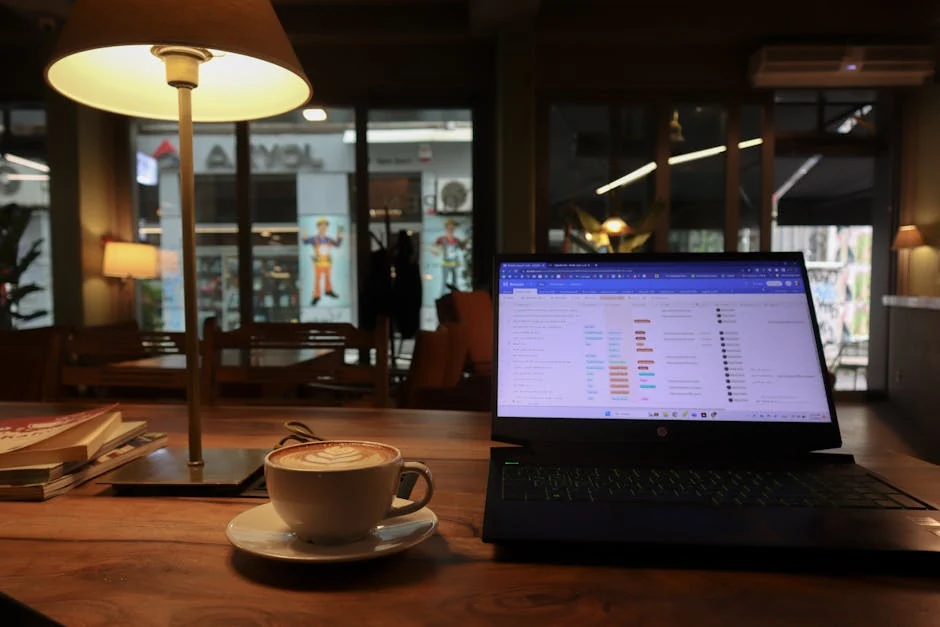
There is a cafe in Chiang Mai that I have spent, conservatively, 200 hours of my life in.
It has fast wifi, consistent power outlets at every seat, good filter coffee, and staff who have never once given me a look that said “are you still here?” despite the fact that I was always still here. The music is at a volume that doesn’t require headphones and doesn’t distract. The chairs are comfortable enough for a four-hour session but not so comfortable you fall asleep. There are plants.
I have done some of my best work in that cafe. I have also sat in it on a bad day eating a second piece of cake at 3pm feeling like a slightly defeated houseplant.
Working from cafes abroad is a skill. Here’s everything I’ve learned.
Why cafes work (when they work)
The psychology of it first, because it’s actually interesting.
There’s a phenomenon called “background noise productivity.” A moderate level of ambient sound, 65-70 decibels, the hum of a coffee shop, correlates with higher creative output than either silence or loud noise. This is backed by research and also by the lived experience of approximately every writer, designer, and marketer who has ever worked remotely.
The second reason: accountability by proximity. You’re in a public space. You’re not going to lie on the floor or start a new series on Netflix or reorganize your wardrobe instead of working. The slight social pressure of being seen to be at a screen is, weirdly, motivating.
The third: environmental change works. The brain habituates to familiar environments. Monotony of setting = monotony of thought. New cafes, new streets, new light quality: it genuinely refreshes something.
How to find the right cafe
The places marketed to tourists are often the worst for working. High prices, slow wifi, staff who want table turnover.
How I find working cafes in a new city:
Workfrom (workfrom.co) is a database of cafes and coworking spaces with reviews focused on wifi, power outlet availability, and noise level. It’s patchy in less-visited cities but excellent in nomad hubs.
Google Maps: search “[city name] cafe laptop friendly” or “[city name] cafe work.” The reviews will surface places known for this.
Ask other nomads. If there’s a local Nomad List community, a Facebook group, or a Couchsurfing page for the city, someone will have a list.
The scout method: walk until you find a cafe that has at least one person working on a laptop, check that there are visible power outlets, sit down and buy something before testing the wifi. This works better than it sounds and often surfaces places not on any list.
The signs of a good working cafe:
- Power outlets visible from where you’d sit
- People working already (the social proof is reliable)
- Menu prices that suggest they’re not trying to maximize table turnover (a 3 EUR coffee means you’re welcome to stay, a 1.50 EUR coffee means they want you out)
- Music at a reasonable level
- Not so beautiful and Instagram-popular that it’s constantly full of people taking photos and the wifi is overwhelmed
The signs of a bad one:
- No visible power outlets
- “Wifi is slow” in recent Google reviews
- Super popular with tourists (these cafes often deprioritize wifi because their customers don’t need it)
- No natural light (personal, but working in a dark cafe is depressing on the third hour)
The wifi situation
This is the one that will bite you if you don’t manage it.
Always test before you need it. Sit down, order your coffee, and do a speed test (fast.com is reliable). Do this before you have an immovable deadline or a video call in 20 minutes. You need to know your fallback options before you’re in crisis mode.
What you need for basic work: 10 Mbps down is sufficient for most knowledge work. Email, Slack, document editing, web browsing.
For video calls: 25 Mbps symmetric (both upload and download) is comfortable. Calls on 10 Mbps often work but are unreliable when the cafe gets busier.
For uploading large files: You need proper speeds or your own connection. Cafe wifi at 50 people during the midday rush is not where you upload a video edit.
Your backup: Your phone’s mobile data as a hotspot. This is why having a working eSIM or local SIM matters enormously as a nomad. When the cafe wifi dies mid-call, you switch to hotspot, you finish the call, you are not the person having a breakdown in the corner. eSIMply gives me reliable data across most of my destinations and the hotspot function has saved client calls on more occasions than I’d like to admit. More on managing data while traveling: how to use your phone abroad.
A VPN is standard practice for cafe working. Public wifi networks are shared networks and the basic security risk is real. NordVPN or ExpressVPN on auto-connect covers this.
Power management
The anxiety of watching your laptop battery drain while there’s no outlet in reach is a particular nomad experience.
The setup I use:
Start the day at full charge. Always. Plug in overnight. If that’s not possible (old accommodation, single outlet in an awkward place), a portable charger for the laptop makes the difference.
Carry your charger always. It adds weight, but it adds weight once and then you have it. The number of times I’ve found an outlet in an unexpected place and been grateful for the charger is countless.
Arrive at the cafe before your battery gets below 70% ideally, because the outlet situation might be complicated (all taken, wrong side of the room, cable not long enough) and you want time to solve it without pressure.
For countries with different plug standards, a travel adaptor is infrastructure, not optional. You probably know this. Carry it in your day bag, not in your main luggage.
Cafe etiquette: what varies by country
This is where working abroad differs from working in your home city. The unwritten rules genuinely vary.
Japan: Cafes are places for brief stops in most traditional Japanese culture. Working on a laptop for three hours in a local coffee shop is unusual and will generate looks. Chains like Starbucks and Doutor have adapted to laptop workers and are genuinely fine for this. Smaller independent cafes, less so. In Tokyo especially, there are well-equipped cafes specifically for nomads and freelancers (kissaten-style coffee shops with good wifi and power) if you know where to look.
Southeast Asia (Thailand, Bali, Vietnam): The most nomad-friendly region in the world by a significant margin. Working laptops are completely normal. Cafe owners have often designed their spaces specifically for this. A 2-3 hour sit with one or two drinks is standard and expected. Nobody minds.
Western Europe: The culture varies by country and city. Paris is less tolerant of all-day cafe sitters than Amsterdam. London has many cafes that actively welcome laptop workers (wifi passcode on the receipt is a good sign). Smaller towns and traditional Italian or Spanish bars: less adapted. Use common sense and read the room.
North Africa and Middle East: Cafes are predominantly social spaces, often male-dominated in traditional areas. As a woman working alone in a more conservative area, you’ll attract attention if you set up a laptop in a traditional cafe. Women-friendly, international cafes exist in all major cities. Research them before you need them.
South America: Similar to Southeast Asia for major cities with strong nomad communities. Medellín and Mexico City are especially well-adapted. Smaller towns: use your judgment.
The money calculation
Working from cafes costs money, and you should budget for it.
A reasonable per-day cafe budget for a working nomad: one coffee, possibly a second coffee, possibly a lunch or snack. In Southeast Asia this might be 5-8 USD. In Lisbon or Berlin, 15-20 EUR isn’t unusual. In Tokyo, 20-25 USD is realistic.
This is meaningfully cheaper than coworking space membership (which typically runs 150-300 EUR/month in most cities). But coworking spaces have consistent fast internet, ergonomic setups, meeting rooms, and the ability to take a call without worrying about background noise. For one or two days a week in a new city, cafes. For getting serious work done consistently, coworking is worth it.
The setup for maximum productivity
After years of this, here’s what I do:
Laptop on a stand. Compact keyboard and trackpad on the table. Headphones on. This arrangement is slightly awkward to set up and completely transforms a three-hour session from a neck-pain experience to an actually comfortable one.
Go in with a specific task list. “I am going to write this article and review these edits” rather than “I’ll see what needs doing.” Cafe sessions without a clear objective turn into email and context-switching and you leave having done nothing satisfying.
Order something every hour or two. This is the compact you’re making with the cafe. You’re using their space, their wifi, their electricity. The 4 EUR flat white is the price of your office. Pay it without resentment.
Leave before you’re completely burned out. The magic two-to-three hour window exists. The five-hour session where you’re staring at nothing and on your third coffee because you keep ordering to justify your presence is not productive for anyone.
The cafe in Chiang Mai closes at 6pm. I always tried to leave by 5:30. Some of my most consistent productive months happened on that schedule.
More on digital nomad